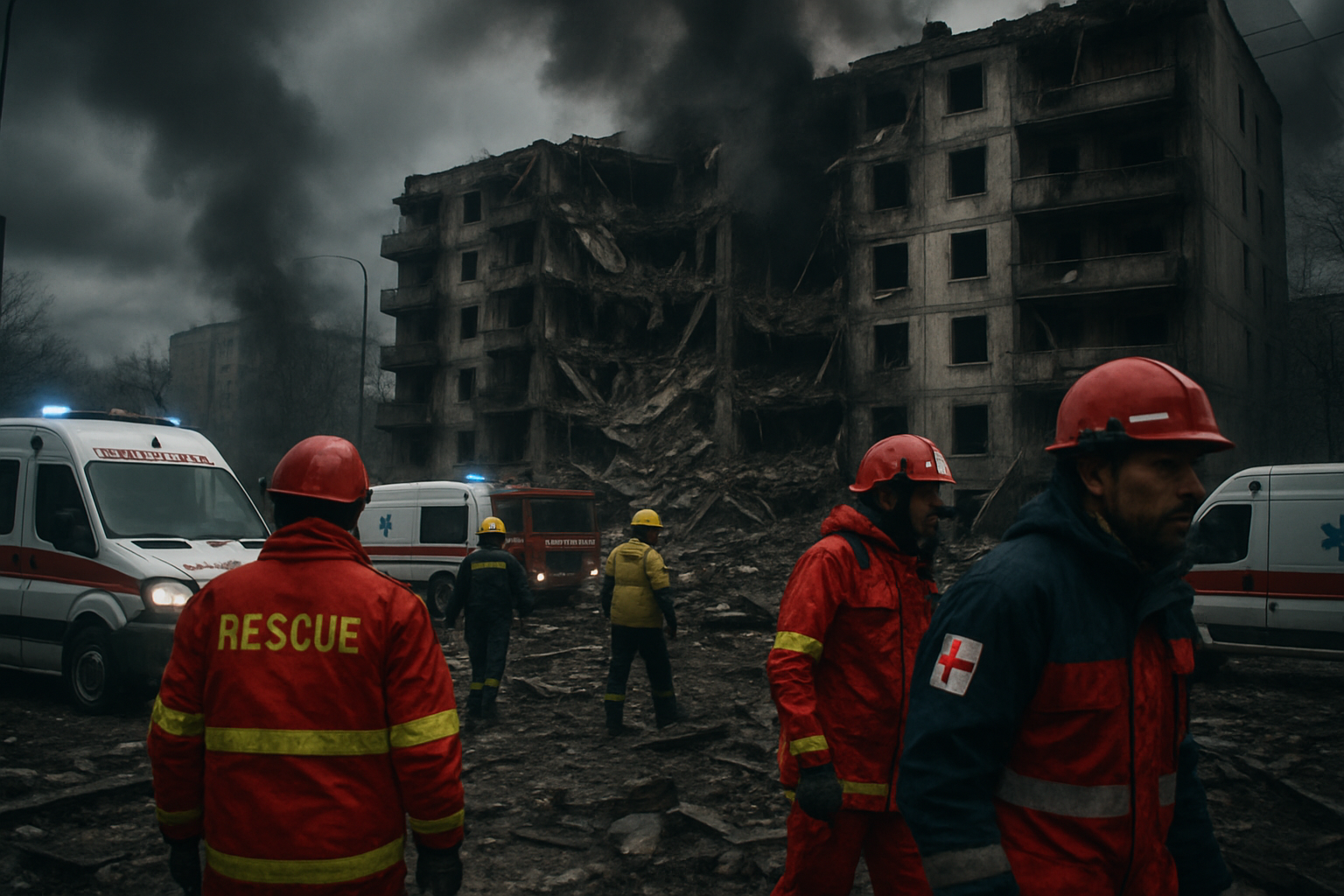
Russia launched a massive missile and drone attack on Ukrainian cities early Thursday morning, February 12, 2026, striking residential areas across Kyiv, Dnipro, and Odesa in what officials described as one of the most intensive bombardments in recent weeks.
Ukrainian capital Kyiv came under what Mayor Vitali Klitschko characterized as a "massive attack" that was "still underway" as dawn broke across the city. The coordinated assault targeted both residential and non-residential buildings on both sides of the Dnipro River that bisects Ukraine's capital.
"A mass attack on the capital is still underway," Mayor Klitschko reported on Telegram, confirming that strikes had been recorded across multiple districts of the city. Emergency medical teams were immediately dispatched to affected areas as explosions echoed throughout the metropolitan area.
Widespread Civilian Impact Across Multiple Cities
The attack extended far beyond Kyiv, with the southeastern city of Dnipro suffering particularly severe damage. Regional Governor Oleksandr Ganzha confirmed that private homes and vehicles sustained significant damage from the bombardment. The assault on Dnipro proved especially tragic, with an infant and a four-year-old girl among those injured when residential buildings were struck.
According to Ukrainian sources, the attack on Dnipro involved both missiles and drones, causing fires to break out in residential districts. The targeting of civilian areas housing families with young children represents a continuation of what Ukrainian officials describe as systematic attacks on non-military targets.
In Odesa, Ukraine's crucial Black Sea port city, drone attacks damaged infrastructure facilities and business centers, leaving one person injured. The strategic importance of Odesa as Ukraine's primary maritime gateway makes it a frequent target of Russian military operations.
Casualties Mount Across Targeted Regions
The coordinated assault resulted in multiple civilian casualties across the affected regions. In Kyiv, two people were wounded in the combined missile and drone attack, with one person hospitalized in serious condition according to local military administration reports. Fragments from intercepted missiles fell near residential buildings, though authorities noted that no fires broke out in those specific areas.
The human toll was particularly devastating in Dnipro, where four people were confirmed injured, including the infant and young child. The attack on residential areas forced families to seek shelter as emergency services worked to contain fires and provide medical assistance to the wounded.
"This represents a clear escalation in attacks targeting civilian infrastructure and residential areas where families live with their children."
— Regional Emergency Services Official
Pattern of Escalation Amid Diplomatic Efforts
The February 12 attack occurs against the backdrop of ongoing diplomatic initiatives, including recent prisoner exchanges and communication restoration between the United States and Russia. Despite breakthrough agreements achieved in Abu Dhabi trilateral talks, military operations have continued to escalate.
Ukrainian air defenses worked throughout the morning to intercept incoming missiles and drones. According to Egyptian military sources, Ukrainian forces successfully shot down 16 missiles and 197 drones during the assault, demonstrating the scale of the Russian bombardment.
The timing and intensity of the attack follow a pattern of increased Russian military pressure during winter months, with infrastructure and residential areas frequently targeted during extreme cold weather conditions. Over the past month, Russia has launched more than 10,000 drones and missiles at Ukrainian targets.
International Response and Regional Security
The attack prompted immediate responses from regional allies. Poland, which shares a border with Ukraine, maintained heightened alert status and continued monitoring the situation closely. The strikes occurred near enough to the Polish border to raise security concerns among NATO member states.
International observers noted that the bombardment came just days after diplomatic breakthrough moments, including successful prisoner exchanges that had raised hopes for de-escalation. The 314-prisoner exchange achieved in recent Abu Dhabi talks represented the first such humanitarian agreement in five months.
European Union officials have condemned the attacks as violations of international humanitarian law, particularly given the targeting of residential areas where civilians, including children, were present. The systematic nature of these strikes on civilian infrastructure continues to draw international criticism.
Infrastructure and Emergency Response
Emergency services across all affected cities mobilized rapidly to respond to the attacks. In Kyiv, Tymur Tkachenko, head of the capital's military administration, confirmed that at least one direct hit was recorded in an eastern suburb, with emergency medical teams dispatched immediately to the scene.
The attacks caused significant damage to both residential and commercial structures. In Dnipro, residential buildings suffered direct hits, while in Odesa, both infrastructure facilities and business centers were damaged by the drone assault.
Ukrainian air defense systems worked throughout the morning to minimize casualties and damage. The successful interception of a significant number of incoming projectiles prevented what could have been an even more devastating attack on civilian populations.
Strategic Context and Military Analysis
The February 12 bombardment represents part of Russia's broader strategy of targeting civilian infrastructure during winter months, when damage to heating and power systems can have maximum impact on civilian populations. This approach has been characterized by Ukrainian officials as "winter warfare" designed to undermine civilian morale.
The coordinated nature of the attack, striking multiple major cities simultaneously, demonstrates significant planning and resource allocation. The use of both missiles and drones in a combined assault reflects evolving Russian military tactics that aim to overwhelm air defense systems.
Military analysts note that the targeting of residential areas alongside infrastructure represents a continuation of tactics that have drawn widespread international condemnation throughout the conflict. The presence of children among the casualties underscores the civilian nature of the targets struck.
Humanitarian Crisis Deepens
The attack adds to the mounting humanitarian toll of the ongoing conflict. With winter conditions still affecting much of Ukraine, attacks on civilian areas and infrastructure create additional hardship for millions of Ukrainian civilians who continue to face challenging living conditions.
The injury of an infant in Dnipro highlights the indiscriminate nature of the attacks on residential areas. International humanitarian organizations have repeatedly called for the protection of civilian areas, particularly those housing families with children.
Emergency shelters and medical facilities across the affected cities continue to operate at capacity as they respond to both immediate casualties and ongoing needs of displaced populations. The resilience of Ukrainian civilian infrastructure and emergency response capabilities remains critical for maintaining basic services.
Regional Implications and Security Concerns
The scale and coordination of the February 12 attack raises broader questions about regional security and the trajectory of military operations. The simultaneous targeting of multiple major cities demonstrates Russia's continued capability to launch large-scale operations despite nearly two years of conflict.
For neighboring NATO countries, particularly Poland, the proximity of strikes to their borders continues to necessitate heightened security measures and close monitoring of the situation. The potential for spillover effects remains a constant concern for regional security planners.
The attack's timing relative to recent diplomatic efforts adds complexity to ongoing peace initiatives. International mediators must now navigate the challenge of maintaining diplomatic momentum while addressing the humanitarian impact of continued military escalation.
Looking Forward
As emergency services continue their response efforts and the full extent of damage is assessed, the February 12 attacks underscore the ongoing humanitarian crisis facing Ukrainian civilians. The targeting of residential areas housing families with children represents a particularly concerning escalation in tactics.
International support for Ukraine's air defense capabilities becomes increasingly critical as attacks on civilian targets continue to intensify. The successful interception of a significant portion of incoming missiles and drones demonstrates the importance of continued military assistance for protecting civilian populations.
The broader implications for regional security and ongoing diplomatic efforts remain to be seen as the international community responds to this latest escalation in attacks on civilian infrastructure and residential areas across Ukrainian cities.