Russia launched one of its most devastating coordinated attacks of 2026 on Friday night, deploying over 600 drones and missiles across multiple Ukrainian regions, killing at least four civilians and wounding more than 30 others in what Ukrainian officials condemned as systematic targeting of civilian infrastructure.
The massive assault, which Ukrainian air defense forces described as involving 660 aerial targets, represents a significant escalation in Russian military operations and marks one of the largest single-day attacks since the conflict began nearly four years ago. Ukrainian forces successfully intercepted 30 missiles and 580 drones, but several strikes penetrated defensive systems, causing substantial casualties and infrastructure damage.
Dnipro Bears the Brunt of Coordinated Strikes
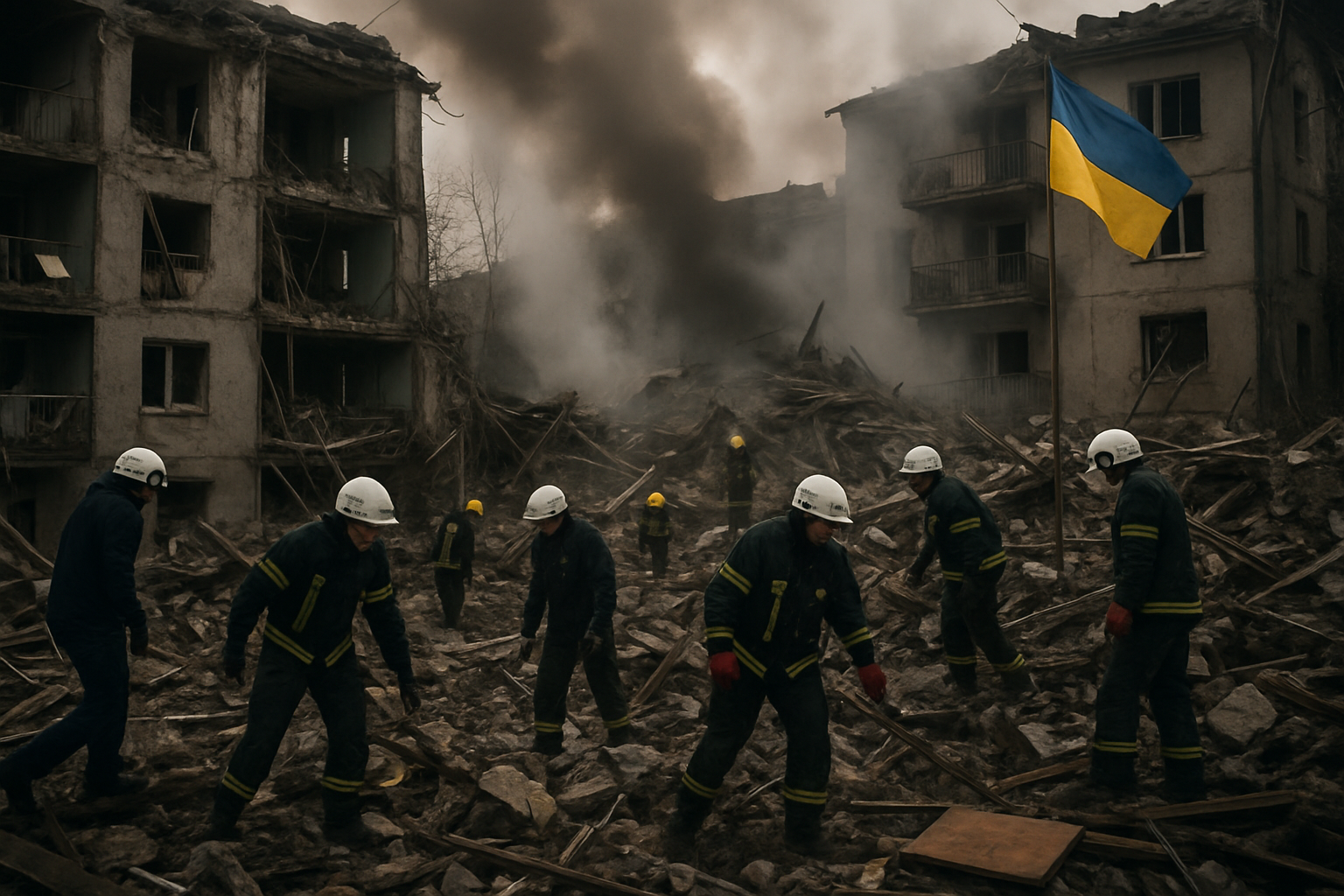
The eastern city of Dnipro suffered the heaviest casualties as Russian forces targeted residential buildings with precision strikes. Rescue teams worked through the night searching for survivors trapped under rubble after a four-story residential building was partially destroyed in the bombardment.
Alexander Hanža, head of the Dnipropetrovsk regional military administration, confirmed that at least three people were killed in Dnipro, with 21 wounded, including children. The toll continued to rise throughout Saturday morning as rescue operations expanded across multiple impact sites.
"The debris removal at the strike site continues. People could still be trapped under the rubble,"
— Volodymyr Zelensky, Ukrainian President
French media outlets reported that the attack resulted in two deaths and 21 injuries in Dnipro specifically, while Denmark's state broadcaster confirmed a total of four deaths across Ukraine. The discrepancy in casualty figures reflects the ongoing nature of rescue operations and the challenges of accurately assessing damage across multiple strike locations.
Systematic Targeting Across Multiple Regions
The coordinated assault extended far beyond Dnipro, with strikes documented across numerous Ukrainian regions. Romania, a NATO member sharing a 650-kilometer border with Ukraine, reported that drone fragments from the attack fell in the southeastern city of Galati, damaging an electricity pole and a household annex. This marked the first time property damage occurred in Romania from Russian drone debris, escalating regional security concerns.
Romanian defense officials were forced to evacuate the area where drone fragments were recovered, citing concerns that the debris could contain explosive charges. The incident underscores the expanding geographic impact of Russian aerial operations and the risks faced by neighboring NATO countries.
Historical Context and Escalation Pattern
This latest assault comes amid a concerning pattern of escalating Russian attacks throughout 2026. According to Planet News analysis of historical data, Russia has systematically increased the scale and intensity of its aerial campaigns, with previous major attacks in April alone involving hundreds of drones and missiles targeting civilian infrastructure.
The attack follows the suspension of trilateral peace talks between Ukraine, Russia, and the United States, which have been indefinitely postponed due to the Iran crisis consuming American diplomatic attention. The February 2026 diplomatic breakthrough that achieved a historic 314-prisoner exchange and restored US-Russia military communications after a four-year suspension remains stalled, with framework preservation dependent on resolution of Middle Eastern conflicts.
Nuclear Governance Crisis Backdrop
The escalating attacks occur against the backdrop of an unprecedented nuclear governance crisis. The New START treaty expired on February 5, 2026, marking the first time in over 50 years that the United States and Russia operate without nuclear constraints. Both nations control approximately 80% of global nuclear weapons, with Russia possessing 4,380 warheads and the US maintaining 3,708.
UN Secretary-General António Guterres has described the current situation as a "grave turning point," warning that nuclear risks are at their "highest levels in decades." The restored military communications between Pentagon and Russian General Staff officials represent the only formal diplomatic channel between the nuclear superpowers.
Ukraine's Strategic Transformation
Despite the intensifying attacks, Ukraine has undergone a remarkable strategic transformation from aid recipient to security provider. Over 200 Ukrainian military specialists have been deployed to the UAE, Qatar, Jordan, Bahrain, and Kuwait, sharing expertise in defending against Iranian Shahed drones – the same weapons systems being used against Ukrainian infrastructure.
This evolution reflects Ukraine's growing role as a global security partner, leveraging battlefield experience gained through nearly four years of conflict. The UK has revealed the existence of four operational maintenance, repair, and overhaul (MRO) facilities in Ukraine servicing Western-supplied equipment, with a fifth facility planned – the first public acknowledgment of such extensive military infrastructure on Ukrainian soil.
Humanitarian Crisis Deepens
The systematic targeting of civilian infrastructure has created a mounting humanitarian crisis. President Zelensky has disclosed that 55,000 Ukrainian soldiers have been officially killed, with "large numbers" missing and international estimates suggesting actual casualties may be two to three times higher.
The energy terrorism strategy has left over 1,170 buildings in Kyiv without adequate heating, while Ukrainian nuclear plants were forced to halt electricity production for the first time in the conflict. Over 17.8 million Ukrainians are currently accessing winter support programs as a result of systematic infrastructure attacks that violate Geneva Convention protections for civilian populations.
"Russia's tactics remain unchanged. The only thing Russia wants is to continue this war,"
— Volodymyr Zelensky, Ukrainian President
International Response and Support
The international community has responded with unprecedented support, including the European Union's historic €90 billion loan package – the largest single-nation assistance ever provided. However, divisions persist within the EU, with Slovakia, Czech Republic, and Hungary refusing to participate in the financing, exposing cracks in unified Western policy.
Germany has provided 35 Patriot missiles, while Sweden and Denmark have committed €246 million for air defense systems. Despite these contributions, the scale and intensity of Russian attacks continue to challenge Ukrainian defensive capabilities, with recent assaults involving over 700 drones in 24-hour periods.
Territorial and Diplomatic Stalemate
The fundamental sticking point in any potential resolution remains unchanged: eastern Ukrainian territories currently under Russian control. Russia demands recognition of these territorial gains and insists that any Putin-Zelensky talks must occur in Moscow, while Ukraine maintains its territorial integrity position and seeks long-term security guarantees.
President Zelensky has categorically rejected territorial concessions, stating that the Ukrainian people would reject "handing over territories" as a "failure story." Russian territorial gains have accelerated dramatically, with 481 square kilometers captured in January 2026 compared to 260 square kilometers in December 2025 – an 85% increase representing the fastest expansion in months.
Global Implications and Future Outlook
The stakes of this conflict extend far beyond Ukraine's borders, encompassing European security architecture redefinition, international law enforcement credibility, and territorial sovereignty principles for the 21st century. Success in eventually resuming diplomatic talks could end Europe's deadliest war since World War II and provide a template for territorial dispute resolution. Failure risks continued escalation with global implications for diplomatic solutions to international conflicts.
The current phase represents a critical test of diplomatic innovation versus military escalation in determining European security trajectory. With peace talks suspended indefinitely due to the Iran crisis, the timeline for resumed negotiations depends on Middle East situation resolution and broader regional stability.
As rescue operations continue in Dnipro and other affected areas, this latest assault serves as a stark reminder of the human cost of international diplomatic failures and the urgent need for innovative approaches to conflict resolution in an increasingly multipolar world.