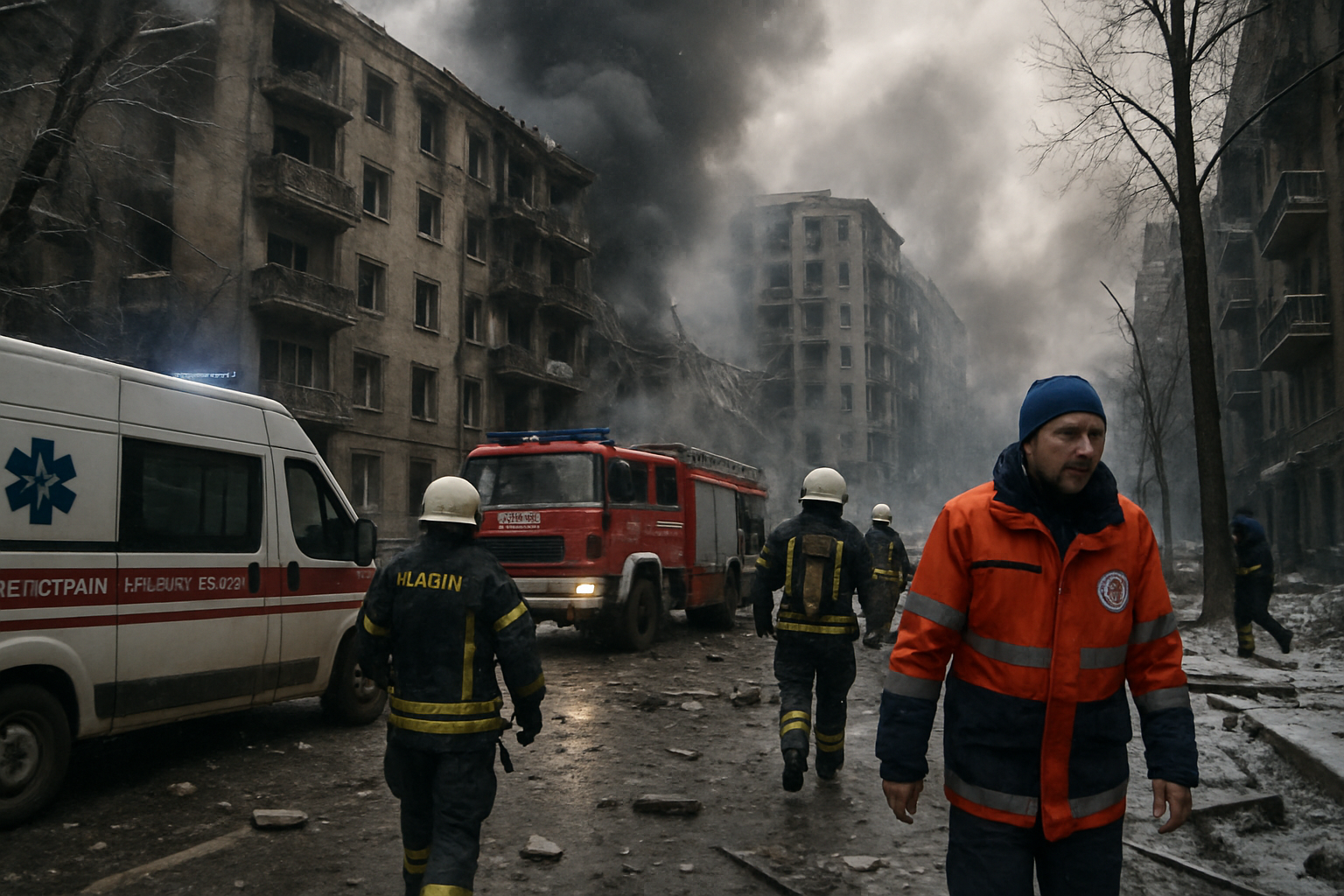
Russian forces launched a massive coordinated assault on Ukrainian cities on Thursday, February 26, 2026, employing a devastating combination of ballistic missiles and attack drones that struck targets across multiple regions, causing casualties and significant damage to civilian infrastructure.
The attacks targeted major urban centers including Kiev, Kharkiv, and Zaporizhzhia, with Ukrainian air defense systems working to intercept the incoming threats. In Kiev, explosions were heard throughout the capital as residents sought shelter, while emergency services mobilized across the affected regions.
Scale of the Assault
According to Ukrainian sources, Russian forces deployed at least 12 strikes on Zaporizhzhia alone, setting a high-rise residential building ablaze and causing damage to shopping centers. The attack resulted in at least seven people wounded in the southeastern city, highlighting the continued targeting of civilian areas.
In Kharkiv, Ukraine's second-largest city, Russian forces conducted what officials described as a "combined aerial attack" using both missiles and drones. The strikes hit multiple districts including Slobidskyi, Shevchenkivskyi, and Saltivskyi, causing casualties and igniting fires across the city. The coordinated nature of the assault demonstrates the continuing intensity of the conflict as it approaches its fourth anniversary.
International Response and Ongoing Conflict
These latest attacks come amid heightened international attention on the Ukraine conflict, which has now entered its fifth year since Russia's initial invasion in February 2022. The systematic targeting of civilian infrastructure continues a pattern that has characterized much of the warfare, with Ukrainian officials documenting extensive damage to residential buildings, energy facilities, and essential services.
"The enemy carried out at least 12 strikes on Zaporizhzhia, setting a high-rise residential building on fire, damaging shopping centers, and injuring at least seven people."
— Ukrainian Officials
The attacks represent a significant escalation in military operations, occurring against the backdrop of previous diplomatic efforts that have yielded limited results. Recent peace initiatives, including trilateral talks between Ukraine, Russia, and the United States in various venues, have achieved some humanitarian breakthroughs such as prisoner exchanges, but fundamental territorial disputes remain unresolved.
Civilian Impact and Humanitarian Crisis
The strikes on residential areas in multiple cities underscore the continuing humanitarian impact of the conflict. In Zaporizhzhia, the targeting of shopping centers and high-rise buildings demonstrates the indiscriminate nature of the attacks, affecting civilian populations far from active combat zones.
Ukrainian emergency services have been responding to fires and rescue operations across the affected cities. The winter timing of these attacks compounds their impact, as damage to heating and power infrastructure during cold weather creates additional hardship for civilian populations.
Strategic Context
These attacks occur as the conflict has shown signs of territorial acceleration, with Russian forces having captured significant ground in recent months. Military analysts note that such large-scale combined operations require substantial planning and resources, indicating a coordinated strategic approach rather than opportunistic strikes.
The use of both ballistic missiles and drones in coordinated waves represents an evolution in tactics designed to overwhelm air defense systems. This multi-vector approach has become increasingly common as both sides adapt their strategies to changing battlefield conditions.
Looking Forward
As rescue operations continue across the affected Ukrainian cities, these attacks highlight the ongoing volatility of the conflict despite periodic diplomatic initiatives. The systematic nature of the strikes on civilian infrastructure raises continued concerns about compliance with international humanitarian law.
The international community continues to monitor the situation closely, with NATO allies and EU partners maintaining support for Ukraine while diplomatic efforts to find a sustainable resolution face significant challenges. The targeting of civilian areas and essential infrastructure remains a central concern for international observers and humanitarian organizations operating in the region.
Emergency services in all affected cities continue their response efforts, with local authorities coordinating shelter and medical assistance for those impacted by the attacks. The resilience of Ukrainian civilian infrastructure and emergency response capabilities remains critical as the conflict continues to affect millions across the country.