Russia has launched one of its largest coordinated military assaults of 2026, targeting multiple Ukrainian cities with missiles and drones while diplomatic efforts to end the conflict remain indefinitely postponed due to the Middle East crisis involving Iran.
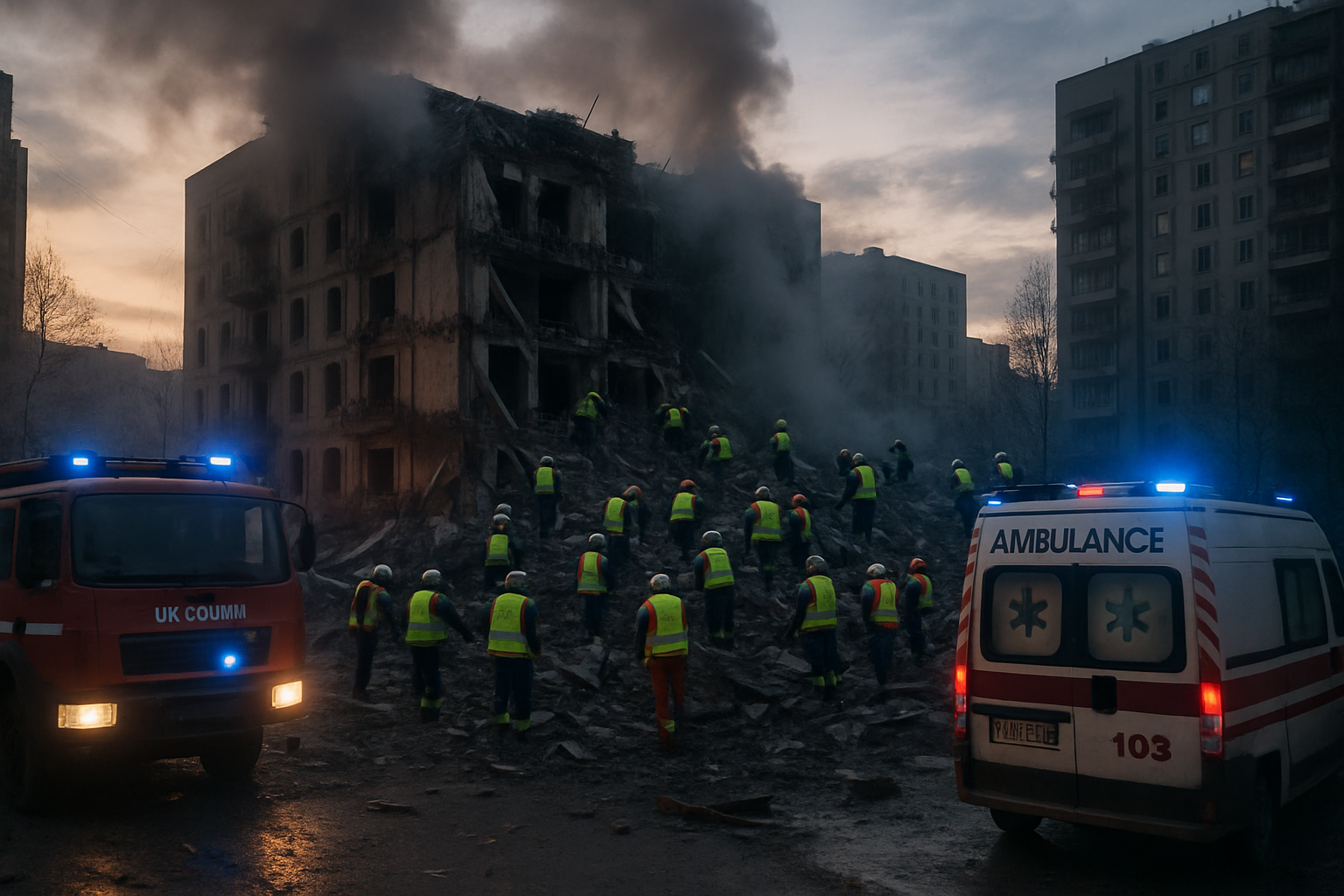
According to multiple international sources, Russian forces conducted what Ukrainian officials described as a "massive attack" on the Kyiv region during the overnight hours of March 13-14, killing at least four people and wounding ten others. The assault targeted residential areas, warehouses, and vehicles across the region, marking a significant escalation in civilian targeting.
Devastating Impact Across Multiple Regions
The coordinated Russian offensive hit numerous Ukrainian positions, with the Kyiv region bearing the brunt of the assault. Ukrainian authorities reported that guided aerial bombs and missiles struck civilian infrastructure, including a student dormitory, warehouses, and apartment buildings.
Mikola Kalashnyk, head of the Kyiv regional military administration, confirmed that "the enemy is launching a massive attack on the Kyiv region using drones and missiles." Emergency services worked through the night to rescue survivors and assess the full scope of the damage.
In the city of Brovary within the Kyiv region, Russian missile strikes killed one person and injured eight others. The attack represents part of a broader pattern of systematic targeting of civilian areas that international observers say violates the Geneva Conventions.
Peace Talks Derailed by Iran Crisis
The military escalation comes as diplomatic efforts to resolve the conflict have been indefinitely suspended. President Volodymyr Zelensky revealed that trilateral peace negotiations between Ukraine, Russia, and the United States have been postponed due to the evolving situation involving Iran in the Middle East.
"Due to the situation around Iran, there are still no necessary signals for a trilateral meeting. We will resume talks as soon as the security situation allows."
— President Volodymyr Zelensky
The postponement represents a significant setback to diplomatic momentum that had achieved historic breakthroughs earlier this year, including a 314-prisoner exchange and the restoration of US-Russia military communications after a four-year suspension.
Strategic Military Developments
The latest attacks are part of a broader pattern of Russian military acceleration. Intelligence reports indicate Russian territorial gains of 481 square kilometers in January 2026 compared to 260 square kilometers in December 2025, representing an 85% increase in the pace of territorial acquisition.
Ukrainian sources report that Russia has launched approximately 1,750 strike drones, 1,530 guided aerial bombs, and 39 missiles against Ukrainian targets over the past week alone. The systematic nature of these attacks has prompted international concerns about deliberate civilian targeting.

The conflict has entered what many observers consider its most critical phase since the full-scale invasion began in February 2022. Official Ukrainian casualty figures disclosed by President Zelensky indicate 55,000 soldiers killed, with a "large number" missing in action, though international estimates suggest actual casualties may be two to three times higher.
International Response and Support
The European Union has maintained unprecedented support for Ukraine, approving a historic €90 billion loan package described as the largest single-nation assistance effort in EU history. However, Slovakia, Czech Republic, and Hungary have refused to participate, exposing significant divisions within the European bloc.
Additional international military support continues to flow to Ukraine, including Sweden-Denmark providing €246 million in air defense systems and Germany contributing 35 Patriot missiles. Over 17.8 million Ukrainians are currently accessing winter support programs due to systematic attacks on energy infrastructure.
Nuclear Security Concerns
The conflict unfolds against the backdrop of an unprecedented nuclear governance crisis. The New START treaty between the United States and Russia expired on February 5, 2026, marking the first time in over 50 years that the two nuclear superpowers lack bilateral constraints on their arsenals. Together, they control approximately 80% of global nuclear weapons.
UN Secretary-General António Guterres has described the current situation as a "grave turning point," with nuclear risks at their "highest level in decades."
Ongoing Humanitarian Crisis
Russian attacks have systematically targeted civilian infrastructure throughout the winter months, leaving more than 1,170 buildings in Kyiv without heating during sub-zero temperatures. This "winter weapon" strategy has been condemned by international humanitarian organizations as a violation of international law.
The pattern of targeting civilian areas has been particularly evident in recent attacks. The city of Bohodukhiv suffered repeated strikes that killed civilians including young children, demonstrating what Ukrainian officials describe as systematic family targeting.
Uncertain Diplomatic Future
While peace talks remain suspended, the diplomatic framework established through earlier negotiations remains intact. The restoration of US-Russia military communications and prisoner exchange mechanisms can potentially be reactivated when conditions permit.
The Trump administration had previously established a June 2026 deadline for comprehensive peace talks with a potential Washington venue, but the Iran crisis has created significant uncertainty about this timeline.
"The framework for peace remains, but current regional conflicts are preventing the high-level engagement necessary for territorial dispute resolution."
— Diplomatic Source
Ukraine has begun pivoting to serve as a security provider in the Middle East, deploying military experts to UAE, Qatar, Jordan, Bahrain, and Kuwait to help combat Iranian drone attacks—the same weapons systems being used against Ukrainian infrastructure.
Looking Ahead
The suspension of peace talks due to the Iran crisis demonstrates the interconnected nature of global security challenges in an increasingly multipolar world. As military operations continue to intensify, the international community faces the challenge of managing multiple simultaneous crises while preserving momentum for Europe's most significant security challenge since the Cold War.
The stakes extend far beyond Ukraine and Russia, affecting European security architecture, international law enforcement, and territorial sovereignty principles that will shape power competition for decades to come. Success in eventual resumed negotiations could provide a template for 21st-century conflict resolution, while continued military escalation may undermine diplomatic credibility globally.
As the conflict approaches its fifth year, the coming months will be decisive in determining whether innovative diplomatic solutions can overcome entrenched military positions, or if Europe's deadliest war since World War II will continue to reshape the international order through force rather than negotiation.