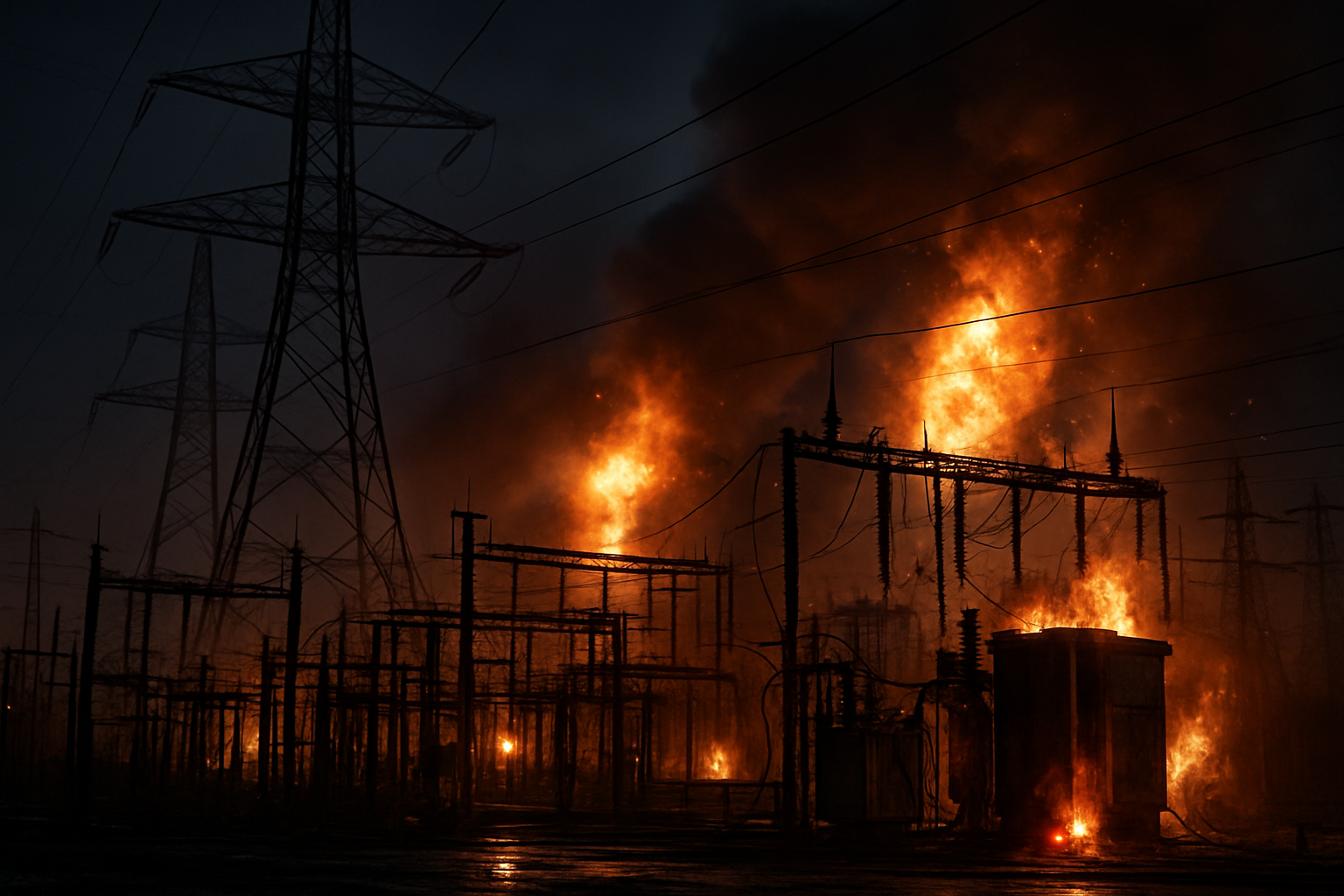
Russia conducted a devastating large-scale missile and drone assault on Ukrainian energy infrastructure Sunday, deploying approximately 300 drones and 50 missiles in what officials describe as one of the most comprehensive attacks of 2026, just days before the fourth anniversary of Moscow's full-scale invasion.
The coordinated barrage targeted critical energy facilities across multiple Ukrainian regions, with Ukrainian air defenses managing to intercept 33 missiles and 274 drones by 10:00 AM local time. However, the scale of the attack overwhelmed defensive capabilities in several areas, causing significant damage to power generation and distribution networks.
Strategic Targeting of Energy Infrastructure
The assault primarily focused on Ukraine's energy backbone, with Mykolaiv region suffering particularly severe damage. Shahed-type drones struck energy infrastructure facilities, leaving approximately 16,000 consumers without power in freezing winter conditions. The systematic targeting of civilian energy infrastructure represents a continuation of Russia's "winter weapon" strategy, designed to maximize humanitarian pressure during extreme cold.
Ukrainian Energy Minister Herman Halushchenko described the situation in several regions as "critical," with emergency power cuts implemented to prevent cascading failures across the interconnected grid. The attacks demonstrate Russia's sophisticated understanding of Ukraine's energy network vulnerabilities, targeting not just individual facilities but the entire distribution system to maximize civilian impact.
Civilian Casualties and Humanitarian Crisis
In Kyiv Oblast, rescue operations in Putrivka village became a tragic symbol of the conflict's human toll. Emergency teams successfully extracted eight people, including a child, from rubble caused by the missile strikes. However, one victim died during transport to medical facilities, while five others required hospitalization for their injuries.
"We managed to save several lives, but the human cost of these systematic attacks on civilian areas continues to mount,"
— Kyiv Oblast Emergency Services Spokesperson
The broader humanitarian impact extends across five districts in the Kyiv region, where one woman was injured and extensive property damage was recorded. This represents part of a documented pattern where over 1,170 Kyiv buildings remain without heating during temperatures reaching minus-30°C, forcing activation of emergency warming centers across affected regions.
Separate Terrorist Attack in Lviv
Adding to the day's tragic events, a separate terrorist incident unfolded in the western city of Lviv, distinct from the coordinated missile and drone campaign. Twin explosions killed a police officer and wounded 24 others during what authorities describe as a "terrorist attack" targeting law enforcement responding to an emergency call about a store break-in near the city center.
The explosions occurred sequentially - first after police arrived at the scene, followed by a second blast when additional emergency crews responded. A 23-year-old policewoman was killed, while patrol cars and civilian vehicles suffered damage. Ukrainian authorities have detained a female suspect believed to be acting on behalf of Russian intelligence services, according to preliminary investigations.
Military and Diplomatic Context
The timing of Sunday's attacks carries particular significance, occurring just two days before the February 24 anniversary of Russia's 2022 invasion and during ongoing diplomatic efforts. Recent weeks have seen unprecedented developments, including the restoration of U.S.-Russia military communications after a four-year suspension and a historic prisoner exchange of 314 individuals - the first such swap in five months.
However, these diplomatic breakthroughs occur against a backdrop of accelerating military operations. Russian territorial gains reached 481 square kilometers in January 2026, compared to 260 square kilometers in December 2025, representing a dramatic acceleration. Over 10,000 Russian drones and bombs were launched in January alone, with energy infrastructure remaining a primary target.
President Volodymyr Zelensky, who previously disclosed that 55,000 Ukrainian soldiers have been officially confirmed killed, with a "large number" missing in action, condemned the latest attacks while Moscow continues what Ukrainian officials term "energy terrorism" - the systematic targeting of civilian infrastructure during life-threatening winter conditions.
International Response and Support
The international community has responded with unprecedented support packages, though divisions remain among European allies. The European Union approved a historic €90 billion loan package for Ukraine - the largest financial assistance ever provided to a single nation - though Slovakia, Czech Republic, and Hungary refused participation, highlighting persistent divisions within the bloc.
Sweden and Denmark have committed €246 million for advanced air defense systems, including Tridon Mk2 technology, while Germany has provided 35 Patriot missiles to bolster Ukraine's defensive capabilities. The World Bank allocated $40 million specifically for energy restoration efforts, recognizing the critical nature of infrastructure damage.
Poland has maintained heightened alert status, deploying fighter aircraft along its 530-kilometer border with Ukraine as precautionary measures during the intensity of attacks on western Ukrainian regions. Over 17.8 million Ukrainians are currently accessing winter support programs, demonstrating the massive humanitarian scope of the crisis.
Nuclear Security Implications
The energy infrastructure attacks have raised serious nuclear security concerns, as previous strikes forced Ukrainian nuclear power plants to halt electricity production for the first time since the conflict began. International Atomic Energy Agency (IAEA) Director General Rafael Grossi has confirmed the unprecedented nature of these shutdowns, which affect the facilities' ability to maintain critical safety systems.
Ukrainian Foreign Minister Dmytro Kuleba has warned that attacks on energy infrastructure connected to nuclear facilities put "all of Europe at risk of a nuclear incident," highlighting regional security implications that extend far beyond Ukraine's borders. The systematic targeting of electrical distribution networks supporting nuclear plants represents a dangerous escalation in infrastructure warfare.
Systematic Violations of International Law
The pattern of systematic civilian infrastructure targeting during extreme winter conditions represents clear violations of the Geneva Conventions, which protect civilian facilities essential for the survival of the population. The deliberate timing of these attacks during sub-zero temperatures creates life-threatening conditions for millions of civilians, particularly vulnerable populations including children, elderly, and those with medical conditions requiring electrical equipment.
International humanitarian law experts note that the systematic nature of these attacks - including the documented targeting of repair personnel who work to restore damaged infrastructure - demonstrates a calculated strategy to maximize civilian suffering. Previous incidents include the killing of 15 DTEK energy workers while they attempted to restore power systems, showing the deliberate expansion of targeting beyond military objectives.
Long-term Reconstruction Challenges
The systematic destruction of Ukraine's energy infrastructure requires comprehensive rebuilding that will take months or years to fully complete, even after active hostilities cease. The attacks target not just generation facilities but the complex network of transmission lines, substations, and distribution systems that require specialized equipment and technical expertise to restore.
International energy experts emphasize that Ukraine's energy security has become a critical component of European stability, with ongoing reconstruction efforts requiring massive international coordination and funding. The development of underground electrical infrastructure, costing tens of millions per site, represents one adaptation strategy for long-term resilience against continued attacks.
Diplomatic Paradox and Future Outlook
The continuation of large-scale infrastructure attacks occurs amid the most significant diplomatic developments since the conflict began. Recent Geneva peace talks in February 2026, building on the Abu Dhabi breakthrough, achieved concrete progress on ceasefire monitoring mechanisms, though fundamental territorial disputes remain unresolved.
The Trump administration has established a June 2026 deadline for comprehensive peace negotiations, with potential Washington venue talks that could involve presidential-level engagement. However, the acceleration of military operations and continued civilian targeting raise questions about genuine commitment to diplomatic solutions versus the use of humanitarian pressure as a negotiating tactic.
As Ukraine approaches the fourth anniversary of Russia's full-scale invasion, the systematic targeting of energy infrastructure during winter conditions represents both a military strategy and a test of international resolve to protect civilian populations during armed conflict. The effectiveness of international support mechanisms and the resilience of Ukrainian society will continue to determine whether diplomatic innovation can overcome military escalation in what has become Europe's deadliest conflict since World War II.