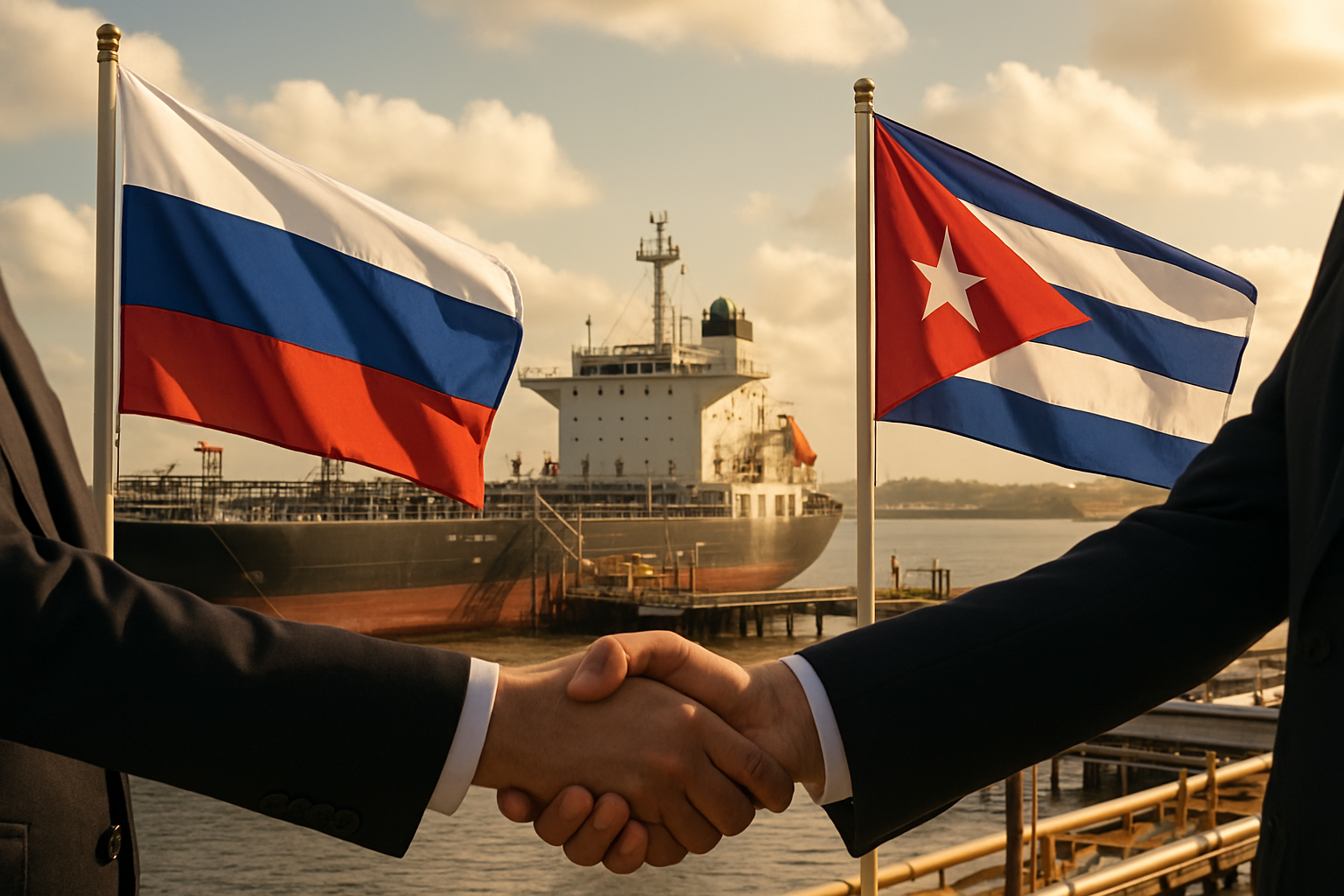
Russia announced plans to supply crude oil and petroleum products to Cuba as humanitarian aid, defying U.S. sanctions pressure and offering a potential lifeline to the Caribbean island nation facing its worst energy crisis since the 1990s.
The Russian Embassy in Cuba confirmed the oil supply commitment on February 12, 2026, stating that "as far as we know, Russia is expected to supply oil and petroleum products to Cuba as humanitarian aid in the near future." The announcement comes as Cuba faces complete aviation isolation and severe energy shortages that have brought the island to the brink of economic collapse.
Moscow's intervention represents a direct challenge to the Trump administration's "maximum pressure" campaign against Cuba, which has successfully severed the island's primary oil supply lines through threatening 25% tariffs on any country that ships petroleum to the communist nation.
Cuba's Energy Crisis Reaches Breaking Point
The Russian oil promise comes as Cuba endures its most severe energy crisis in over three decades. The island's oil reserves have dwindled to just 15-20 days of supply after Venezuelan crude shipments completely halted and Mexico suspended deliveries to avoid U.S. tariff threats.
The crisis has created unprecedented hardships across the island of 11 million inhabitants. Over 51% of the population faces scheduled blackouts during peak evening hours, according to state electricity company Unión Eléctrica. The government has implemented emergency measures including four-day work weeks for public employees, semi-virtual university classes, and strict fuel rationing.
Most dramatically, Cuba achieved complete aviation isolation in February 2026 when all nine major international airports confirmed zero Jet A-1 fuel availability through March 11. Air Canada, WestJet, and Air Transat suspended all flights, stranding approximately 21,000 Canadian tourists and effectively cutting Cuba off from international air travel for the first time since the 1962 missile crisis.
Trump's Maximum Pressure Strategy
The Cuban energy emergency stems directly from President Trump's January 30, 2026 executive order threatening 25% tariffs on countries supplying oil to Cuba. The policy forced both Venezuela and Mexico—Cuba's primary energy suppliers—to halt shipments despite humanitarian concerns.
Mexican President Claudia Sheinbaum has maintained humanitarian aid shipments, deploying naval vessels with 814 tons of emergency supplies, while suspending oil deliveries to avoid economic retaliation from Washington. "Mexico won't allow its territory to be used for pressuring other nations," Sheinbaum declared, but ultimately bowed to U.S. economic pressure.
Venezuelan crude shipments completely stopped following the political transition that removed Nicolás Maduro from power in January 2026. The new interim Venezuelan government, led by Acting President Delcy Rodríguez, has prioritized rebuilding relations with Washington over maintaining energy cooperation with Cuba.
Tourism Industry in Freefall
Cuba's tourism sector, a critical source of foreign currency, has collapsed under the energy crisis. Major Spanish hotel chains including Meliá and Iberostar have closed facilities in Varadero and along the northern coast due to transportation difficulties and power shortages affecting operations.
Canada issued a "high degree of caution" travel advisory for Cuba, prompting thousands of trip cancellations and effectively ending the crucial winter tourism season. Even Cuban bishops canceled a planned Vatican meeting with Pope Leo XIV, citing concerns about return travel amid the aviation fuel shortage.
The crisis has severed Cuban-American family connections, eliminated medical evacuation capacity, and disrupted essential supply chains for the island's 11 million residents. Healthcare systems face particular strain with hospitals suspending non-emergency surgeries and struggling with staff transportation issues.
Russia's Strategic Intervention
Russia's oil commitment represents more than humanitarian assistance—it's a strategic challenge to U.S. hemispheric dominance. Moscow has condemned what it calls the "economic strangulation" of Cuba, characterizing the crisis as a "deliberately engineered humanitarian emergency."
The Russian embassy provided no timeline or specific volumes for the oil shipments, but the commitment alone signals Moscow's willingness to risk potential U.S. retaliation to support its Caribbean ally. The move follows Russia's broader pattern of confronting U.S. pressure globally, from Ukraine to Iran.
European media have characterized the Cuban situation as exceeding the severity of the 1990s "Special Period" because it results from deliberate U.S. policy rather than external economic collapse. Unlike that earlier crisis, Cuba now faces complete connectivity severance from the international community.
Historical Context and Implications
The current crisis represents the most comprehensive isolation Cuba has faced since the 1962 missile crisis. Cuba's domestic oil production has collapsed from 3 million barrels daily at its peak to just 700,000 barrels, creating heavy dependence on imports that the U.S. strategy has systematically severed.
The energy crisis tests the limits of economic coercion as a diplomatic tool, with humanitarian implications affecting entire civilian populations. Regional powers face difficult choices between maintaining U.S. economic relationships and providing humanitarian assistance to Cuba.
Russia's intervention, if implemented, would demonstrate that even maximum U.S. economic pressure has limits when other major powers are willing to accept costs to maintain strategic partnerships. The situation also highlights the vulnerability of small island states to external economic coercion in an interconnected global economy.
International Response and Regional Implications
The Cuban crisis has drawn international attention to the effectiveness and morality of comprehensive economic isolation as a policy tool. While the Trump administration views the energy squeeze as successful pressure that will force Cuba to "seek negotiations" and "return to being free," critics argue it represents collective punishment of civilian populations.
The crisis affects broader Caribbean aviation networks and creates precedents for modern economic siege warfare. Airlines have been forced to implement expensive contingency routing through Mexico and the Dominican Republic, disrupting regional connectivity and increasing operational costs throughout the Caribbean basin.
For Russia, supporting Cuba despite U.S. pressure demonstrates Moscow's commitment to allies and challenges American economic dominance in the Western Hemisphere. If Russian oil shipments materialize, they would break the isolation strategy's effectiveness and potentially encourage other countries to resist U.S. economic pressure.
Coming Weeks Critical
The next phase of the Cuban crisis will determine whether innovative solutions can emerge to address the humanitarian emergency or whether the island faces extended isolation. Russia's oil commitment, if realized, could provide crucial breathing room for Cuban authorities while testing U.S. willingness to extend sanctions to Russian petroleum suppliers.
The crisis also raises broader questions about the sustainability of maximum pressure campaigns and their humanitarian impacts. As Cuba enters its second month of aviation isolation and energy emergency, the international community faces a test of how to respond to economic coercion that affects entire civilian populations.
The outcome will influence not only Cuba's immediate survival but also establish precedents for economic warfare capabilities in the 21st century, with implications for territorial sovereignty and humanitarian protection principles worldwide.