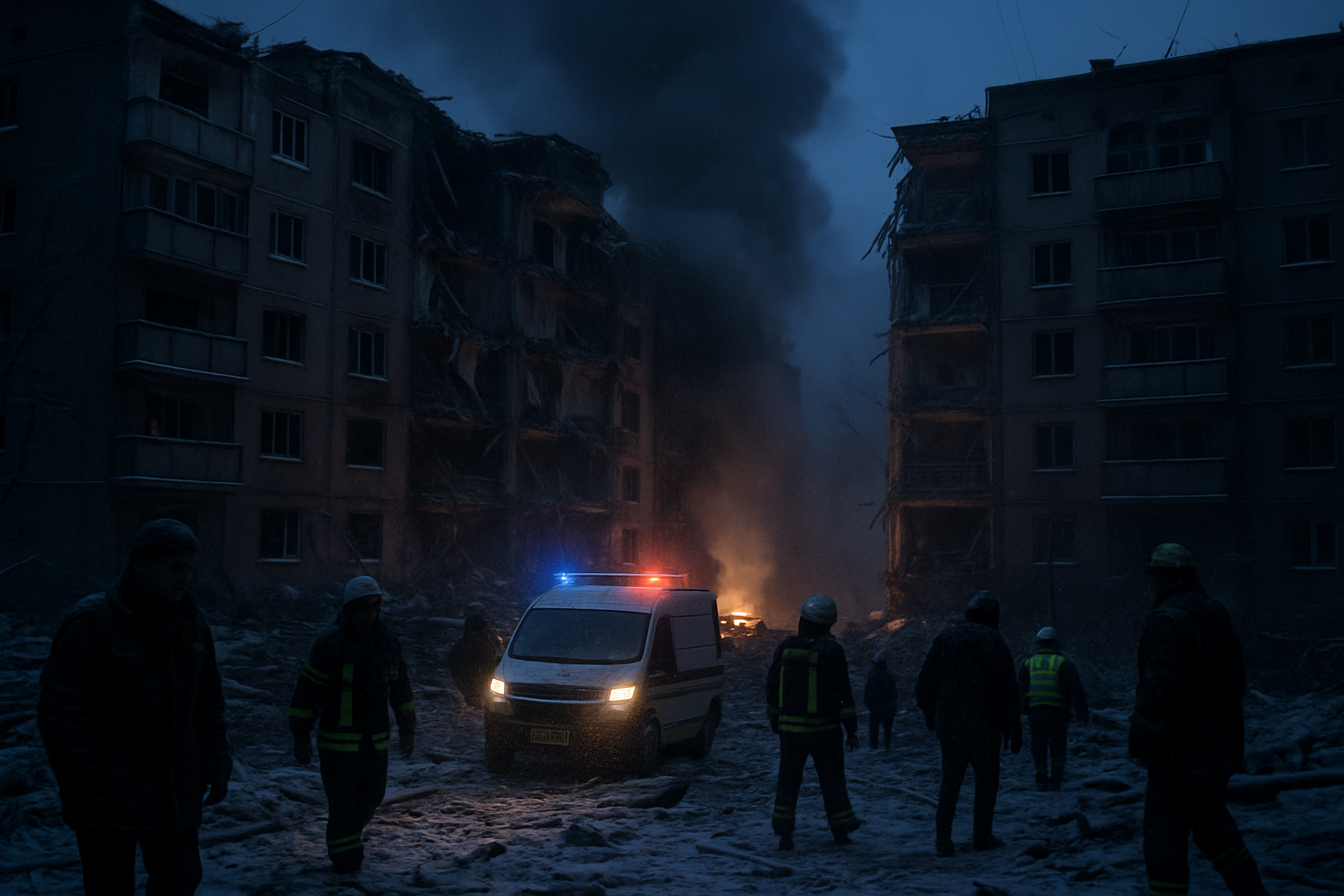
Russia resumed large-scale attacks on Ukrainian cities early Tuesday morning, targeting energy infrastructure and residential areas across multiple regions as temperatures plummeted to minus-20 degrees Celsius, ending a brief respite that had been attributed to U.S. diplomatic pressure.
The coordinated strikes began at 12:24 AM local time when air raid sirens woke residents of Kyiv, followed by explosions that continued throughout the early morning hours. Ukrainian officials confirmed that Russian forces deployed a combination of missiles and drones in what appears to be one of the most significant attacks in recent weeks.
Kyiv Under Fire
Kyiv's military administration head Timur Tkachenko reported that multiple residential buildings were damaged across the Darnytskyi, Dniprovskyi, and Shevchenkivskyi districts. Mayor Vitali Klitschko confirmed that two civilians were wounded in the attacks, which also damaged non-residential facilities, a gas station, and numerous vehicles.
The attacks occurred during what meteorologists described as the coldest night of the winter, with temperatures reaching minus-20 degrees Celsius. Residents were forced to seek shelter in metro stations, creating scenes reminiscent of the war's early months when underground stations served as bomb shelters.
"The thermometer showed -20°C when at 12:24 AM the air raid sirens took the inhabitants of Kyiv out of doubt about whether the energy truce announced by Donald Trump five days earlier was still in place."
— Spanish media report on the timing of attacks
Kharkiv Faces Extended Assault
The northeastern city of Kharkiv endured a particularly intense three-hour bombardment that specifically targeted energy infrastructure. Local officials confirmed that the attacks forced authorities to drain water from heating systems in 820 buildings to prevent the network from freezing, leaving hundreds of homes without heating during extreme weather conditions.
Russian forces employed both unmanned aerial vehicles and missiles in the Kharkiv assault, with casualties reported though specific numbers remained unclear as emergency services continued their response operations.
International Response and Military Preparations
Poland responded to the attacks by preemptively deploying fighter jets, highlighting the regional security implications of the renewed Russian offensive. Polish authorities confirmed that military aircraft were scrambled as a defensive measure in response to the Ukrainian attacks.
The timing of the strikes has drawn particular international attention, coming just three days before scheduled trilateral peace talks between Ukraine, Russia, and the United States in Abu Dhabi on February 5-6. These negotiations represent the second round of diplomatic efforts aimed at ending the nearly four-year conflict.
End of Energy Infrastructure Truce
The attacks marked the end of what had been described as a temporary pause in strikes on Ukraine's energy sector. The Kremlin had previously announced that it had agreed to a request from U.S. President Donald Trump to refrain from attacking Ukrainian energy infrastructure and the capital until February 1, ahead of the planned Abu Dhabi talks.
French diplomatic sources confirmed that Russia had resumed attacks on Kyiv after several days of respite that Moscow attributed to American requests. The breach of this informal arrangement raises questions about the prospects for the upcoming negotiations.
Broader Pattern of Attacks
Beyond Kyiv and Kharkiv, Russian forces struck multiple other Ukrainian regions. In the Sumy region, drone attacks damaged an educational facility, private houses, and infrastructure in Konotop. In Zaporizhzhia region, a Russian drone strike destroyed a house in Veselyi Hai, killing one woman and wounding another.
These attacks continue a pattern of what Ukrainian officials describe as "logistics terror" - targeting transportation and civilian infrastructure rather than purely military objectives. Recent intelligence reports indicate that over 10,000 Russian drones and bombs were launched in January 2026 alone.
Humanitarian Crisis Deepens
The attacks compound an already severe humanitarian situation as Ukraine faces some of the harshest winter weather in years. Temperatures in some regions, including Sumy and Chernihiv, are expected to drop to minus-30 degrees Celsius, making the loss of heating and electricity potentially life-threatening for civilians.
Emergency services across affected regions deployed medical teams and established warming centers for residents displaced by the attacks. The combination of military strikes and extreme weather creates what aid organizations describe as a "double crisis" for Ukrainian civilians.
Impact on Peace Negotiations
The resumption of large-scale attacks just days before the planned Abu Dhabi talks raises significant concerns about the prospects for meaningful diplomatic progress. Ukrainian President Volodymyr Zelensky had previously expressed "cautious optimism" about achieving "lasting and dignified peace" through the trilateral format.
U.S. Special Envoy Steve Witkoff is expected to participate in the Abu Dhabi negotiations, which follow preliminary discussions between U.S. and Russian officials in Miami on January 31. The talks represent the most serious diplomatic effort to end the conflict since Russia's invasion began in February 2022.
Regional Security Implications
The attacks have prompted immediate security responses from neighboring NATO countries. Polish authorities' decision to deploy fighter jets demonstrates the wider security implications of escalated fighting, particularly given the proximity of the conflict to NATO's eastern border.
The international community continues to mobilize support for Ukraine's energy infrastructure, with the World Bank recently allocating $40 million for restoration efforts. However, the repeated targeting of civilian infrastructure has led to calls for enhanced air defense systems and international accountability measures.
Looking Ahead
As rescue operations continue and damage assessments are conducted, the renewed attacks underscore the fragility of any informal agreements in the ongoing conflict. The combination of extreme weather conditions and infrastructure damage creates immediate humanitarian concerns while potentially complicating the diplomatic environment ahead of next week's peace talks.
The international community now faces questions about how to respond to what appears to be a deliberate escalation designed to influence upcoming negotiations. The success or failure of the Abu Dhabi talks may depend significantly on how the current military situation develops in the coming days.