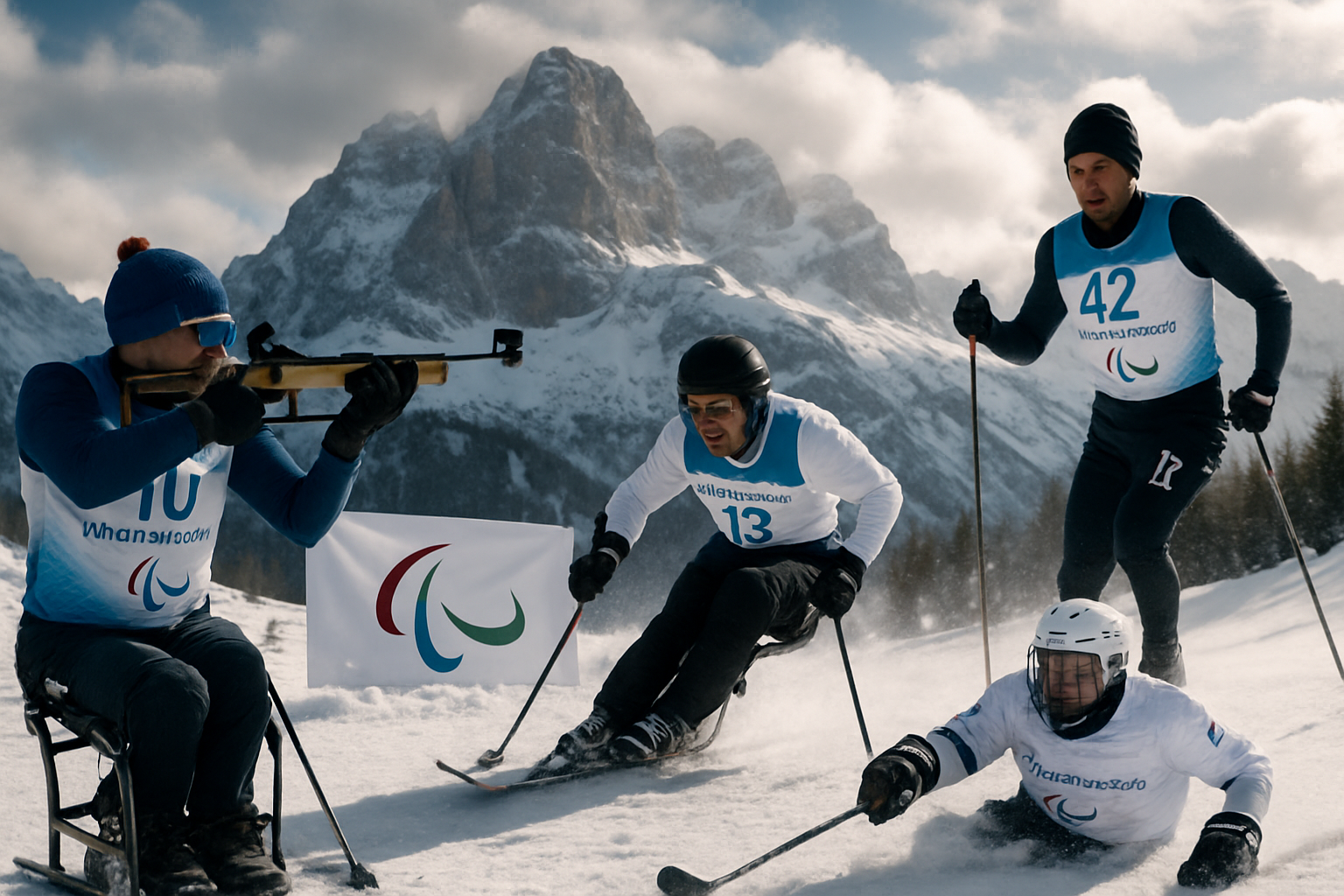
Russia achieved its first Winter Paralympic medal victories in over a decade at the Milano-Cortina 2026 Paralympics, with bronze medals in alpine skiing events marking a politically charged return to the international Paralympic stage after years of exclusion.
Historic Medal Breakthrough
On Saturday, March 7, Russian alpine skiers Varvara Voronchikhina, 24, and Aleksei Bugaev, 29, captured bronze medals in their respective downhill standing events, ending Russia's 12-year Paralympic medal drought that stretched back to the 2014 Sochi Winter Games. The victories marked the first time since 2016 that the Russian flag was raised at a Paralympic podium ceremony.
Voronchikhina's achievement in the women's downhill standing category was particularly significant, as it represented Russia's return to Paralympic alpine skiing excellence. The 24-year-old athlete's performance demonstrated the resilience of Russian Paralympic sport despite years of international sanctions and restrictions.
"This is a historic moment for Russian Paralympic sport. These athletes have shown incredible determination to compete at the highest level."
— Russian Paralympic Committee Representative
Controversial International Decision
The medal ceremonies took place against a backdrop of intense international controversy. In September 2025, the International Paralympic Committee (IPC) voted to lift sanctions that had prevented Russian and Belarusian athletes from competing under their national flags since 2022. The decision allowed six Russian athletes and four Belarusian competitors to participate in Milano-Cortina 2026 under their national symbols for the first time in years.
This reversal of the neutral athlete status sparked widespread criticism from multiple countries. Ukraine condemned the decision as "dirty" and "scandalous," with President Volodymyr Zelensky personally criticizing the IPC's stance. Several European nations, including Estonia, Germany, and Lithuania, boycotted the opening ceremony in protest.
Limited Support at Victory Ceremony
The medal ceremonies reflected the ongoing tensions surrounding Russian participation. A small group of Russian supporters, consisting primarily of delegation members and journalists, waved a single Russian flag during the victory celebrations. The muted support contrasted sharply with the enthusiastic crowds that Ukrainian athletes received throughout the Games.
The controversy extended beyond the podium ceremonies. Lithuanian broadcaster LRT refused to cover the opening ceremony, while Estonian officials demanded that Ukrainian symbols be given equal prominence if Russian flags were allowed. The diplomatic tensions highlighted the complex intersection of sport and geopolitics in international competition.
Paralympic Competition Excellence
Despite the political controversy, the Milano-Cortina 2026 Paralympics maintained high competitive standards across all disciplines. The Games, running from March 6-15, utilized the same revolutionary dual-city hosting model that proved successful during the Winter Olympics, spanning over 400 kilometers across northern Italy's Alpine venues.
Other notable performances included strong showings from Estonia's wheelchair curling team of Kätlin Riidebach and Ain Villau, who secured multiple victories throughout the competition. Latvia's Paralympic team also demonstrated competitive excellence in various events, contributing to the global expansion of Paralympic winter sports.
Historical Context and Significance
Russia's return to Paralympic medal success carries particular historical weight. The nation had been a dominant force in Paralympic winter sports before the implementation of sanctions related to state-sponsored doping violations and, more recently, geopolitical actions. The 12-year gap between Paralympic medals represented one of the longest droughts in Russian Paralympic history.
The Milano-Cortina Paralympics marked the first major international multi-sport event where Russian athletes competed under their national flag since the comprehensive sanctions were implemented. The decision to allow this participation remains one of the most controversial in Paralympic history.
International Reaction and Future Implications
The international response to Russia's medal success was mixed, reflecting broader geopolitical tensions. While some celebrated the return of elite athletic competition, others viewed the victories as premature given ongoing international concerns about Russian participation in global sport.
Estonian Member of European Parliament Urmas Paet called for continued scrutiny of international sporting federation decisions regarding athlete participation during active conflicts. The controversy highlighted ongoing debates about the role of sporting neutrality during humanitarian crises.
Paralympic Values Under Scrutiny
The Milano-Cortina Paralympics showcased both the highest levels of adaptive athletic achievement and the complex challenges facing international sport governance. Paralympic values of determination, inspiration, courage, and equality were demonstrated by athletes from dozens of nations, even as political controversies threatened to overshadow their achievements.
Norway's Jostein Stordahl, competing in his 10th Paralympic Games at age 59 after a train accident at 17, exemplified the Paralympic spirit that transcends political boundaries. His nearly 40-year Paralympic career represents the enduring power of adaptive sport to inspire global audiences.
Looking Forward
The Russian medal victories at Milano-Cortina 2026 will likely influence future discussions about athlete participation in international competition during periods of geopolitical tension. Sports law experts note that the Paralympic movement faces ongoing challenges in balancing competitive inclusion with moral and political considerations.
The success of Russian athletes, combined with continued international criticism, establishes important precedents for how sporting federations navigate complex geopolitical situations while attempting to maintain the integrity and accessibility of Paralympic competition.
As the Milano-Cortina Paralympics concluded, the medals won by Voronchikhina and Bugaev represented both athletic achievement and a controversial chapter in Paralympic history that will likely influence international sporting policy for years to come.