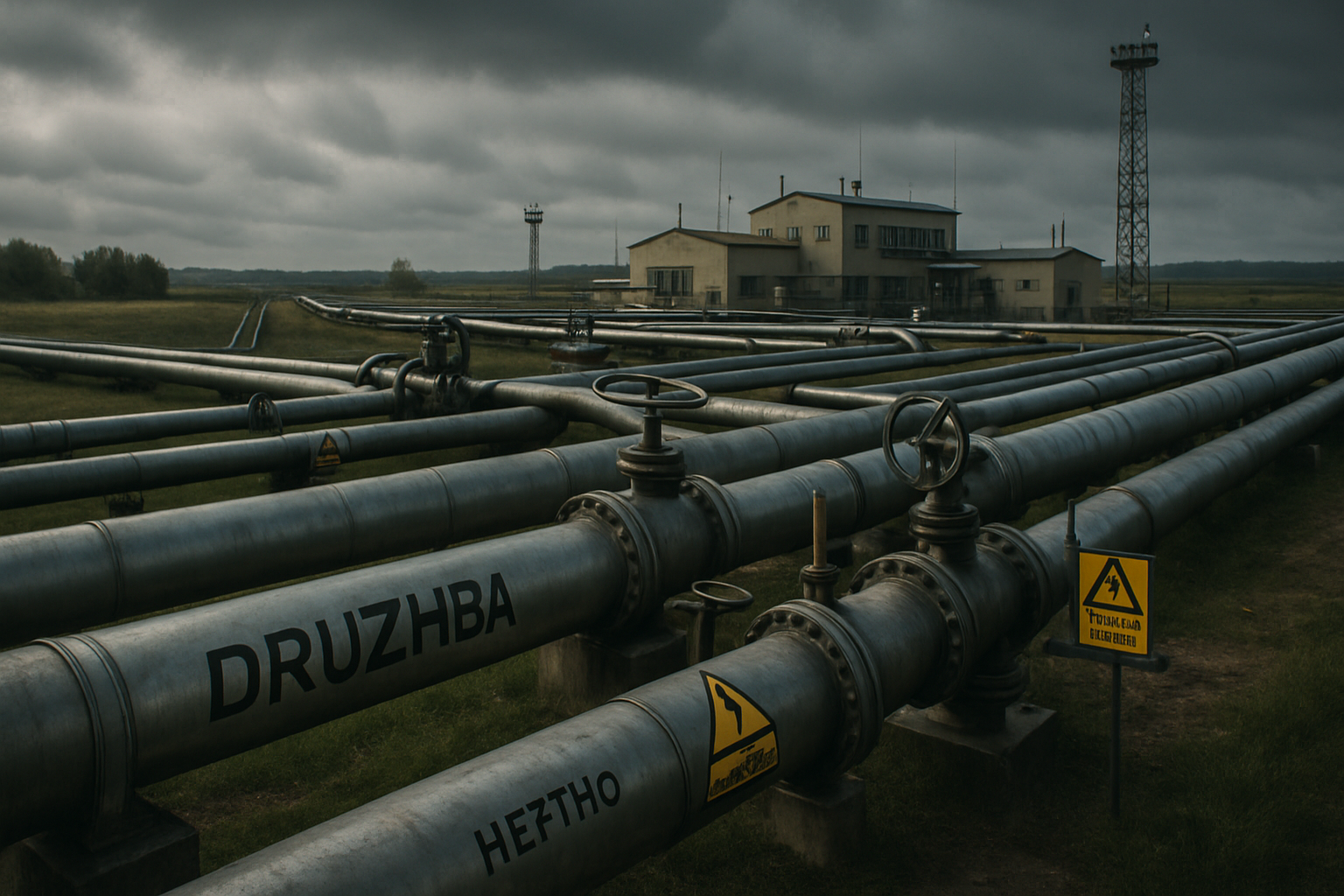
Russia has announced it will suspend shipments of Kazakh oil to Germany through the critical Druzhba pipeline system starting May 1st, marking another significant escalation in the ongoing European energy crisis that has plagued the continent since early 2026.
The decision, confirmed by multiple sources including the German subsidiary of Russia's state-owned oil company Rosneft, represents a critical blow to Germany's energy security at a time when global oil markets remain severely disrupted by the continuing Middle East crisis and Strait of Hormuz closure.
Pipeline Disruption Details
According to reports from Al Jazeera and The Moscow Times, the German subsidiary of Rosneft informed German energy regulators that the Russian Energy Ministry had formally ordered the suspension of Kazakh oil transit through the Druzhba pipeline network. The decision affects a crucial alternative supply route that has become increasingly vital as Germany seeks to diversify away from traditional Middle Eastern oil sources amid ongoing geopolitical tensions.
The Druzhba pipeline system, historically known as the "Friendship Pipeline," has been a cornerstone of European energy infrastructure for decades, carrying millions of barrels of oil from Russia and Central Asian producers to refineries across Central and Eastern Europe.
"Moscow confirms it will suspend shipments of Kazakh oil to Germany from May 1st"
— Russian Energy Ministry Statement
Broader European Energy Context
This latest disruption occurs against the backdrop of the most severe global energy crisis since the 1970s oil shocks. According to my extensive analysis of the situation, oil prices have surged to historic levels, with Brent crude peaking at $119.50 and WTI reaching $108.15 - marking the first time prices have breached $100 per barrel since 2022.
The crisis has been primarily driven by Iran's Revolutionary Guard declaration of the Strait of Hormuz as "unsafe for shipping," effectively blocking 40% of global seaborne oil transit through the critical 21-mile chokepoint. This has forced European nations to seek alternative supply routes, making pipeline systems like Druzhba increasingly valuable.
Germany's energy ministry has stated that the country's energy supply remains secure despite the announcement, but the timing raises serious concerns about supply chain resilience. The Bundeswirtschaftsministerium emphasized that current strategic reserves and alternative sourcing arrangements should prevent immediate disruptions to German consumers.
Historical Pipeline Disputes
The Druzhba pipeline has been at the center of numerous energy disputes throughout 2026. Most notably, a prolonged crisis began in January when the pipeline was taken offline for nearly three months. Slovakia and Hungary claimed Ukrainian authorities had deliberately manipulated oil supplies as "political blackmail," while Ukraine maintained that Russian drone attacks had damaged critical infrastructure requiring extensive repairs.
This dispute created what became known as the deepest EU institutional crisis since the Russian invasion began, with Hungary blocking a historic €90 billion EU aid package to Ukraine over the pipeline issue. The crisis was only resolved in April 2026 when Ukrainian President Zelensky announced completion of the necessary repairs.
During that earlier crisis, Slovakia had declared a state of oil emergency, releasing 250,000 tons from strategic reserves to supply the Slovnaft Bratislava refinery - representing approximately one month of operational capacity. The prolonged disruption had forced both Slovakia and Hungary to explore alternative supply routes, including potential connections through Croatian Mediterranean ports.
Strategic Implications
The suspension of Kazakh oil deliveries represents more than a bilateral energy issue - it highlights the fundamental vulnerabilities in European energy architecture that have been repeatedly exposed throughout 2026. The decision comes as the International Energy Agency (IEA) has deployed the largest strategic petroleum reserve release in its 50-year history, totaling 400 million barrels from 32 member countries.
Japan has been releasing 80 million barrels - its first strategic deployment since the 2011 Fukushima disaster - while Germany has participated in the coordinated response despite its heavy dependence on Middle Eastern oil supplies, 70% of which normally transit through the now-blocked Strait of Hormuz.
Energy experts warn that this latest disruption could force accelerated development of alternative supply infrastructure. Samuel Ciszuk, a leading energy security analyst, has described the current situation as the "most severe energy security crisis in decades, with single-chokepoint vulnerabilities fully exposed."
Market and Consumer Impact
The announcement has immediately impacted European energy markets, which were already under severe stress from the broader global crisis. Natural gas prices had previously surged 24% in Europe, reaching €47.32/MWh - the highest levels since February 2025.
German consumers have already experienced significant increases in fuel costs, with prices approaching €2 per liter in many regions. The government has been forced to implement comprehensive market interventions, including strengthened antitrust laws to prevent gas station price manipulation - representing the most significant market intervention in modern German energy policy.
The broader consumer impact across Europe has been severe, with Ireland reporting heating oil costs of €2 per liter, Sweden experiencing electricity price increases of 10-20 öre per kilowatt-hour, and multiple Eastern European nations being forced to tap strategic petroleum reserves for the first time in their histories.
Alternative Supply Routes
With the Druzhba pipeline's Kazakh oil supplies now suspended, Germany and other affected European nations are being forced to accelerate development of alternative import routes. Croatian officials have indicated willingness to provide access to Mediterranean supply routes, though these arrangements would be limited to non-Russian crude sources and would require months or potentially years to implement at full capacity.
The development of new supply infrastructure has taken on unprecedented urgency. Slovakia and Hungary have announced plans for a direct pipeline connection between refineries in Bratislava and Százhalombatte to reduce dependence on Ukrainian transit routes - a project that emerged directly from the ongoing pipeline disruptions.
Geopolitical Ramifications
The timing of Russia's decision to suspend Kazakh oil deliveries appears calculated to maximize pressure on European energy markets already strained by the Middle East crisis. The move effectively weaponizes energy infrastructure at a time when European nations are struggling to maintain supply security amid unprecedented global disruptions.
This latest development occurs as European leaders grapple with the broader implications of energy interdependence during geopolitical crises. The repeated use of pipeline infrastructure as diplomatic leverage has prompted urgent discussions about fundamental restructuring of European energy architecture to reduce dependence on volatile supply routes and politically unreliable partners.
"The Russian Energy Ministry had ordered the suspension"
— Rosneft German Subsidiary Statement to Regulators
Future Energy Security Planning
The suspension of Kazakh oil deliveries through Druzhba represents another critical test of European energy resilience during what experts are calling the most dangerous international crisis since the Cold War ended. The crisis affects not just regional energy supplies but global energy security, nuclear governance credibility, and international law enforcement mechanisms simultaneously.
Energy Minister officials across Europe are now confronting the reality that strategic petroleum reserves provide only temporary buffers against sustained geopolitical disruptions. The current crisis has accelerated discussions about supply diversification and renewable energy transitions, though such transformations require years or decades to implement fully.
Recovery timelines remain uncertain and depend heavily on diplomatic and military resolution of ongoing Middle East conflicts, unlike weather-related disruptions that follow predictable patterns. Traditional monetary policy tools have shown limited effectiveness against these structural geopolitical disruptions, forcing governments to implement emergency measures not seen since the 1970s energy crises.
Looking Ahead
The suspension of Russian-controlled Kazakh oil deliveries to Germany marks yet another watershed moment in what has become the most consequential energy crisis of the modern era. The decision's implications extend far beyond immediate supply concerns, affecting international stability mechanisms that could influence global energy policy for decades.
As European nations continue to grapple with these unprecedented challenges, the success or failure of their crisis management approaches will establish critical precedents for 21st-century conflict resolution and energy security cooperation frameworks. The current situation represents the greatest test of multilateral cooperation in modern crisis management, with outcomes that will determine whether diplomatic solutions or military frameworks dominate future international dispute resolution.
The May 1st implementation of Russia's suspension gives European energy planners a narrow window to implement alternative arrangements, but the broader structural vulnerabilities exposed by this crisis will require fundamental transformation of energy security planning to reduce dependence on strategic chokepoints controlled by politically volatile regions.