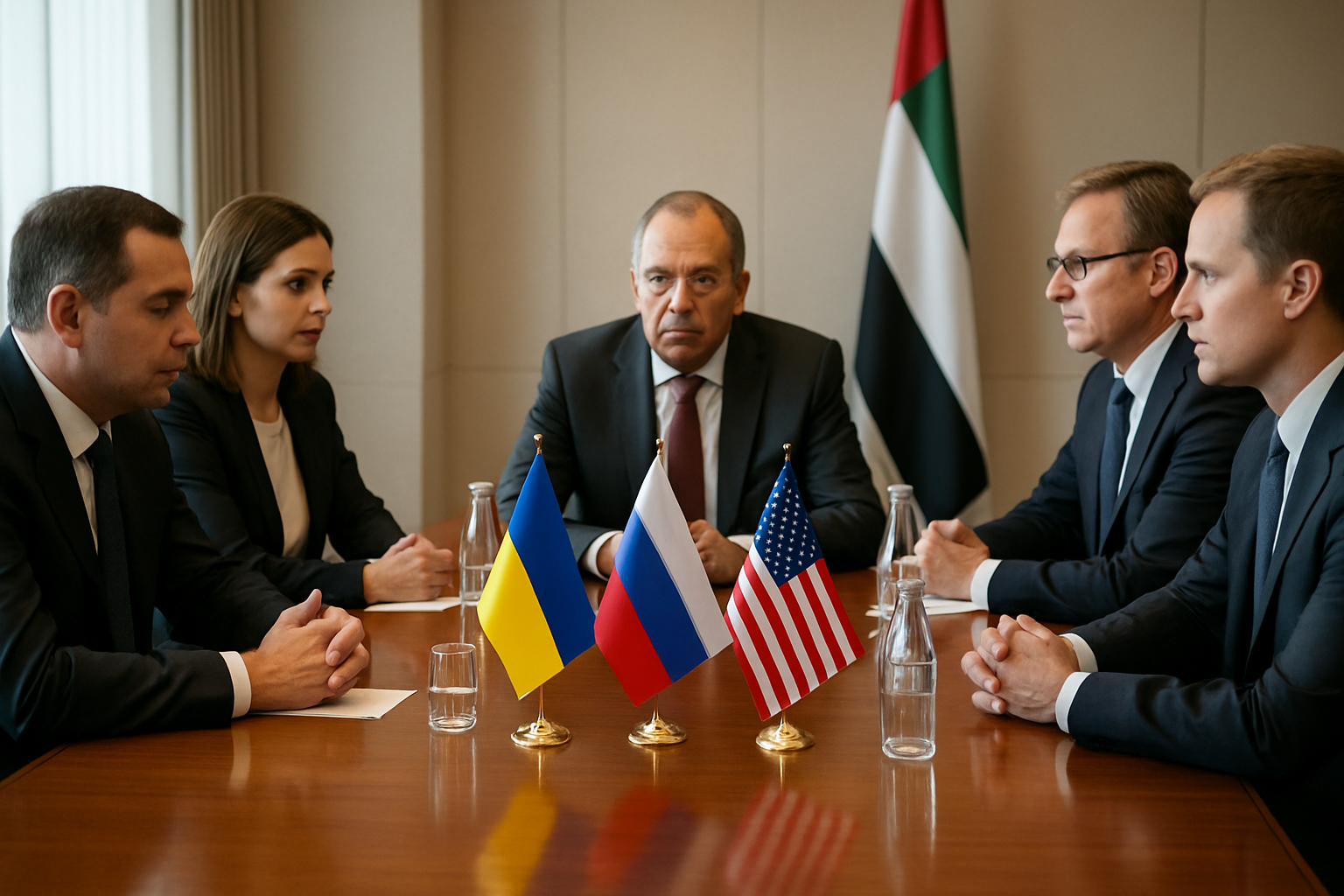
Delegations from the United States, Ukraine, and Russia reached a significant milestone in Abu Dhabi peace negotiations Thursday, agreeing to exchange 314 prisoners of war in the first such humanitarian breakthrough in five months.
The prisoner exchange agreement emerged from the second round of trilateral peace talks in the UAE capital, with US Special Envoy Steve Witkoff announcing the development as evidence that "sustained diplomatic engagement is delivering tangible results and advancing efforts to end the war in Ukraine."
The agreement comes after what Ukrainian Defense Minister Rustem Umerov described as "substantial and productive" discussions that began Wednesday, February 4, and continued through Thursday in Abu Dhabi. The talks represent the most significant diplomatic effort to resolve the nearly four-year conflict that has claimed tens of thousands of lives and displaced millions.
Immediate Humanitarian Impact
The prisoner exchange was implemented swiftly, with both sides transferring 157 military personnel each on Thursday, according to the Russian Ministry of Defense. Additionally, three civilians from Russia's Kursk region were returned from Ukrainian custody, highlighting the humanitarian dimension of the agreement.
"This outcome was achieved from peace talks that have been detailed and productive," Witkoff stated in a post on social media platform X. "While significant work remains, steps like this demonstrate that sustained diplomatic engagement is delivering tangible results."
The exchange marks the first prisoner swap between the warring nations since September 2025, breaking a five-month humanitarian deadlock that had left thousands of families uncertain about the fate of their loved ones.
Diplomatic Framework and Participants
The Abu Dhabi talks follow the same structured format established in the first round held January 23-24, 2026. Negotiations proceed through separate working groups addressing specific topics before joint position synchronization sessions.
Ukraine's delegation is led by Defense Minister Rustem Umerov, who heads the country's Security Council. The Russian side is represented by military intelligence director Igor Kostyukov, while the US team operates under Witkoff's leadership as President Trump's special envoy for the region.
The United Arab Emirates continues serving as neutral host, providing a diplomatic venue removed from the immediate pressures and influences of either NATO or Russian spheres. This neutral positioning has proven crucial in facilitating direct dialogue between the adversaries.
Ongoing Military Reality
The diplomatic progress unfolds against a backdrop of continued military escalation. Russia has intensified its campaign throughout early 2026, with over 10,000 drones and bombs launched in January alone, according to Ukrainian sources.
The talks proceeded despite Russia's massive energy infrastructure attack just days before negotiations began. The February 3 assault, described by Ukrainian energy company DTEK as the "most powerful blow" of 2026, left more than 1,170 buildings in Kyiv without heating during temperatures reaching minus-30 degrees Celsius.
Russian forces have accelerated territorial gains, capturing 481 square kilometers in January 2026 compared to 260 square kilometers in December 2025, according to the Institute for the Study of War. This represents a strategic shift toward what Ukrainian officials describe as "logistics terror" - targeting transportation infrastructure rather than purely military objectives.
International Diplomatic Context
The breakthrough comes amid complex international dynamics surrounding the conflict. NATO Secretary-General Mark Rutte made a surprise visit to Kyiv Tuesday, addressing the Ukrainian Parliament and condemning Russian attacks as sending a "bad signal" before negotiations.
European divisions persist regarding engagement with Russia. Germany maintains opposition to direct talks with Vladimir Putin, citing "maximalist demands," while France and Italy push for continued diplomatic channels. This disagreement reflects broader questions about how the West should balance support for Ukraine with efforts to achieve a negotiated settlement.
The timing coincides with other significant diplomatic initiatives, including confirmed US-Iran nuclear talks scheduled for February 7 in Oman and the recent expiration of the New START nuclear treaty between the US and Russia on February 5, 2026.
Humanitarian Crisis Dimensions
The prisoner exchange addresses one aspect of an broader humanitarian catastrophe. Ukrainian President Volodymyr Zelensky recently disclosed that 55,000 Ukrainian soldiers have been officially confirmed killed since Russia's February 2022 invasion, with a "large number" still classified as missing in action. International researchers estimate actual military deaths could be two to three times higher.
The winter energy crisis has created additional humanitarian pressure, with over 17.8 million Ukrainians accessing winter support programs. Emergency warming centers have been activated across multiple regions following repeated Russian attacks on civilian energy infrastructure.
Previous Diplomatic Efforts
The current Abu Dhabi framework builds on limited previous peace initiatives. The first round of trilateral talks in January made modest progress but highlighted territorial control as the primary sticking point. Russia maintains control over significant portions of eastern Ukraine, while Ukraine insists on full territorial restoration.
Preliminary discussions between US and Russian officials in Miami on January 31, involving Russian special representative Kirill Dmitriev, helped establish parameters for the current negotiations. The UAE's role as neutral host has evolved from technical discussions to substantive political negotiations with full US participation.
Economic and Strategic Implications
The talks occur as Ukraine faces severe winter conditions and ongoing economic pressure from the prolonged conflict. The EU recently approved a historic €90 billion loan package for Ukrainian defense and reconstruction - the largest EU financial assistance program in history - demonstrating continued Western commitment despite war fatigue.
Poland has provided 90 emergency generators to Kyiv, while Sweden and Denmark announced a €246 million air defense package. These support measures underscore the international community's recognition that diplomatic progress must be accompanied by practical assistance for Ukraine's survival during negotiations.
Future Diplomatic Trajectory
Russian sources indicate that the three parties will "agree on dates for new meetings on Ukraine" to continue the dialogue begun in the UAE. This suggests the Abu Dhabi framework has created momentum for sustained diplomatic engagement rather than a one-time intervention.
The prisoner exchange serves as a confidence-building measure that could facilitate progress on more complex issues. However, fundamental disagreements remain over territorial control, security guarantees, and Ukraine's international alignment.
President Zelensky has expressed "cautious optimism" about achieving "lasting and dignified peace," while Russia maintains that any direct Putin-Zelensky meetings must occur in Moscow. These competing positions highlight the substantial diplomatic work that remains ahead.
Global Security Architecture
The Abu Dhabi talks occur within a broader transformation of global security arrangements. The February 5 expiration of the New START nuclear treaty between the US and Russia eliminates the last bilateral nuclear arms control agreement, raising stakes for all international negotiations.
Success in Ukraine could demonstrate that major power conflicts can be resolved through diplomacy despite significant military escalation. Failure might accelerate trends toward military solutions and further undermine international legal frameworks established since World War II.
The involvement of the UAE as mediator also reflects shifting Middle Eastern dynamics, with Gulf states increasingly positioned as neutral diplomatic facilitators rather than aligned with specific great power blocs.
Assessment and Outlook
The prisoner exchange represents the first concrete humanitarian breakthrough in months of diplomatic efforts. While modest compared to the conflict's scope, it demonstrates that sustained engagement can produce tangible results even amid continued military operations.
The structured approach - combining working groups, joint sessions, and confidence-building measures - provides a framework that could accommodate the complex, multi-dimensional nature of the Russia-Ukraine conflict. Unlike previous peace initiatives focused primarily on ceasefire arrangements, the Abu Dhabi talks address broader political settlement parameters.
However, fundamental positions remain far apart. Russia's continued territorial gains and infrastructure attacks suggest Moscow seeks to strengthen its negotiating position through military pressure. Ukraine's insistence on territorial integrity and Western security guarantees reflects determination not to reward aggression through diplomatic concessions.
The next phase of negotiations will test whether humanitarian breakthroughs can create momentum for addressing core political issues, or whether military dynamics will ultimately override diplomatic engagement. With Europe's deadliest conflict since World War II now approaching its fourth anniversary, the Abu Dhabi framework offers perhaps the most structured diplomatic opportunity yet to find a path toward sustainable peace.