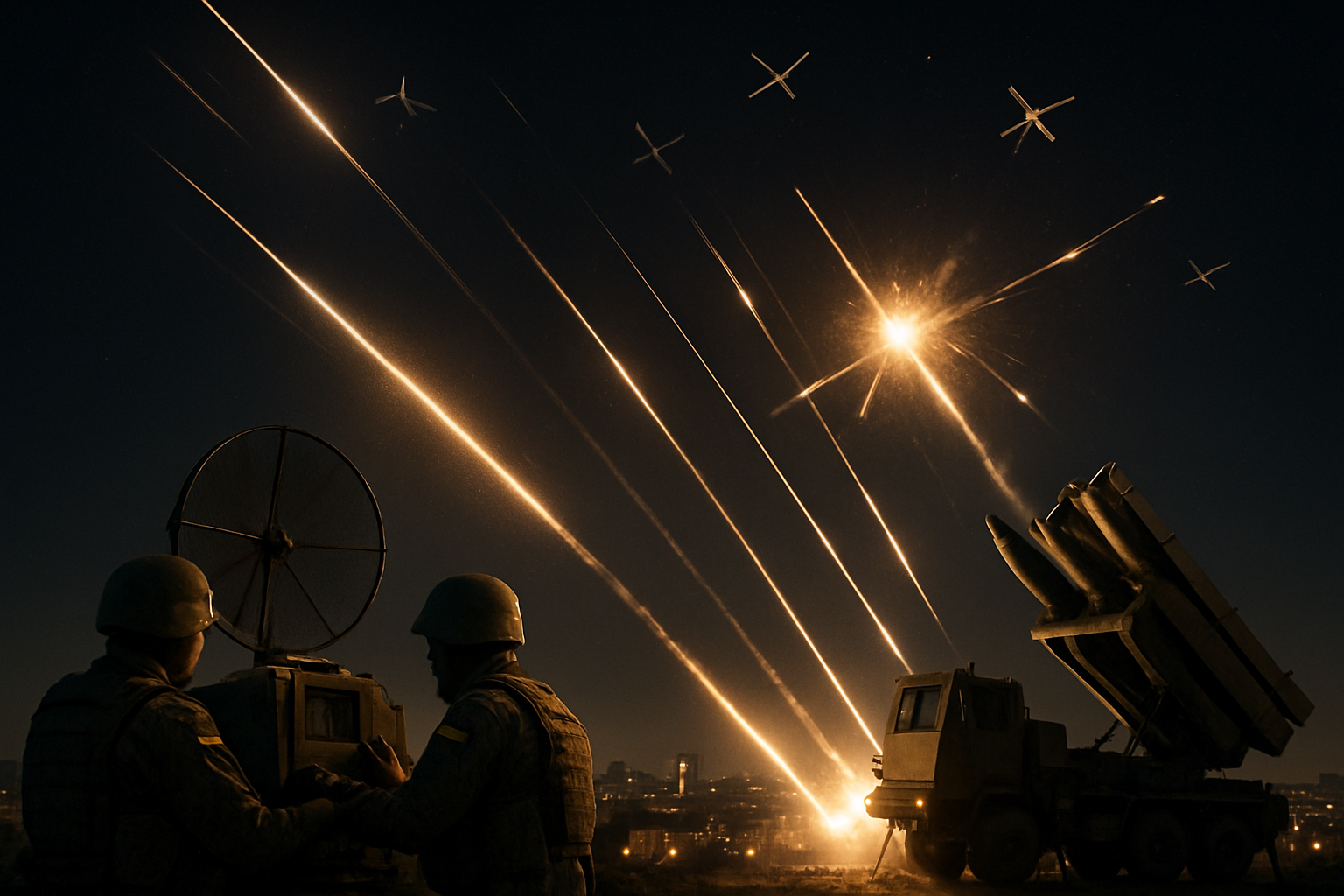
Russia launched one of its most devastating drone assaults of 2026 against Ukrainian energy infrastructure, deploying nearly 1,000 drones in coordinated attacks while Ukrainian forces responded with strategic strikes on Russian ports and military installations, marking a dangerous new escalation in the ongoing conflict.
Ukrainian air defense forces successfully neutralized 121 out of 147 Russian drones launched overnight Tuesday into Wednesday, according to official statements from Ukraine's Air Force. The massive assault targeted critical energy facilities across Ukraine's northern regions, leaving over 212,000 consumers without power in the Chernihiv region alone.
Unprecedented Scale of Russian Attacks
The overnight assault represents one of Russia's largest coordinated drone operations in recent months, with Luxembourg media reporting that Russia fired nearly 1,000 drones at Ukraine over a 24-hour period. This included what officials described as "one of the most massive attacks" conducted in daylight hours, with 556 drones deployed during daytime operations.
The attacks severely damaged two energy facilities in Ukraine's northern Chernihiv region. Chernihivoblenergo reported that approximately 150,000 consumers in the city of Chernihiv and surrounding districts lost power after Russian forces targeted an energy facility in the Chernihiv district. An additional 62,000 consumers were left without electricity in three other districts following a separate attack on infrastructure in the Nizhynskyi district.
Beyond the Chernihiv region, Russian attacks impacted other areas across Ukraine. Around 21,000 residents of Slavutych in the Kyiv region were left without centralized electricity supply following a Russian attack on the morning of March 25. One person was killed in the Izmail district of the Odesa region as a result of Russian strikes, while drone attacks in the Odesa region destroyed a residential building, causing a massive fire and leaving one injured with a possible person trapped under rubble.
Ukrainian Counter-Strikes Target Russian Infrastructure
Ukrainian forces have responded with their own strategic operations targeting Russian military and energy infrastructure. A fire broke out at the port of Ust-Luga in Russia's Leningrad region following a Ukrainian drone attack, according to reports from both Norwegian and Ukrainian sources. The port, located near the Baltic Sea, serves as a crucial oil and gas terminal for Russian exports.
Russian authorities claimed their air defense systems intercepted 389 Ukrainian drones during the night, with the highest concentration of 56 drones shot down over the Leningrad region alone. The Russian Ministry of Defense reported this as one of the most massive Ukrainian drone attacks they have faced, with strikes affecting multiple regions across Russian territory.
Ukrainian military operations have maintained their effectiveness despite defensive pressures. A total of 191 combat engagements between Ukrainian forces and Russian invaders were recorded along the frontline on Tuesday, March 24, with Ukrainian forces successfully repelling 47 Russian assaults on the Pokrovsk axis alone.
International Response and Support
The escalating attacks have prompted renewed international attention to the conflict, even as diplomatic efforts remain stalled. President Zelensky has been engaged in discussions with international partners, including recent meetings with Latvian Defense Minister Andris Spruds to discuss strengthening air defense systems, joint drone production, and expanding cooperation within the SAFE framework.
The conflict continues to strain international relations beyond the immediate combatants. Ukrainian officials have called for Russia's exclusion from UNESCO membership due to systematic attacks on cultural heritage sites, while European partners maintain varying levels of support for different diplomatic approaches to resolving the conflict.
"Ukraine must remain center of attention despite competing global crises."
— International partners, as tensions escalate
Humanitarian Impact and Infrastructure Damage
The systematic targeting of civilian infrastructure continues to create severe humanitarian challenges for Ukrainian civilians. The attacks on energy facilities represent part of what has been characterized as an "energy terrorism" strategy, deliberately targeting civilian infrastructure during winter months to maximize suffering.
According to official Ukrainian data, total combat losses among Russian troops from February 24, 2022, to March 25, 2026, amount to approximately 1,290,960 personnel, including 1,220 killed over the past 24 hours alone. These figures highlight the immense human cost of the ongoing conflict on both sides.
The return of abducted Ukrainian children remains a critical humanitarian issue, with European Commission representatives noting that progress is being hindered by a fragmented international approach. Officials emphasize that real progress requires a clear system for coordinating all parties involved in these efforts.
Strategic Implications and Future Outlook
The escalation in drone warfare represents a significant development in modern military conflict, demonstrating both the capabilities and limitations of contemporary air defense systems. The ability to launch coordinated attacks using hundreds of drones simultaneously poses new challenges for defensive operations and civilian protection.
Military analysts note that the conflict has evolved into a technological warfare scenario where both sides continuously adapt their tactics and equipment. The scale of drone operations now being conducted represents one of the largest implementations of unmanned systems in modern warfare.
The targeting of critical infrastructure, particularly energy facilities, continues to violate international humanitarian law according to multiple international observers. These attacks on civilian infrastructure during extreme weather conditions represent calculated efforts to pressure civilian populations and potentially influence diplomatic negotiations.
As the conflict approaches its fourth anniversary in February 2026, the international community faces ongoing challenges in managing the humanitarian crisis while seeking pathways to resolution. The current escalation underscores the urgent need for effective diplomatic engagement alongside continued international support for affected civilian populations.
The strategic implications extend beyond the immediate conflict zone, as neighboring countries and international partners must continue adapting their security postures and support mechanisms to address the evolving nature of modern warfare and its humanitarian consequences.