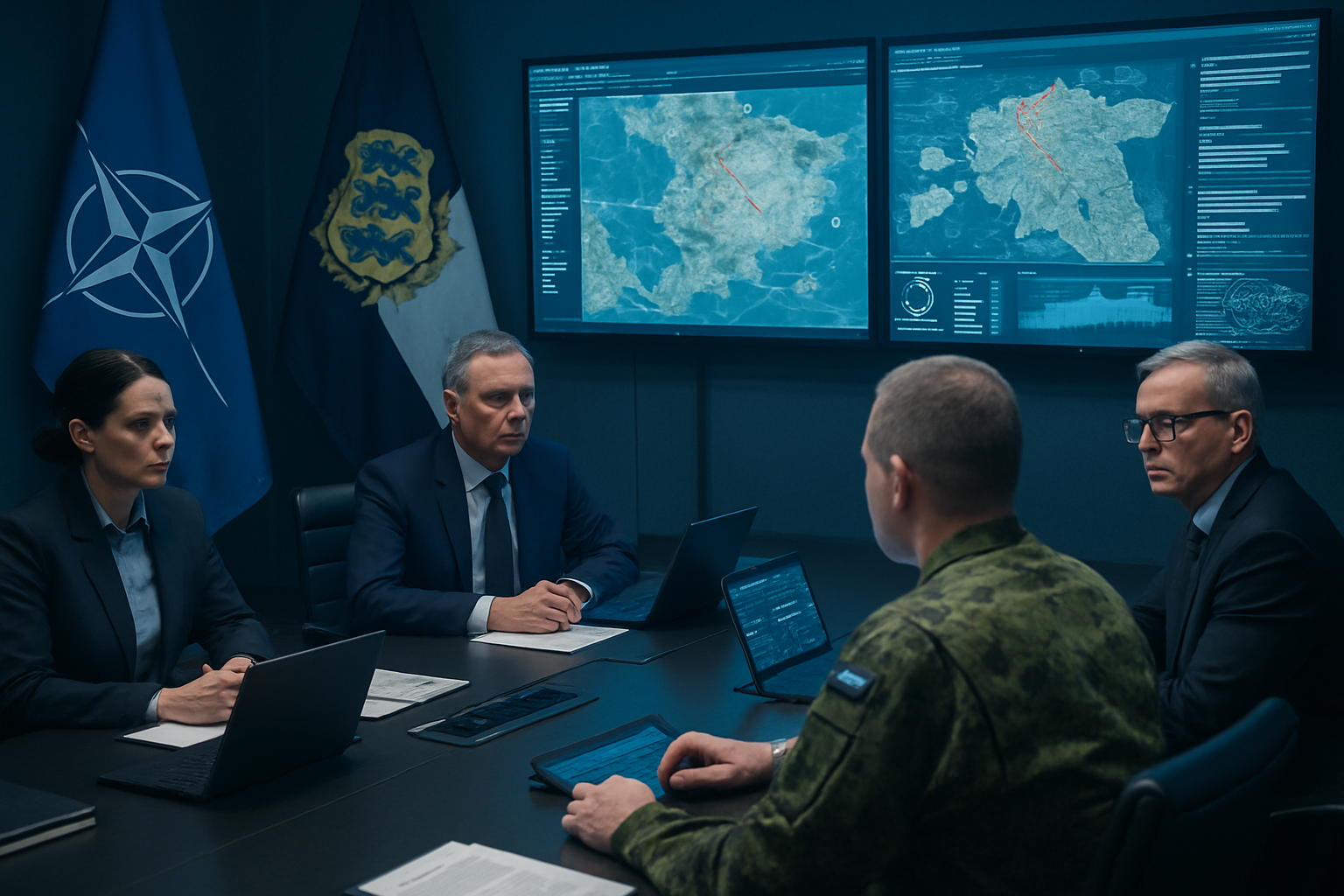
Intelligence reports from Estonia's Foreign Intelligence Service indicate that Russia has no plans to launch military attacks against NATO member states in 2026, even as Baltic nations continue strengthening their air defense capabilities in response to ongoing regional tensions.
According to the comprehensive assessment released in the Estonian Foreign Intelligence Service's annual report "International Security and Estonia 2026," Russia currently lacks both the intention and capability to expand its conflict beyond Ukraine to directly target NATO territories this year. The intelligence evaluation comes as the war in Ukraine reached its 1,417th day on January 10, 2026 – matching exactly the duration of World War II's Eastern Front between the Soviet Union and Nazi Germany.
Intelligence Assessment Details
Kaupo Rosin, Director General of the Estonian Foreign Intelligence Service, presented findings that suggest Russia's military resources remain heavily committed to the Ukrainian theater. "In nearly four years, Russia has exhausted most of the military stockpiles it inherited from the Soviet Union," the report states, indicating significant depletion of conventional military assets.
The assessment coincides with a changing strategic landscape in the Baltic Sea region. Estonian intelligence notes that the Kremlin has developed a new operational framework for analyzing threats and opportunities in the Baltic area, representing an evolution in Russian strategic thinking about the region's security dynamics.
Baltic States Defense Preparations
Despite intelligence assessments suggesting no immediate NATO attack plans, Estonia and neighboring Baltic states continue implementing robust defensive measures. The comprehensive air defense preparations include advanced radar systems, missile interceptor capabilities, and enhanced early warning networks designed to detect and counter potential aerial threats.
Poland has maintained heightened alert status throughout the conflict, previously deploying fighter jets in response to Russian attacks near the Ukrainian border. Sweden and Denmark recently announced a €246 million air defense package, including sophisticated Tridon Mk2 systems, demonstrating continued international commitment to regional security.
"The security situation requires constant vigilance and preparedness, regardless of current intelligence assessments."
— Estonian Defense Ministry Official
Diplomatic Context and Regional Tensions
The intelligence revelations emerge against the backdrop of significant diplomatic developments in the Russia-Ukraine conflict. Recent trilateral peace talks in Abu Dhabi between Ukraine, Russia, and the United States achieved notable progress, including the restoration of military communications channels suspended since 2021 and a historic prisoner exchange involving 314 individuals.
However, military operations continue to intensify. Russia captured 481 square kilometers of Ukrainian territory in January 2026, compared to 260 square kilometers in December 2025, indicating accelerated tactical gains. The conflict's humanitarian impact has reached devastating proportions, with Ukrainian President Volodymyr Zelensky recently disclosing that 55,000 Ukrainian soldiers have been officially confirmed killed, with a "large number" still classified as missing in action.
Energy Infrastructure Targeting
Russian strategy has evolved to focus heavily on civilian energy infrastructure, with attacks leaving over 1,170 buildings in Kyiv without heating during temperatures as low as minus-30°C. These systematic strikes on power generation and distribution facilities have been characterized by Ukrainian officials as "energy terrorism" designed to weaponize winter conditions against the civilian population.
The targeting extends beyond Ukrainian borders in its implications. Recent incidents forced Poland to scramble fighter jets and temporarily close airports in eastern regions due to proximity to Russian strikes on western Ukrainian territories. This pattern demonstrates how the conflict's effects ripple beyond Ukraine's borders, affecting NATO members' security calculations.
Military Communications Breakthrough
A significant development in U.S.-Russia relations occurred with the restoration of high-level military-to-military communications after more than four years of suspension. The Pentagon confirmed that dialogue serves as an "important factor in stability and global peace," providing "means to increase transparency and reduce escalation."
This communication framework focuses initially on deconfliction measures, incident prevention protocols, and advance notification systems for military activities. The restoration represents the most significant U.S.-Russia military agreement since the Ukraine conflict began and could have implications for global security operations in Syria, the Arctic, and Africa where U.S. and Russian forces operate in proximity.
Nuclear Context and Arms Control
The intelligence assessments occur within a broader context of deteriorating nuclear arms control. The New START treaty between the United States and Russia expired on February 5, 2026, marking the first time in over 50 years that no binding nuclear arms control agreement exists between the world's two largest nuclear powers.
This development has eliminated verification mechanisms, data exchanges, and inspection protocols that had provided transparency and confidence-building measures since the Cold War era. UN Secretary-General António Guterres called the treaty's expiration a "grave turning point" for global security, stating that nuclear weapon use risk is "higher than at any time in decades."
Regional Security Architecture Evolution
European security arrangements are undergoing fundamental reassessment as the conflict approaches its fourth year. Estonia's intelligence findings suggest that while immediate NATO territorial threats may be limited, the broader security environment requires sustained vigilance and adaptive defense planning.
The Baltic states' position as NATO's eastern flank has necessitated continuous security evaluation and enhancement of defensive capabilities. This includes not only traditional military preparations but also cybersecurity measures, hybrid warfare countermeasures, and resilience planning for critical infrastructure protection.
International Cooperation and Support
Despite intelligence assessments suggesting reduced immediate threat levels, international support for Baltic security continues to expand. NATO defense ministers are scheduled to meet on February 12, 2026, in Brussels to discuss continued support mechanisms for regional security and Ukraine assistance.
The European Union has approved a historic €90 billion loan package for Ukraine, representing the largest EU aid commitment in history. This financial support demonstrates long-term commitment to Ukrainian resistance and regional stability, regardless of short-term threat assessments.
Looking Forward: Strategic Implications
The Estonian intelligence assessment provides valuable insight into Russian strategic calculations, but security experts emphasize that threat environments can evolve rapidly. While current intelligence suggests no immediate NATO attack plans, the unpredictable nature of the conflict requires continued preparedness and international coordination.
The ongoing diplomatic efforts, including the June 2026 peace deadline established by the United States, may influence future security dynamics. However, with fundamental territorial disputes remaining unresolved and military operations continuing to escalate, the security situation requires sustained attention from NATO allies and international partners.
As Estonia and other Baltic states continue their air defense preparations, they demonstrate the principle that effective deterrence requires both accurate intelligence and robust defensive capabilities, ensuring regional security regardless of current threat assessments.