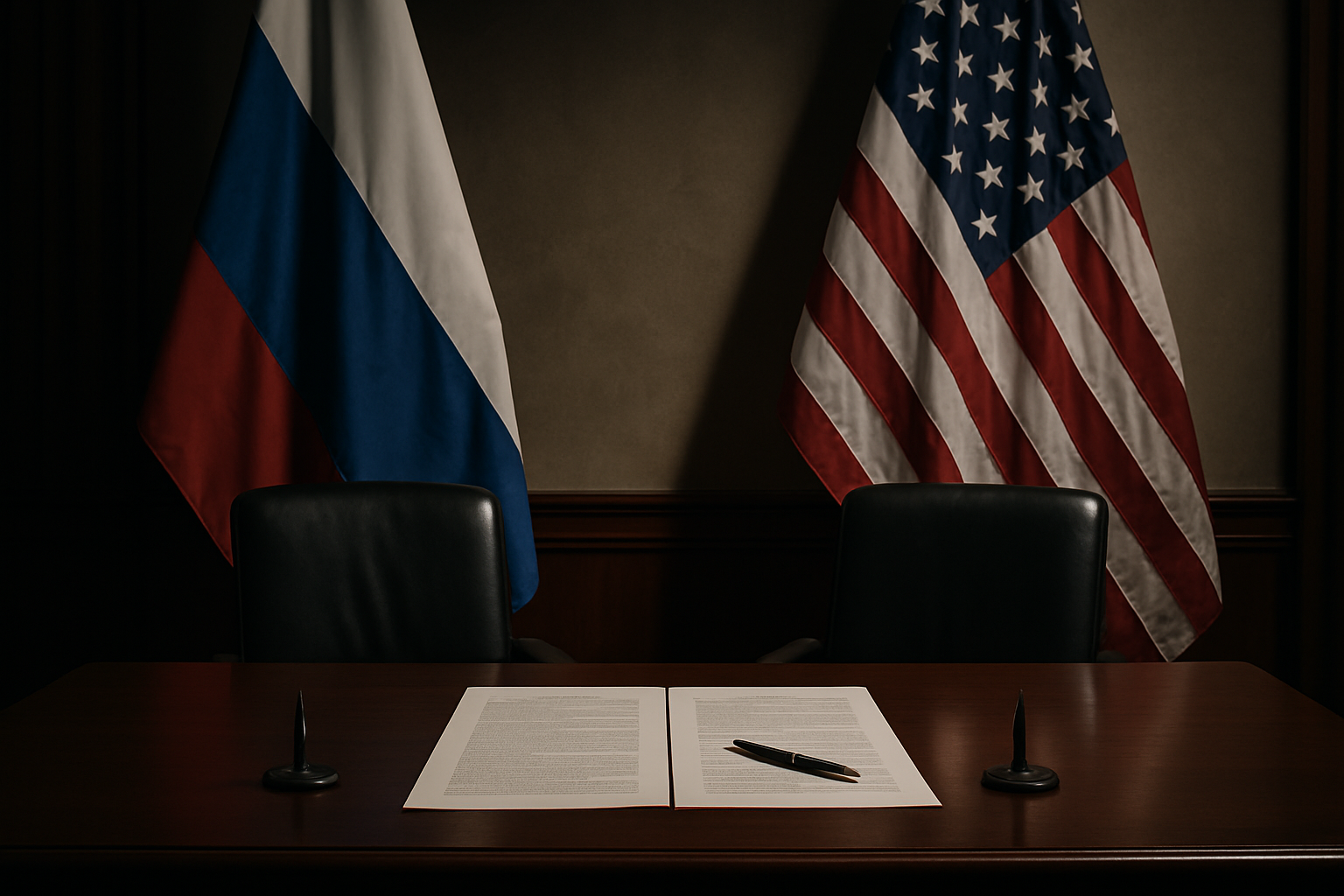
Russia declared Wednesday it is no longer bound by nuclear arms limitations as the New START treaty with the United States officially expired on February 5, 2026, ending the last remaining bilateral nuclear arms control agreement between the world's two largest nuclear powers.
The Russian Foreign Ministry issued a statement Wednesday asserting that "the parties to the New START treaty are no longer bound by any obligations or symmetrical declarations within the context of the treaty." The announcement came hours before the treaty's formal expiration, marking the symbolic end of a 50-year era of nuclear arms control between Moscow and Washington.
Treaty Expiration Amid Diplomatic Tensions
The New Strategic Arms Reduction Treaty (DSNV), which has provided transparency and predictability in the nuclear sphere for 15 years, expired at midnight Moscow time on February 5, 2026. The treaty had limited both nations to 1,550 deployed strategic warheads and 800 deployed and non-deployed strategic delivery systems.
Russian President Vladimir Putin had proposed to U.S. President Donald Trump preserving the treaty's main provisions temporarily, including limits on warheads, carriers, and launch systems. However, according to Russian sources, the United States declined to extend the agreement, citing concerns about China's expanding nuclear arsenal and unwillingness to constrain its own nuclear capabilities.
"We assume that the parties to the New START treaty are no longer bound by any obligations or symmetrical declarations within the context of the treaty."
— Russian Foreign Ministry Statement
International Concerns Over Nuclear Proliferation
The International Campaign to Abolish Nuclear Weapons (ICAN) expressed alarm over the lack of U.S. response to Russian proposals. Alistair Burnett, ICAN's Head of Communications, called the silence from President Trump "disappointing," warning it "makes every crisis more dangerous and increases the risk of mistakes and miscalculation."
The Russian Foreign Ministry stated that Moscow would develop its strategic arms policy "on the basis of a thorough analysis of the US military policy and the overall situation in the strategic sphere." Despite the treaty's expiration, Russia emphasized it intends to act "responsibly and in a balanced manner."
Limited Nuclear Diplomacy Framework
The expiration leaves the world's two largest nuclear arsenals without any bilateral limitations for the first time since the early Cold War period. Russia and the United States together possess approximately 90% of the world's nuclear weapons, with each maintaining thousands of warheads.
Azerbaijan's APA news agency reported that Russia had not received a formal response from the United States to its New START extension proposals, highlighting the breakdown in nuclear diplomacy between the former superpower rivals.
Global Strategic Implications
The treaty's end coincides with broader geopolitical tensions, including ongoing conflict in Ukraine and concerns about China's nuclear modernization program. The absence of arms control agreements removes important verification mechanisms and confidence-building measures that have helped prevent nuclear miscalculation.
European allies have expressed concern about the strategic implications. Lithuania's media reported on Russia's declaration with apparent apprehension, while Slovakia noted that both nuclear powers can now increase their arsenals without legal constraints.
Japanese sources emphasized that Russia remains "open to security talks but would resolutely counter any new threats," suggesting Moscow's willingness to engage in future negotiations under different terms.
Future of Nuclear Arms Control
Despite acknowledging "problems" with the treaty's implementation, the Russian Foreign Ministry stated that New START "initially contributed to discouraging the strategic arms race" and "fulfilled its functions" during its operational period.
The end of New START marks a critical juncture in international security architecture. Without bilateral limitations, both nations are technically free to expand their nuclear arsenals, though such buildups would likely trigger international concern and potentially destabilize global security.
The treaty's expiration occurs as the world faces multiple nuclear challenges, including North Korea's advancing weapons program, Iran's nuclear activities, and questions about future arms control frameworks that might include China as a participant.
As both nations enter an era without nuclear limitations, the international community watches closely for signs of whether diplomacy can eventually restore some form of arms control framework or whether the world is entering a new period of unrestricted nuclear competition between its most powerful military powers.