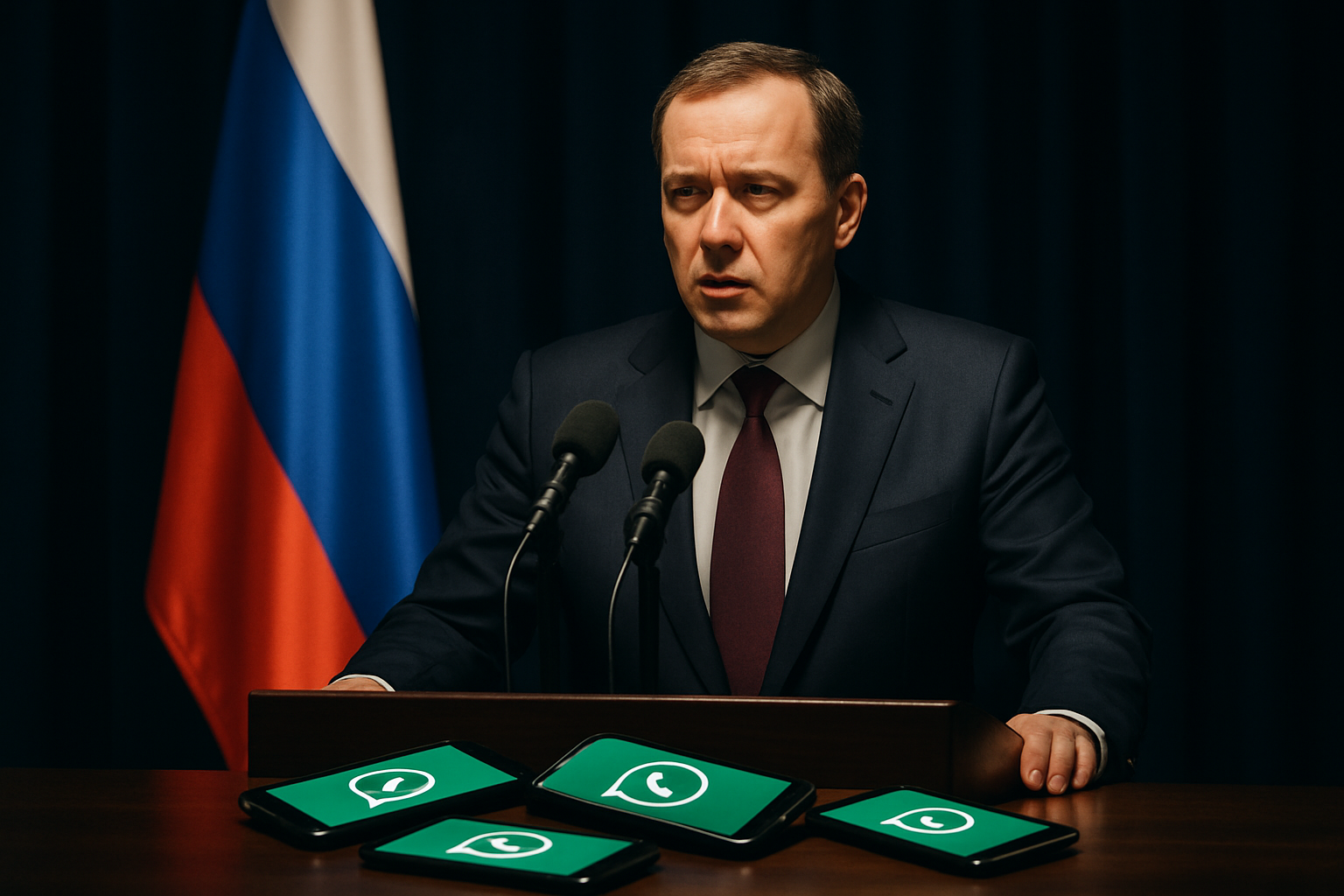
WhatsApp announced Wednesday that Russian authorities "attempted to fully block" the messaging application in the country, potentially affecting over 100 million users as part of the Kremlin's broader campaign to establish digital sovereignty and direct users toward state-controlled communication platforms.
The Meta-owned messaging service disclosed the blocking attempt in a statement posted across its social media channels, describing it as an effort by Russian authorities to "force people to use a state-owned, surveillance-prone application" instead of the encrypted messaging platform used by millions of Russians for daily communication.
Escalation of Digital Control Campaign
The attempted WhatsApp blockade represents the latest escalation in Russia's systematic campaign to assert control over digital communications infrastructure. Moscow has been intensifying pressure on international technology platforms since 2022, implementing what experts describe as a "degradation strategy" that creates plausible deniability while achieving practical usage restrictions.
Russian officials confirmed the country's position through Presidential Press Secretary Dmitry Peskov, who stated that WhatsApp's future availability would depend entirely on Meta's willingness to comply with Russian legislation. "If the company continues ignoring Russia's demands, there will be no chance for the service's return," Peskov declared, echoing similar ultimatums issued to other international platforms.
The blocking attempt comes as Russia continues to promote "Max," its state-controlled messaging alternative, which has experienced significant capacity limitations during user migration attempts. VK Group, which operates Max and other Russian digital services, saw its shares rise 5% on the Moscow Exchange following news of the WhatsApp restrictions.
Sophisticated Censorship Evolution
The approach represents an evolution in digital censorship tactics that Russian authorities have refined through previous restrictions on platforms like Telegram. Rather than implementing complete blocks that typically generate circumvention efforts and international criticism, Russian regulators employ "degradation" techniques including increased response times, intermittent connectivity issues, and selective regional disruptions.
This sophisticated strategy particularly affects Russia's remote regions, where residents depend heavily on satellite and undersea cable connections with limited infrastructure redundancy. Areas including the Nenets Autonomous Okrug, Magadan Oblast, and Sakhalin have experienced disproportionate service disruptions during previous platform restrictions.
The timing of the WhatsApp blocking attempt appears calculated to coincide with Russia's broader geopolitical strategy. The move occurs against the backdrop of ongoing international tensions and represents part of what Moscow describes as building a "sovereign internet" less dependent on Western technology infrastructure.
"Attempting to isolate more than 100 million users without the right to private and secure communication is a step backward that can only lead to reduced security for people in Russia."
— WhatsApp Statement
International Context and Implications
The WhatsApp restriction attempt fits within Russia's broader pattern of digital platform control that has intensified significantly since early 2024. Roskomnadzor, Russia's telecommunications regulator, has implemented systematic restrictions against multiple international platforms under various pretexts including "extremist content" violations and "personal data protection" failures.
European Union officials have expressed concern about the precedent these tactics could set for authoritarian governments worldwide. The sophisticated "degradation approach" creates a model that other nations might adopt to circumvent traditional definitions of internet censorship while achieving similar practical results.
The economic implications extend beyond Russia's borders, as the country represents one of the world's largest messaging app markets. Industry analysts estimate that complete WhatsApp elimination could affect global digital commerce patterns and force millions of users toward platforms with different security standards and data protection policies.
Technical Infrastructure and Enforcement Challenges
Implementing comprehensive messaging app restrictions requires substantial technical infrastructure and coordination across multiple regulatory bodies. Russia has invested heavily in developing what it terms "deep packet inspection" capabilities that can identify and throttle specific application traffic while maintaining general internet connectivity.
However, enforcement faces significant practical challenges. Many Russian users have already adopted virtual private network (VPN) services and other circumvention technologies following previous platform restrictions. The technical sophistication required to completely block modern encrypted messaging services while maintaining economic internet functionality presents ongoing complications for regulatory authorities.
WhatsApp's encryption protocols and distributed infrastructure make complete blocking technically complex without disrupting broader internet services that support Russia's economy. This reality has contributed to the "degradation" approach rather than absolute prohibitions.
State-Controlled Alternative Platforms
Russia's push toward state-controlled messaging platforms reflects broader authoritarian trends toward digital nationalism. The promoted "Max" application offers functionality similar to WhatsApp but operates under Russian jurisdiction with data storage requirements and content monitoring capabilities that align with government oversight preferences.
Technical analysis suggests that Max and similar Russian-developed platforms incorporate design elements that facilitate government access to user communications and metadata. While officials describe these features as necessary for law enforcement and national security, digital rights advocates characterize them as comprehensive surveillance infrastructure.
The capacity limitations experienced by Max during previous user migration attempts highlight the technical challenges of rapidly scaling domestic alternatives to established international platforms. Building infrastructure capable of supporting over 100 million users requires substantial investment and technical expertise that may take years to develop effectively.
Global Digital Rights Implications
The WhatsApp blocking attempt represents a critical test case for international digital rights advocacy and the global technology industry's response to authoritarian platform control. The precedent established by Russia's approach could influence similar efforts by other governments seeking to assert digital sovereignty over international communication platforms.
Digital rights organizations have characterized the restriction as part of a broader pattern of "information isolation" designed to limit Russian citizens' access to independent communication channels and alternative information sources. The timing coincides with increased restrictions on traditional media and civil society organizations.
The international business community is closely monitoring the situation as an indicator of operational risks for technology companies operating in markets with authoritarian governments. The precedent could affect investment decisions and platform development strategies for regions where governments assert similar digital control ambitions.
Looking Forward: Implications for Digital Governance
The attempted WhatsApp block represents more than a single regulatory action; it exemplifies the broader tension between globalized digital platforms and national sovereignty assertions in the digital age. The outcome will likely influence how other nations approach similar challenges between maintaining open internet access and asserting domestic control over digital communications infrastructure.
For Russia's 100 million WhatsApp users, the immediate implications involve potential disruption to daily communication patterns, business operations, and social connections that have become integral to modern life. The broader implications extend to fundamental questions about digital rights, government authority over communication platforms, and the future of international internet governance.
As this situation develops, it will serve as a crucial precedent for how democratic nations and international organizations respond to sophisticated digital censorship tactics that avoid traditional definitions of internet blocking while achieving similar practical results. The stakes extend far beyond a single messaging platform to encompass core principles of digital freedom and international communication rights in the 21st century.