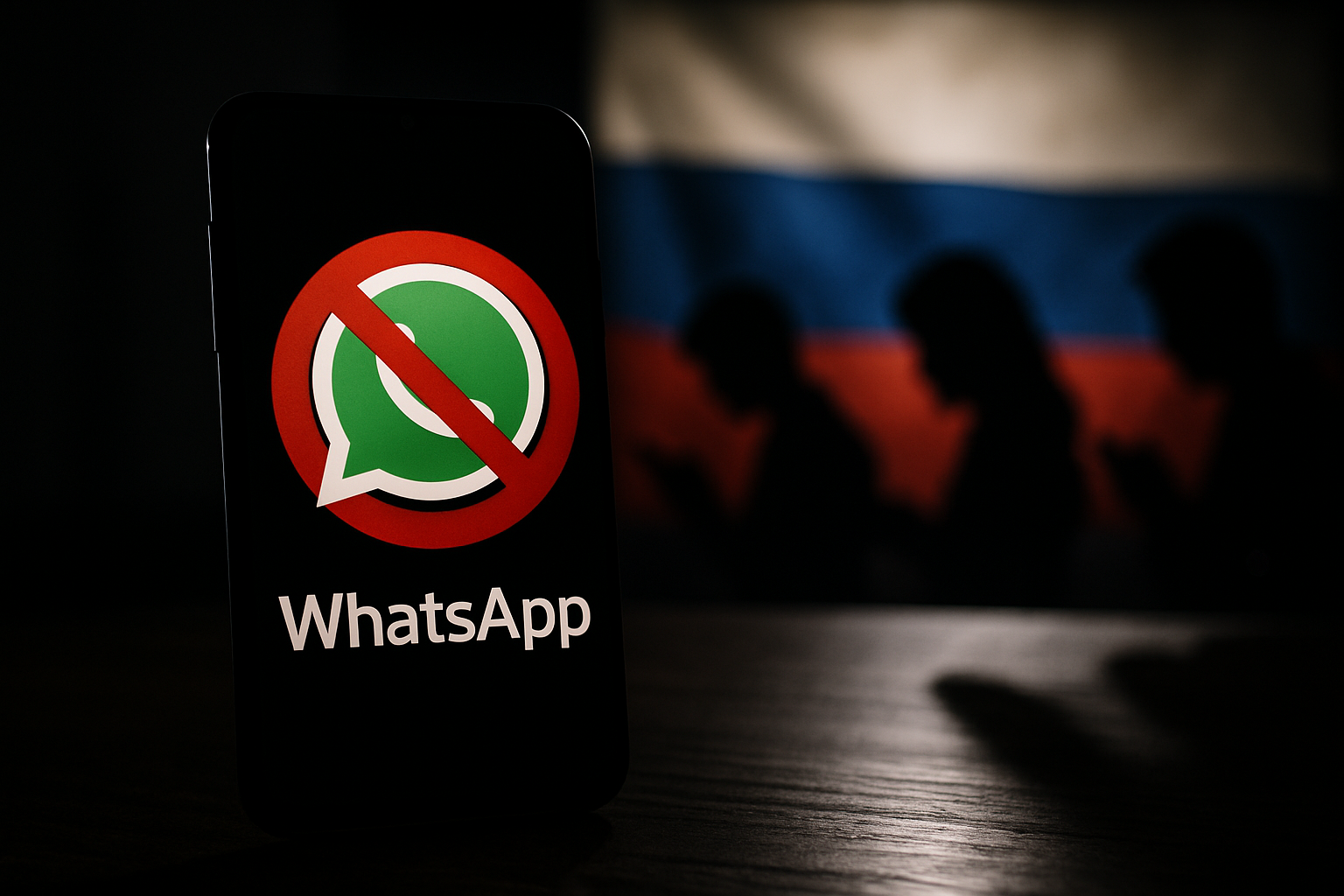
Russia has officially removed WhatsApp from its online registry and completely blocked access to the Meta-owned messaging service, cutting off approximately 100 million Russian users in the most dramatic escalation of the country's digital censorship campaign to date.
The blocking represents a significant shift from Russia's previous "degradation strategy" to outright prohibition, with authorities citing WhatsApp's failure to comply with local laws. The Kremlin is simultaneously pushing users toward "Max," a state-backed messaging platform that lacks end-to-end encryption and provides government access to communications.
Technical Implementation of Digital Iron Curtain
Russian authorities employed sophisticated technical measures to block WhatsApp, including removal of DNS records linking the service to core IP addresses. The approach represents an evolution of Russia's "degradation approach," which previously relied on throttling connection speeds and creating intermittent connectivity issues to discourage usage without triggering widespread circumvention efforts.
"WhatsApp has been fully blocked in Russia after authorities said the Meta-owned messaging app failed to comply with local laws," reported France 24, noting that the Kremlin is now encouraging users to switch to the state-backed "national messenger."
The blocking particularly affects remote regions including Nenets, Magadan, and Sakhalin, where users are dependent on satellite and undersea cable infrastructure with limited redundancy options. These areas have experienced the most severe disruptions, highlighting the vulnerability of digital communications in Russia's periphery.
State-Controlled Alternative Promotion
Russia's promotion of the Max messaging platform reveals the strategic intent behind the WhatsApp ban. Unlike WhatsApp's end-to-end encryption, Max incorporates design elements that facilitate government access to communications and metadata. The platform has already experienced capacity limitations during migration attempts, with VK Group shares rising 5% on the Moscow Exchange following the WhatsApp restriction news.
Technical analysis of Max reveals it functions essentially as a surveillance tool designed for government monitoring, contradicting international standards for private communications. Critics describe the platform as fundamentally compromised from a privacy perspective, representing a complete reversal of digital rights protections.
Broader Digital Sovereignty Campaign
The WhatsApp ban forms part of Russia's systematic campaign since 2022 to implement a "sovereign internet" less dependent on Western technology. Roskomnadzor, Russia's telecommunications regulator, has targeted multiple international platforms under various pretexts including extremist content and data protection violations.
This represents the fourth major platform restriction implemented in six months, following similar measures against Telegram and other messaging services. The pattern demonstrates an escalating pressure strategy designed to force users onto state-controlled platforms while maintaining plausible deniability about censorship intentions.
"Rights campaigners say restrictions on messaging apps are a transparent attempt to ramp up control and surveillance."
— Al Jazeera Report
German media outlet Tagesschau reported that WhatsApp has sharply criticized the Kremlin's actions, with the platform describing the blocking as an attempt to force users toward state-controlled alternatives designed for surveillance purposes.
International Implications and Precedent
The complete blocking of WhatsApp represents a test case for authoritarian platform control that could influence similar efforts globally. European officials have expressed concern about the precedent this sets for other nations considering digital sovereignty measures that prioritize state control over international communication rights.
The sophisticated nature of Russia's implementation demonstrates how authoritarian governments can achieve practical information isolation while avoiding the traditional triggers that typically generate circumvention efforts and international attention. This "degradation approach" creates plausible deniability while achieving substantial restrictions on free communication.
Economic and Strategic Impact
Russia represents a major market for international messaging platforms, and the WhatsApp ban affects global digital commerce patterns. The move accelerates economic isolation effects already present from existing sanctions regimes, while potentially benefiting domestic technology companies through forced platform nationalism.
The timing coincides with broader geopolitical tensions and increased restrictions on traditional media and civil society organizations, representing part of an information isolation strategy that limits independent communication channels and alternative information sources for Russian citizens.
User Circumvention Challenges
Approximately 100 million Russian users now require alternative communication methods, with many turning to VPN technologies for circumvention. However, Russia's sophisticated enforcement capabilities make circumvention more difficult than in previous blocking attempts.
Reports from Russian independent media Meduza indicate that users across the country have reported widespread Telegram disruptions as well, suggesting a coordinated campaign against multiple international messaging platforms. The effectiveness of VPN solutions varies significantly by region, with remote areas experiencing particular difficulties.
Historical Context of Digital Control
The WhatsApp ban represents the culmination of years of escalating digital restrictions in Russia. The country has previously attempted to block Telegram, imposed restrictions on social media platforms, and required foreign technology companies to store Russian user data within the country.
This systematic approach to digital control reflects a broader strategy of information warfare, where controlling communication channels becomes a tool of domestic governance and international influence. The success or failure of these measures will likely influence how other authoritarian governments approach tensions between global digital platforms and assertions of national sovereignty.
Looking Forward: Digital Rights Under Pressure
The complete blocking of WhatsApp in Russia marks a significant escalation in the global struggle between digital rights and authoritarian control. The outcome of this confrontation will have lasting implications for internet freedom worldwide, as other governments observe whether such comprehensive restrictions can be successfully implemented and sustained.
The international community faces a critical test in responding to these developments, as the principles of free communication and open internet access come under increasing pressure from governments asserting digital sovereignty. The stakes extend far beyond a single platform to fundamental questions about information access, privacy rights, and the future of global digital communication in an increasingly fragmented online world.
As Russian authorities continue to refine their digital control mechanisms, the WhatsApp ban serves as both a domestic policy tool and an international signal about the country's commitment to building alternative digital infrastructure independent of Western platforms and influence.