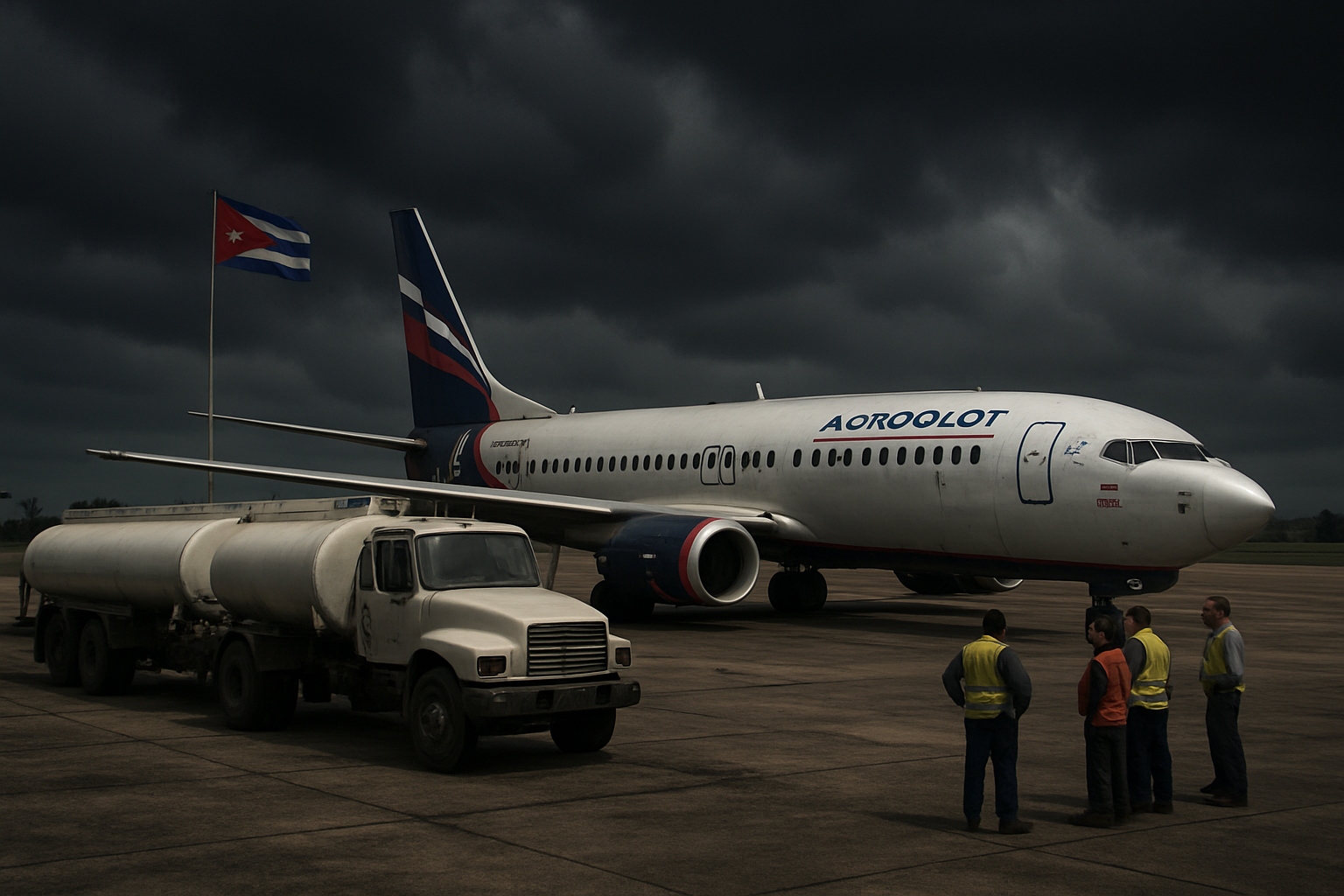
Russian airlines have temporarily suspended all flights to Cuba due to severe fuel shortages at Cuban airports, with emergency evacuation flights planned to bring home approximately 4,000 stranded Russian tourists from Havana and Varadero.
Russian aviation authority Rosaviatsia announced Wednesday that carriers Rossiya Airlines and Nordwind have halted operations to Cuba indefinitely, citing "difficulties with aircraft refueling at local airports." The suspension represents the latest and most significant international airline withdrawal as Cuba faces its worst energy crisis in decades.
Emergency Evacuation Operations Underway
Rossiya Airlines, part of the Aeroflot Group, will conduct several special evacuation flights in the coming days to transport Russian tourists from Havana's José Martí International Airport and Varadero to Moscow. Tourism operators estimate at least 4,000 Russian nationals are currently stranded on the island.
Russia's Ministry of Economic Development has advised citizens to postpone travel to Cuba until the aviation fuel situation stabilizes. The emergency evacuation flights will depart with increased fuel loads to avoid any refueling requirements in Cuba.
Cuba's Aviation Isolation Deepens
The Russian suspension follows a series of international airline withdrawals as Cuba warned carriers over the weekend that jet fuel would remain unavailable for at least one month starting Tuesday. Cuba's aviation authorities confirmed that all nine major airports, including José Martí International in Havana, have zero Jet A-1 fuel availability through March 11, 2026.
"This represents the most comprehensive aviation isolation Cuba has experienced since the 1962 missile crisis,"
— International Aviation Analyst
The crisis affects approximately 400 weekly flights and 70,000 scheduled seats, creating unprecedented disruption to Caribbean aviation networks. Major Canadian carriers Air Canada and WestJet suspended operations earlier this week, evacuating an estimated 21,000 Canadian tourists who represented nearly half of Cuba's foreign visitor base.
Energy Crisis Reaches Critical Point
Cuba's fuel shortage stems from a broader energy crisis that has left the island with oil reserves down to just 15-20 days supply. Venezuelan crude shipments have been completely halted, while Mexico suspended oil deliveries following U.S. pressure under the Trump administration's January 30 executive order threatening 25% tariffs on countries supplying oil to Cuba.
The energy emergency has triggered comprehensive restrictions across Cuban society, including:
- Four-day work weeks for government employees
- Scheduled blackouts affecting 51% of the population during peak hours
- Suspension of non-emergency hospital surgeries
- Semi-virtual university classes
- 90% of provincial gas stations closed
Tourism Industry Devastation
The aviation fuel crisis has delivered a devastating blow to Cuba's tourism sector, with major international hotel chains including Spanish operators Meliá and Iberostar closing Varadero and northern coast facilities. Canadian chain Blue Diamond has similarly shuttered operations due to staff transportation difficulties.
Cuba's tourism industry, which employed hundreds of thousands and generated crucial foreign currency, now faces what analysts describe as "complete freefall." The Canadian government's "high degree of caution" travel advisory has prompted thousands of trip cancellations, effectively ending the crucial winter tourism season.
International Response and Implications
Russia has condemned what it terms "economic strangulation" of Cuba, while European media outlets have characterized the situation as a "deliberately engineered humanitarian emergency." The crisis tests the limits of economic coercion as a diplomatic tool, with 11 million Cuban inhabitants facing potential complete aviation isolation.
Mexico has maintained humanitarian aid despite suspending oil shipments, with President Claudia Sheinbaum deploying naval vessels carrying 814 tons of supplies while emphasizing that Mexico "won't allow its territory to be used for pressuring other nations."
Historical Context and Comparisons
The current crisis exceeds the severity of Cuba's 1990s "Special Period" following the Soviet collapse. Unlike that earlier crisis caused by external economic collapse, the current situation results from deliberate U.S. policy targeting Cuba's energy infrastructure through pressure on supplier nations.
Cuban President Miguel Díaz-Canel has called for dialogue with the United States while describing the current situation as an attempt at "total asphyxiation" of Cuba's economy. The crisis has severed Cuban-American family connections and eliminated medical evacuation capacity for the island's population.
Aviation Industry Adaptations
International carriers operating in the Caribbean are exploring contingency routing through Mexico and the Dominican Republic, similar to adaptations made during the 1990s Special Period. Some airlines are increasing departure fuel loads significantly to avoid any Cuban refueling requirements, though this reduces cargo capacity and increases operational costs.
The crisis has exposed vulnerabilities in Caribbean aviation networks, with regional connectivity severely disrupted. Airlines face the challenge of maintaining service to other Caribbean destinations while avoiding Cuban airspace restrictions and fuel shortage complications.
Economic and Humanitarian Consequences
The aviation isolation affects more than tourism, disrupting essential supply chains and medical services. Healthcare systems face critical challenges with surgery suspensions, staff transportation difficulties, and power outages threatening medicine storage and critical equipment operation.
The eastern provinces, home to 3.4 million people, have been particularly affected following failures at the Holguín electrical substation. Sugar harvests have been halted, and major international conferences canceled as the island struggles with the most severe energy restrictions in its modern history.
Looking Forward
Resolution of the crisis requires either diplomatic breakthrough, alternative supply arrangements circumventing U.S. pressure, or fundamental changes to Cuba's energy infrastructure. No timeline has been identified for lifting the restrictions that have created this unprecedented aviation blockade.
The Russian evacuation flights represent a temporary measure to address the immediate humanitarian concern of stranded tourists, but the broader aviation crisis appears likely to persist through March 2026 unless diplomatic or policy changes occur.
The situation demonstrates how modern economic pressure can achieve complete aviation isolation of an entire nation, setting a precedent for 21st-century economic warfare capabilities while raising questions about collective punishment approaches affecting civilian populations beyond political objectives.