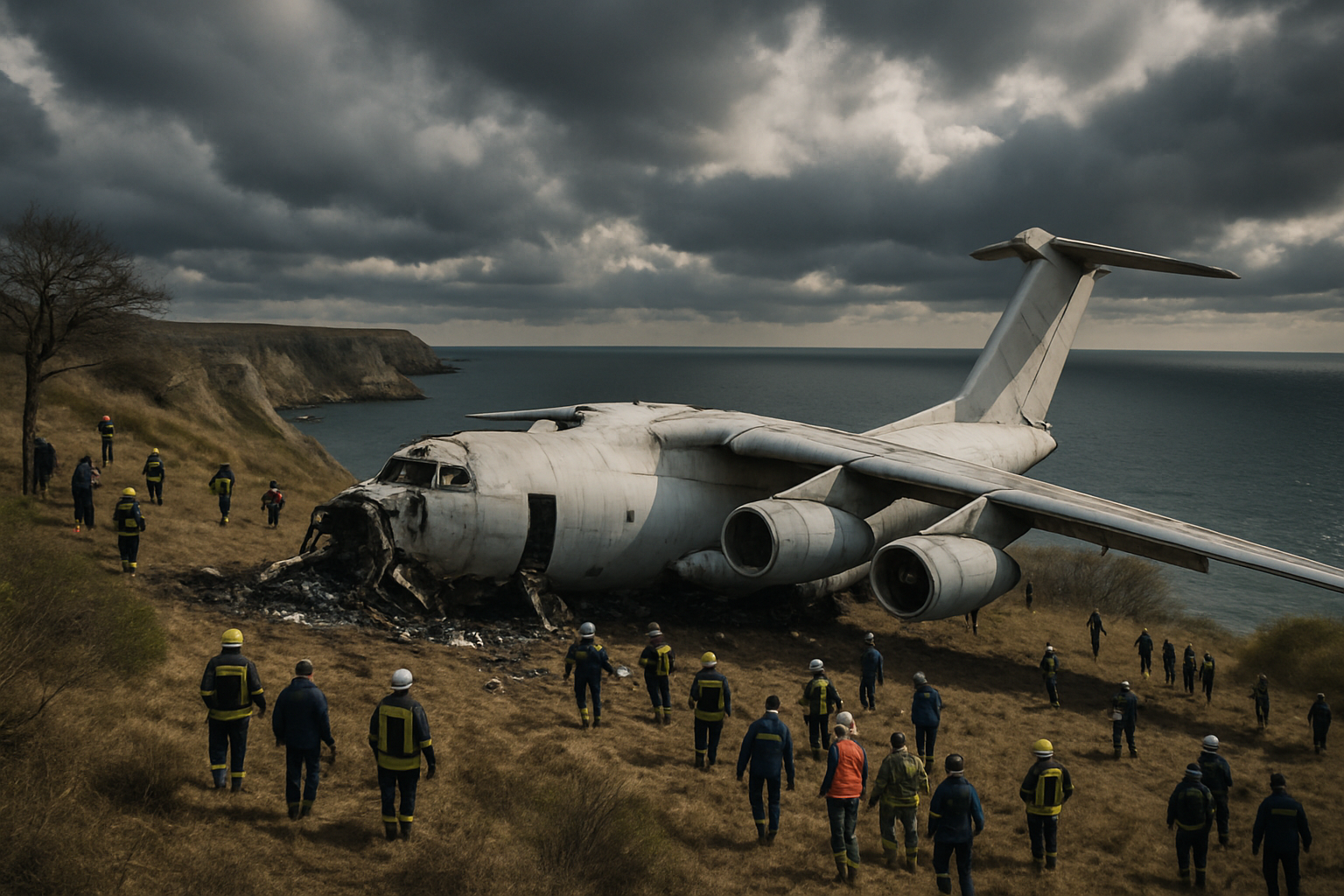
A Russian An-26 military transport plane crashed into a cliff in Crimea on Wednesday, killing all 29 people on board in one of the deadliest military aviation disasters in the region since Russia's 2014 annexation of the peninsula.
The aircraft, carrying 23 passengers and six crew members, crashed during what Russian news agencies reported as a routine military transport operation. The Russian Defense Ministry confirmed the incident early Wednesday morning, with the crash site located in Crimea, the Black Sea peninsula annexed by Russia from Ukraine in 2014.
Technical Failure Suspected
According to multiple international sources analyzing the incident, the crash appears to have been caused by technical difficulties rather than external factors. Finnish news agency Yle reported that the Russian Defense Ministry attributed the plane's crash to a "technical malfunction."
French media outlet Le Monde, citing Russian state news agency TASS, reported that "no signs of external impact were found on the aircraft debris," with investigators focusing on a technical failure as the primary cause. Venezuelan news sources confirmed similar assessments, noting that examinations of the wreckage showed "no signs of external impact," suggesting the accident was caused by mechanical problems.
International Monitoring of Incident
The crash has drawn attention from international media and defense analysts across multiple continents. News outlets from China to Norway have reported on the incident, highlighting the significance of military aviation safety in the region during ongoing tensions.
Danish broadcaster DR reported that 29 people were killed when the Russian military aircraft went down over the Crimean Peninsula. Norwegian state broadcaster NRK, citing Russian media sources, confirmed that both passengers and crew members lost their lives when the AN-26 transport plane crashed in Crimea.
The incident represents one of the most serious military aviation accidents in Crimea since the territory's disputed status began in 2014. The An-26 is a Soviet-era twin-engine turboprop transport aircraft that has been widely used by former Soviet military forces for decades.
Regional Aviation Safety Concerns
This crash adds to growing concerns about military aviation safety in the region, where aging aircraft fleets continue to operate under challenging conditions. The An-26, while generally considered reliable, represents technology from the Soviet era that requires intensive maintenance to operate safely.
Military aviation experts have noted that transport operations in mountainous coastal terrain like Crimea's cliff regions present additional challenges for aircraft operations, particularly during adverse weather conditions or mechanical difficulties.
Broader Context
The incident occurs against the backdrop of heightened military activity in the Black Sea region. International observers have documented increased military aviation operations in and around Crimea since 2014, with transport aircraft playing crucial roles in maintaining military logistics and supply lines.
This crash follows a concerning pattern of military aviation incidents globally in recent months. Earlier in 2026, similar transport aircraft accidents occurred in other regions, including a Bolivian Air Force C-130 Hercules crash at El Alto Airport that killed 22 people, and a Colombian Air Force C-130 crash in the Amazon region that resulted in 69 fatalities.
The frequency of such incidents has raised questions about aging military aircraft fleets worldwide and the need for enhanced safety protocols, particularly for transport operations in challenging geographic conditions.
Investigation Ongoing
Russian authorities have initiated a comprehensive investigation into the crash, focusing on mechanical systems, maintenance records, and operational factors that may have contributed to the accident. The investigation is expected to examine the aircraft's service history, recent maintenance activities, and the crew's operational procedures.
International aviation safety experts note that such investigations typically take several months to complete, particularly when technical failure is suspected as the primary cause. The findings may have implications for other An-26 operators worldwide and could influence future military aviation safety protocols.
The crash represents a significant loss of life and highlights ongoing challenges in maintaining aging military aircraft fleets. As investigations continue, the incident serves as a reminder of the risks inherent in military aviation operations, particularly in regions where aircraft must operate under demanding geographical and operational conditions.