Russian forces launched widespread attacks across Ukraine Tuesday morning, killing at least five civilians and injuring dozens more, as Poland scrambled fighter jets and activated air defense systems in response to missile strikes near its border, highlighting the expanding regional impact of the ongoing conflict.
The coordinated Russian assault targeted multiple Ukrainian regions with a combination of drones, missiles, and guided aerial bombs, marking another escalation in systematic attacks on civilian infrastructure. Ukrainian air defense forces successfully intercepted 25 missiles and 365 drones of various types, but the sheer scale of the attack overwhelmed defensive capabilities in several areas.
Casualty Reports Across Multiple Regions
The human toll from Tuesday's attacks was devastating. In the Poltava region, two people were killed and 11 injured in early morning strikes, according to regional military administration head Vitaliy Diakivnich. The attacks caused significant damage to railway infrastructure, disrupting transportation networks crucial for both civilian and military logistics.
Additional casualties were reported in Zaporizhzhia, where Russian troops struck the Kosmichnyi district, causing a gas station to catch fire and injuring one person. In Kherson's Central district, Russian forces used multiple-launch rocket systems, killing one person and injuring several others in what has become a daily pattern of attacks on the southern city.
"The systematic targeting of civilian areas represents a clear violation of international humanitarian law and the Geneva Conventions,"
— Ukrainian Defense Ministry Statement
Poland Responds with Military Mobilization
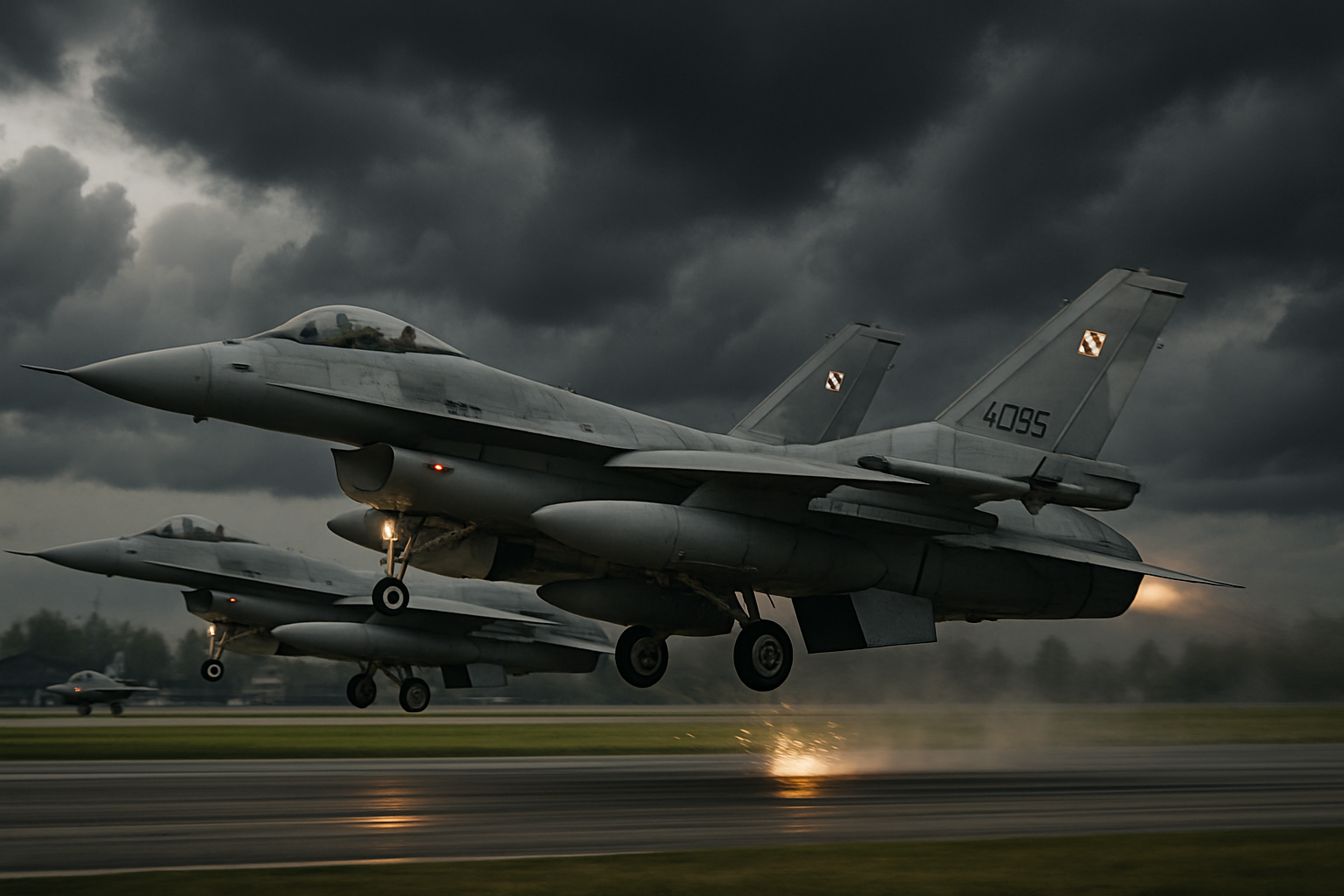
In an unprecedented response to the missile strikes near its eastern border, Poland scrambled combat aircraft and placed ground reconnaissance and air defense systems on high alert Tuesday morning. The Polish Ministry of Defense confirmed the deployment of F-16 fighter jets and activation of Patriot missile defense systems along the Ukrainian border.
This marked the most significant Polish military response to Russian attacks since the conflict began, reflecting growing concerns about the spillover effects of the war. Polish officials emphasized that while no missiles crossed into Polish airspace, the proximity of Russian strikes to NATO territory required an immediate defensive posture.
Air Defense Operations Under Extreme Pressure
Ukrainian Air Defense Forces faced one of the most challenging operations of 2026, attempting to intercept an overwhelming barrage of Russian weapons. The success rate of 25 missiles and 365 drones intercepted demonstrates both the effectiveness of Western-supplied air defense systems and the unsustainable pressure Ukrainian forces face daily.
The scale of the Russian attack - deploying hundreds of drones alongside ballistic and cruise missiles - represents a coordinated effort to saturate Ukrainian air defenses. Military analysts note this tactic is designed to overwhelm defensive capabilities and ensure some weapons reach their intended targets.
Regional Infrastructure Under Siege
Tuesday's attacks continued Russia's systematic campaign against Ukrainian civilian infrastructure, particularly targeting energy facilities and transportation networks. The strikes on railway infrastructure in Poltava region follow a pattern of attacks designed to disrupt Ukraine's ability to move personnel and supplies across the country.
Energy facilities across multiple regions reported damage, though Ukrainian officials have not disclosed the full extent of the impact. The attacks come as Ukraine continues to repair damage from previous strikes while preparing for the challenging winter months ahead.
International Response and NATO Implications
Poland's military response signals a new level of concern within NATO about the conflict's potential to escalate beyond Ukrainian borders. The deployment of Polish air defense systems represents the most direct military response by a NATO member to Russian attacks during the current phase of the conflict.
NATO officials have repeatedly stated that any attack on alliance territory would trigger Article 5 collective defense provisions. Poland's heightened alert status suggests growing anxiety about missile fragments or targeting errors that could affect Polish territory.
Humanitarian Crisis Deepens
The latest attacks add to a mounting humanitarian crisis as Ukraine approaches the conflict's fourth anniversary. With winter approaching, attacks on energy infrastructure threaten to leave millions of Ukrainians without adequate heating and electricity during the coldest months of the year.
International humanitarian organizations report that over 17.8 million Ukrainians are currently accessing winter support programs, highlighting the massive scale of civilian impact from Russia's systematic infrastructure targeting.
Military Analysis: Escalation Patterns
Military experts note that Tuesday's attack pattern - combining mass drone swarms with precision missile strikes - represents an evolution in Russian tactics. The coordination of different weapon systems suggests improved command and control capabilities despite ongoing Western sanctions on military technology.
The timing of the attacks, coinciding with reported diplomatic efforts, follows a documented pattern of Russian military escalation during potential negotiating periods. Analysts interpret this as an attempt to strengthen Moscow's bargaining position through demonstrated military capability.
Looking Ahead: Regional Security Concerns
The escalation in attacks and Poland's military response indicate that the conflict's impact is expanding beyond Ukraine's borders. NATO members bordering Ukraine face increasing pressure to balance support for Ukrainian defense with protection of their own territories.
As the conflict approaches its fourth anniversary, the international community continues to grapple with supporting Ukraine while preventing further escalation that could draw NATO directly into the conflict. Poland's response demonstrates the delicate balance alliance members must maintain as the war continues.
The systematic nature of Russian attacks on civilian infrastructure, combined with the regional military responses they provoke, suggests the conflict is entering a new phase with potentially broader implications for European security architecture.