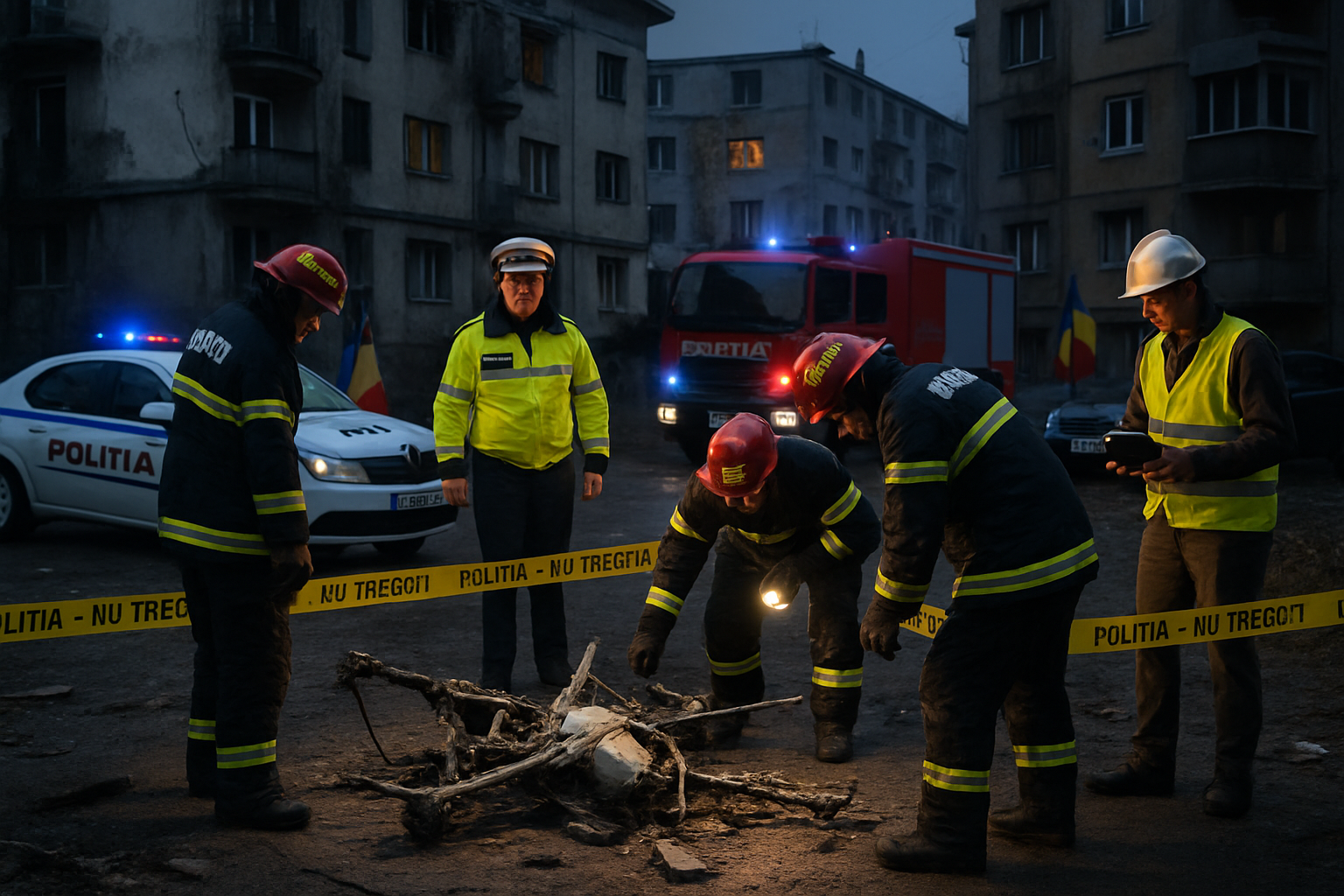
A Russian drone crashed in the Romanian city of Galați on Saturday, prompting swift condemnation from President Nicușor Dan and raising serious concerns about the spillover effects of the Ukraine conflict into NATO territory.
President Nicușor Dan strongly condemned what he termed "Russia's irresponsible behavior," which endangers "the safety of Romanian citizens, a NATO member state," following the drone crash in Galați municipality. The incident marks a significant escalation in cross-border security concerns as the conflict continues to affect neighboring countries.
Multiple Drone Debris Sites Discovered
The situation expanded beyond the initial Galați incident, with drone debris discovered at a farm in Grindu locality, Tulcea County. Alexandru Damaschin, administrator of Teodema farm in Grindu, reported finding "a crater and some debris" during his morning rounds, prompting immediate response from authorities.
Defense Minister Radu Miruță explained that the drone penetrated Romanian national airspace flying at a very low altitude in an area where monitoring is more difficult. He confirmed that NATO was informed according to established procedures, emphasizing the alliance's coordinated response to such incidents.
Explosive Ordnance and Controlled Detonation
Romanian institutions acted in coordination to reduce risks through controlled detonation of fragments from the Russian drone. The explosive-laden drone that fell in a neighborhood on the outskirts of Galați was safely detonated by authorities in a secure area, approximately two kilometers from the impact site on the shores of Lake Brateș in an uninhabited perimeter.
"This incident highlights the need to accelerate the army's equipment and modernization programs so that we can respond adequately to these challenges."
— President Nicușor Dan
Surveillance Limitations and Air Defense Challenges
Defense Minister Miruță acknowledged that while the Romanian Army has the capability to monitor airspace, there are limitations when dealing with small objects flying at low altitudes. The minister explained that such drones operate in conditions where surveillance becomes significantly more challenging, highlighting a persistent vulnerability in NATO's eastern border defenses.
The incident occurred during what officials described as a "tense night" along the Ukrainian border, with RO-ALERT emergency messages issued in Tulcea County and NATO aircraft scrambled in response to heightened activity.
Regional Security Context and Historical Pattern
This incident is part of a broader pattern of spillover effects from the Ukraine conflict affecting neighboring NATO countries. Previous incidents have included Ukrainian drones inadvertently entering Finnish and Estonian airspace during operations targeting Russian facilities, demonstrating the complex challenges of distinguishing between hostile and friendly aircraft in the current security environment.
The drone crash occurred amid Russia's continued massive coordinated attacks on Ukraine, involving over 600 aerial targets in recent operations. While Ukrainian air defense systems have intercepted significant numbers of missiles and drones, the scale of Russian attacks creates inherent risks for neighboring countries.
NATO Response and Alliance Coordination
The incident activated NATO's established response protocols, with the alliance's Arctic Sentry mission providing enhanced intelligence sharing and satellite surveillance capabilities. Romania's strategic position on NATO's eastern flank, with a 650-kilometer border with Ukraine, makes it a crucial component of the alliance's collective defense posture.
Romania has maintained strong support for Ukraine throughout the conflict, contributing to international aid efforts and achieving the historic NATO 2% GDP defense spending target alongside all other alliance members for the first time in the organization's 75-year history.
Diplomatic Implications and International Law
President Dan's condemnation emphasized that the incident demonstrates a lack of respect for international law and puts Romanian citizens at risk. The controlled detonation revealed that the drone contained explosive charges, confirming its military nature and the serious threat it posed to civilian populations.
The incident occurs against the backdrop of suspended trilateral peace negotiations between Ukraine, Russia, and the United States, which were indefinitely postponed due to the Iran crisis despite February 2026 breakthroughs including a historic 314-prisoner exchange and restored US-Russia military communications.
Regional Security Architecture Under Pressure
This drone incident illustrates how modern conflicts transcend traditional boundaries through spillover effects, challenging NATO's ability to protect member states while supporting Ukraine's defensive operations. The electronic warfare environment in Ukraine disrupts GPS navigation systems, contributing to technical difficulties that can result in such cross-border incidents.
Lithuania has warned that Russia could be ready for "limited military conflict" within 3-5 years, while the Baltic states have experienced similar drone incidents during Ukrainian operations targeting Russian facilities. These patterns highlight the urgent need for enhanced air defense capabilities and diplomatic solutions to protect civilian populations.
Looking Forward: Security and Diplomatic Challenges
The Romanian drone incident serves as a stark reminder of how the Ukraine conflict's effects extend beyond the immediate theater of operations. As the conflict continues with no immediate resolution in sight, NATO member states on the eastern flank face ongoing challenges in balancing support for Ukraine with protection of their own territory and citizens.
The successful coordinated response by Romanian authorities and NATO demonstrates the alliance's preparedness for such cross-border incidents while maintaining strong support for Ukraine's territorial sovereignty. However, the incident underscores the critical need for diplomatic solutions that can address the root causes of the conflict and prevent further escalation that threatens regional stability.