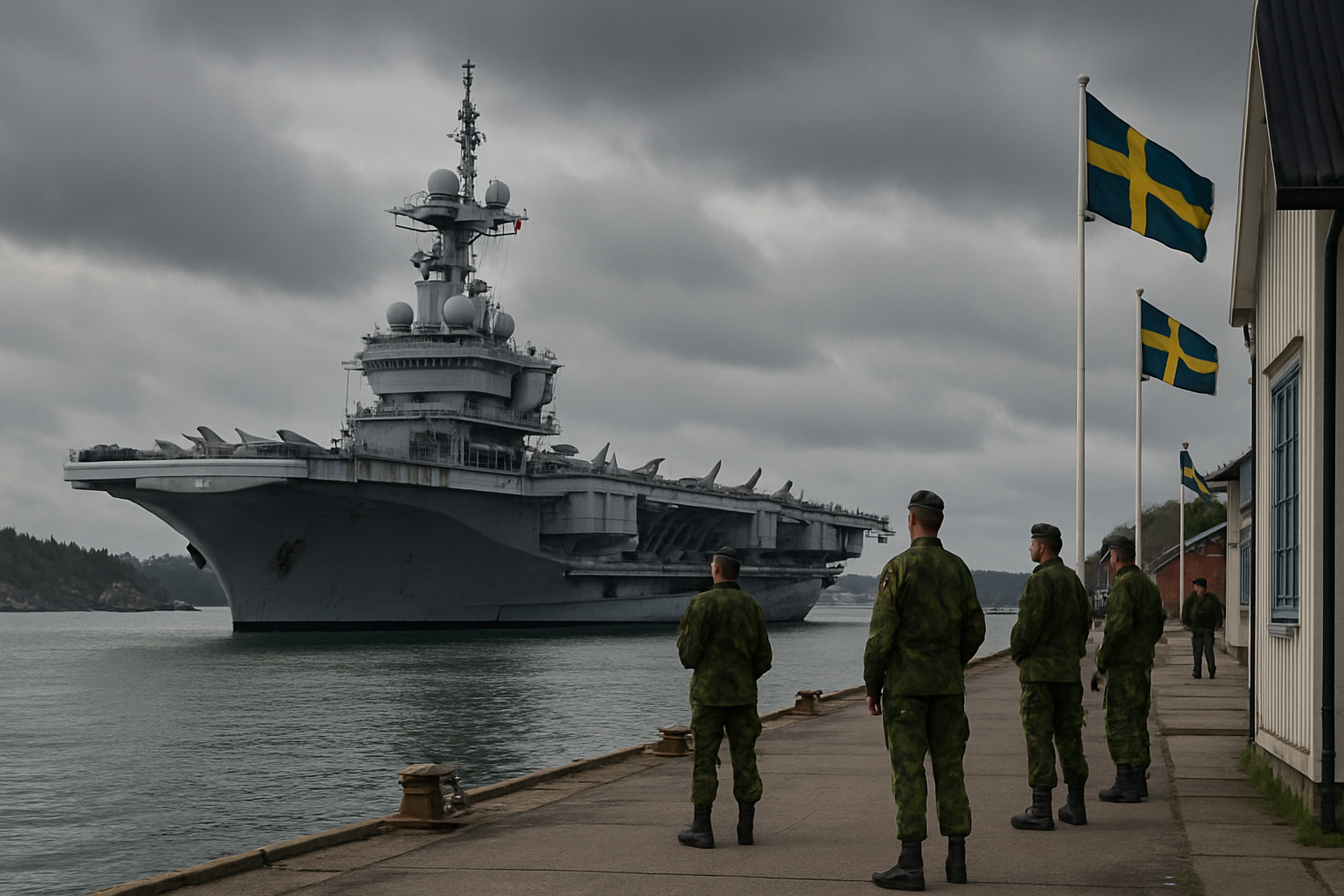
Swedish armed forces confirmed Friday that a Russian drone intercepted near the French aircraft carrier Charles de Gaulle during NATO exercises originated from a Russian reconnaissance vessel, marking a significant escalation in Baltic Sea tensions amid deteriorating European security conditions.
The unmanned aircraft was jammed approximately 13 kilometers from the Charles de Gaulle in the Øresund Strait near Malmö, where the French flagship had arrived for a port call before participating in NATO exercises. Swedish Defense Minister Pål Jonson characterized the incident as "serious and irresponsible" while Defense Chief Ewa Skoog Haslum declared it "not surprising" given Russia's pattern of provocative behavior.
Russian Intelligence Operation Confirmed
According to Swedish military sources, the drone was launched from the Russian reconnaissance vessel Zhigulevsk, which was operating in international waters in the Baltic Sea. This represents a deliberate intelligence gathering operation targeting one of NATO's most significant naval assets during active military exercises.
"The Russian Armed Forces confirm that the drone that flew near the French aircraft carrier in Malmö this week was Russian," Swedish forces stated in an official release. The incident occurred Wednesday as the 42,000-ton Charles de Gaulle - France's only aircraft carrier and flagship of the Marine Nationale - was conducting scheduled operations with NATO allies.
"Russia is constantly testing boundaries and limits. This type of action is not surprising but represents a serious violation of our airspace."
— Ewa Skoog Haslum, Swedish Defense Chief
Broader Pattern of Russian Aggression
The Baltic Sea incident fits within a documented pattern of Russian military provocations against NATO forces and infrastructure. Recent months have seen increased Russian reconnaissance activities, submarine incursions, and electronic warfare operations targeting Nordic and Baltic nations.
Sweden's confirmation of the drone's Russian origin comes as European security experts warn of escalating hybrid warfare tactics employed by Moscow. The timing of the operation - during active NATO exercises involving the French carrier group - suggests a coordinated intelligence effort to gather operational data on Western military capabilities.
The Charles de Gaulle's presence in Nordic waters represents France's commitment to collective defense under Article 5, particularly as Sweden completed its transition to full NATO membership following Russia's invasion of Ukraine. The carrier typically operates with an escort group including frigates, submarines, and supply vessels, making the drone penetration particularly concerning for alliance security planners.
Swedish Response and Regional Implications
Swedish authorities have launched a comprehensive investigation into the airspace violation while reinforcing maritime security protocols in the Baltic region. The incident has prompted renewed discussions about air defense coordination among Nordic NATO members.
Defense Minister Pål Jonson emphasized that such provocations would not deter Sweden from fulfilling its alliance commitments. "We will continue to strengthen our defenses and work closely with our NATO allies to ensure regional security," he stated during a parliamentary briefing.
The Øresund Strait, connecting the Baltic Sea to the North Sea between Sweden and Denmark, represents a critical chokepoint for naval operations. Russian surveillance of NATO naval movements through this waterway has significant implications for alliance operational security and freedom of navigation.
NATO Exercise Security Concerns
The Russian drone operation during active NATO exercises raises serious questions about operational security and intelligence protection. Military analysts note that reconnaissance data gathered could compromise future alliance operations and reveal tactical capabilities of participating forces.
French naval officials have not publicly commented on potential intelligence compromises but sources indicate enhanced security protocols are being implemented for future exercises. The Charles de Gaulle carries sensitive military technology including nuclear-capable aircraft and advanced surveillance systems.

International Law and Airspace Sovereignty
Legal experts characterize the incident as a clear violation of Swedish airspace sovereignty under international maritime law. While the Russian vessel Zhigulevsk operated in international waters, the drone's penetration of Swedish territorial airspace represents a breach of sovereignty recognized under the UN Convention on the Law of the Sea.
Sweden's measured response reflects the delicate balance between deterring Russian aggression and avoiding escalation that could provide Moscow with justification for further provocations. The incident demonstrates the challenges facing smaller NATO members in confronting sophisticated Russian intelligence operations.
Regional Security Architecture Under Pressure
The Baltic Sea has emerged as a critical theater in the broader confrontation between NATO and Russia, with recent incidents including suspected sabotage of underwater cables, GPS jamming, and increased submarine activity. The drone operation against the Charles de Gaulle represents an escalation in the sophistication and boldness of Russian intelligence operations.
Nordic security officials report a dramatic increase in Russian reconnaissance activities since Sweden and Finland joined NATO, with Moscow apparently seeking to map alliance capabilities and operational patterns in the region. The use of unmanned systems allows Russia to gather intelligence while maintaining plausible deniability and avoiding direct confrontation.
Alliance Coordination and Future Deterrence
NATO officials are coordinating response strategies to address the growing pattern of Russian intelligence operations in the Baltic region. The incident has prompted discussions about enhanced air defense coordination and information sharing among alliance members.
Swedish and French military commanders are conducting joint assessments of the security breach while developing protocols to prevent similar incidents during future exercises. The cooperation represents the practical implementation of Article 5 collective defense principles in peacetime intelligence protection.
"This incident demonstrates why strong transatlantic cooperation and robust deterrence capabilities remain essential for European security."
— NATO Official, speaking on condition of anonymity
The Russian drone operation against the Charles de Gaulle serves as a stark reminder of the evolving security challenges facing NATO in an era of hybrid warfare and great power competition. As alliance members adapt to new forms of aggression, incidents like these underscore the importance of collective vigilance and coordinated response in maintaining deterrence against authoritarian provocations.
Swedish authorities continue monitoring Russian naval activities in the Baltic while strengthening defensive capabilities in coordination with NATO allies. The incident will likely influence future exercise planning and security protocols as the alliance adapts to the reality of persistent Russian intelligence operations targeting Western military assets.