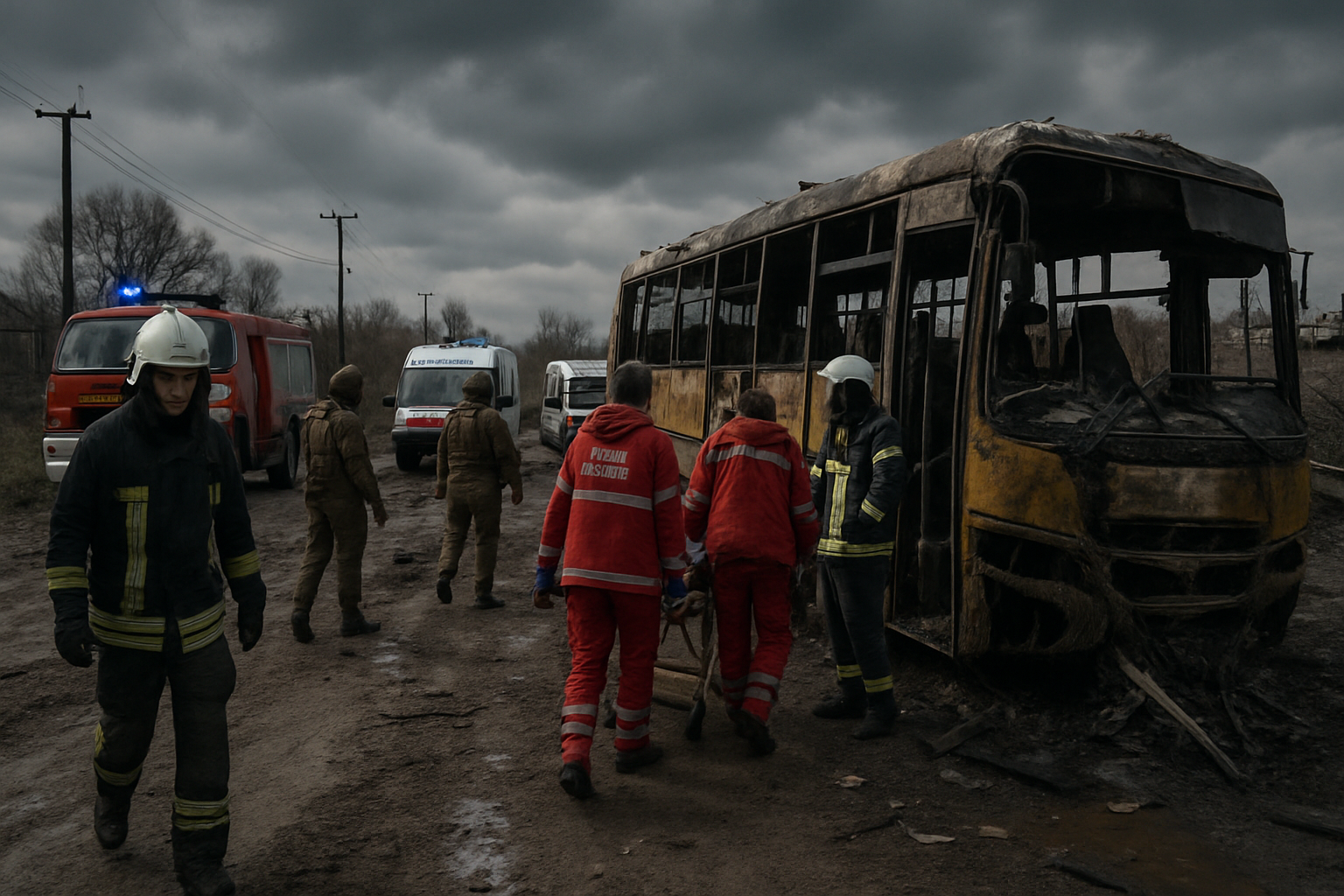
Fifteen Ukrainian miners were killed and seven others wounded when a Russian drone struck their service bus in the Dnipropetrovsk region on Sunday, marking one of the deadliest attacks on civilian energy workers since the conflict began.
The fatal strike occurred in the town of Ternivka, Pavlohrad district, targeting a service bus belonging to DTEK, Ukraine's largest private energy company. The victims were returning home after completing their work shift at a local mining facility, according to company officials and government sources.
Details of the Attack
Ukrainian emergency services reported that the Russian drone specifically targeted the civilian transport vehicle in what First Deputy Prime Minister Denys Shmyhal described as a "cynical and targeted attack" on the country's energy sector workers. The strike demonstrates Russia's continued targeting of civilian infrastructure and personnel critical to Ukraine's energy operations.
According to Ukrainian media reports, six of the seven wounded individuals remain in serious condition, highlighting the severity of the attack. The exact type of drone used in the strike has not been officially confirmed, though Russian forces have increasingly deployed various unmanned aerial vehicles to target civilian areas throughout the conflict.
"The victims were DTEK workers returning home after their shift. This represents another deliberate attack on civilian energy infrastructure personnel."
— Ukrainian Emergency Services
Broader Pattern of Attacks
The deadly bus strike was not an isolated incident on Sunday. In the southeastern city of Zaporizhzhia, Russian forces also targeted a maternity hospital and residential building, wounding at least six people. The coordinated attacks on civilian facilities underscore Moscow's strategy of targeting critical infrastructure and healthcare facilities.
The timing of these attacks comes amid harsh winter conditions across Ukraine, making the targeting of energy workers particularly concerning for the country's ability to maintain power supplies during one of the coldest seasons in recent memory. DTEK workers have been on the front lines of efforts to restore and maintain electrical infrastructure repeatedly damaged by Russian strikes.
International Response and Peace Talks Context
The attack occurred just hours after Ukrainian President Volodymyr Zelensky announced that trilateral peace talks between Ukraine, Russia, and the United States had been rescheduled from February 1st to February 4-5 in Abu Dhabi. Zelensky stated Ukraine was prepared for "substantial discussion" aimed at achieving a "real and dignified end to the war."
The deadly strike on civilian energy workers appears to contradict recent reports of a potential Russian suspension of attacks on energy infrastructure, raising questions about Moscow's commitment to meaningful peace negotiations. Ukrainian officials have consistently highlighted attacks on civilian targets as evidence of Russia's disregard for international humanitarian law.
Impact on Energy Sector
DTEK, as Ukraine's largest private energy company, plays a crucial role in maintaining the country's electrical grid and mining operations. The company's workers have been repeatedly targeted throughout the conflict, with energy infrastructure becoming a primary focus of Russian military strategy.
The loss of 15 experienced miners represents not only a human tragedy but also a significant blow to Ukraine's energy sector workforce. These workers are essential for maintaining coal mining operations that contribute to Ukraine's energy independence, particularly during the winter months when heating demands are highest.
Humanitarian Concerns
The targeting of civilian workers returning from their shifts raises serious humanitarian concerns under international law. The deliberate attack on non-combatant energy workers constitutes a violation of the Geneva Conventions' protections for civilian personnel.
Ukrainian authorities have documented this incident as part of a broader pattern of Russian attacks on civilian infrastructure, which they argue constitutes systematic war crimes. The international community continues to monitor these developments as part of ongoing accountability mechanisms.
Regional Security Implications
The Dnipropetrovsk region, where Sunday's attack occurred, has become a frequent target of Russian strikes due to its strategic importance for Ukraine's energy and industrial sectors. The region houses significant mining operations and energy infrastructure critical to the country's economic stability.
Local authorities have implemented enhanced security measures for civilian transport and energy facilities, though the drone strike demonstrates the continued vulnerability of workers traveling to and from essential infrastructure sites.
As Ukraine prepares for renewed peace negotiations, the continued targeting of civilian energy workers highlights the urgent need for concrete agreements on protecting non-combatant personnel and critical infrastructure. The families of the 15 miners killed in Sunday's attack join thousands of other Ukrainians who have lost loved ones in what officials characterize as systematic attacks on civilian targets.