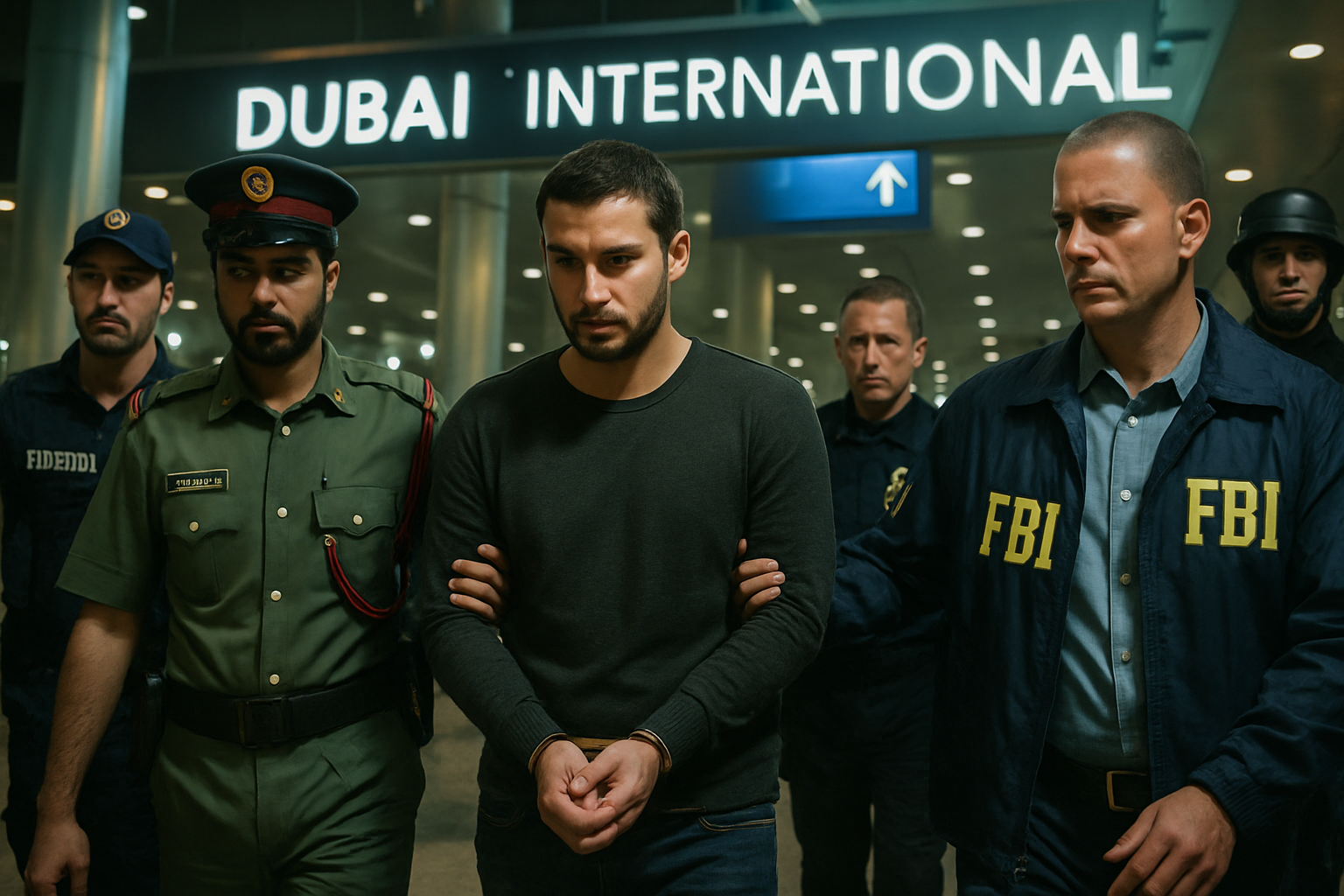
Russia's Federal Security Service (FSB) announced Sunday that a suspect in the attempted assassination of a senior military intelligence official has been detained in Dubai and extradited to Russia, marking a significant breakthrough in a high-profile shooting investigation that has raised questions about international security cooperation and alleged foreign intelligence involvement.
Lieutenant General Vladimir Alekseyev, 64, deputy head of Russia's Main Intelligence Directorate (GRU), was shot multiple times on Friday outside his apartment building in northwestern Moscow in what investigators describe as a targeted assassination attempt. The suspect, identified by Russian authorities as Lyubomir Korba, fled to the United Arab Emirates hours after the attack but was subsequently arrested and handed over to Russian authorities.
International Cooperation and Swift Arrest
The FSB confirmed that the suspect was detained in Dubai through cooperation with UAE authorities and has been transported to Russia for prosecution. Russian officials described the operation as a successful example of international law enforcement coordination, despite broader geopolitical tensions.
According to multiple sources, including reports from Algeria's Echorouk Online and Bosnia's Sarajevo Times, the arrest demonstrates the UAE's role as a neutral mediator extending beyond peace negotiations to criminal justice cooperation. The speed of the arrest and extradition process has been noted by international observers as particularly significant given the current state of global diplomatic relations.
"The man suspected of shooting the deputy head of the Russian military intelligence service in Moscow was detained and handed over to Russia in Dubai"
— Russian Federal Security Service Statement
Details of the Moscow Attack
The shooting occurred Friday at a residential building in the northwestern part of Moscow, where Alekseyev was reportedly shot several times by an assailant before the perpetrator fled the scene. Russian Investigative Committee spokesperson Svetlana Petrenko confirmed that Alekseyev was hospitalized following the attack and has since undergone surgery.
Multiple international news outlets, including Canada's CBC and China's South China Morning Post, reported that Alekseyev has regained consciousness following the medical treatment. The 64-year-old general serves as deputy head of the GRU, one of Russia's most important intelligence agencies responsible for military intelligence operations.
Russian media reports suggest the attack followed a series of incidents targeting senior military officers, raising concerns about security protocols for high-ranking officials in sensitive positions.
Claims of Ukrainian Intelligence Involvement
Russian authorities have accused Ukrainian intelligence services of orchestrating the attack, though Ukraine has firmly denied any involvement. According to Russia's Investigative Committee, the suspected gunman arrived in Moscow in late December "on assignment from Ukrainian intelligence services to commit a terrorist attack."
The allegations come amid ongoing tensions between Russia and Ukraine, with Russian officials suggesting this incident represents an escalation in targeting senior military leadership. However, these claims have been rejected by Ukrainian authorities, who dismiss the accusations as unfounded.
The timing of the attack and subsequent arrest has drawn attention from international security experts, particularly given its occurrence during a period of heightened diplomatic activity, including recent peace talks in Abu Dhabi involving Ukrainian, Russian, and U.S. representatives.
Alekseyev's Profile and Significance
Lieutenant General Vladimir Alekseyev is a senior figure in Russia's military intelligence apparatus, serving as first deputy head of the Main Intelligence Directorate. The GRU is responsible for military intelligence gathering and special operations, making any attack on its leadership a matter of significant security concern.
Alekseyev has been under European Union sanctions since 2018, reportedly linked to allegations regarding the Novichok chemical weapons case, and faces U.S. sanctions related to election interference accusations. Despite these international sanctions, he remains a central figure in Russia's military intelligence operations.
The attack on such a heavily protected and high-ranking official has raised questions about either significant security lapses or the sophistication of the operation targeting him.
Additional Suspects and Investigation Status
Russian authorities have indicated that multiple individuals may be involved in the plot. The FSB announced that a suspected accomplice was arrested in Moscow, while another suspect allegedly escaped to Ukraine. This suggests a coordinated operation involving multiple participants with international connections.
The Russian Investigative Committee has opened a criminal case for attempted murder and illegal arms trafficking. The investigation continues as authorities search for additional accomplices and seek to understand the full scope of the alleged conspiracy.
International Response and Implications
The arrest in Dubai and subsequent extradition to Russia demonstrates international law enforcement cooperation despite broader geopolitical tensions. The UAE's assistance in the apprehension represents a continuation of its role as a neutral mediator, extending from recent peace negotiations to criminal justice matters.
Security experts note that the professional execution of the attack suggests extensive planning, surveillance, and potentially inside knowledge of security protocols. The incident may prompt reviews of protection measures for other senior Russian military officials during this period of heightened international tensions.
The case also highlights the complex nature of international cooperation in law enforcement, particularly in cases involving allegations of foreign intelligence involvement. The successful arrest and extradition provide a model for addressing cross-border security challenges despite diplomatic tensions.
Broader Security Context
This incident occurs against the backdrop of ongoing international tensions and diplomatic efforts to address various global conflicts. Recent developments include successful prisoner exchanges between Russia and Ukraine, restoration of U.S.-Russia military communications, and various peace negotiation efforts.
The targeting of senior military intelligence officials represents a significant escalation in the types of operations being conducted during current geopolitical tensions. The international implications of such attacks affect not only bilateral relations but also broader security cooperation frameworks.
As the investigation continues, the case will likely influence discussions about protecting senior officials and maintaining security protocols during periods of heightened international tensions. The outcome of the prosecution may also affect diplomatic relations and international cooperation on security matters.