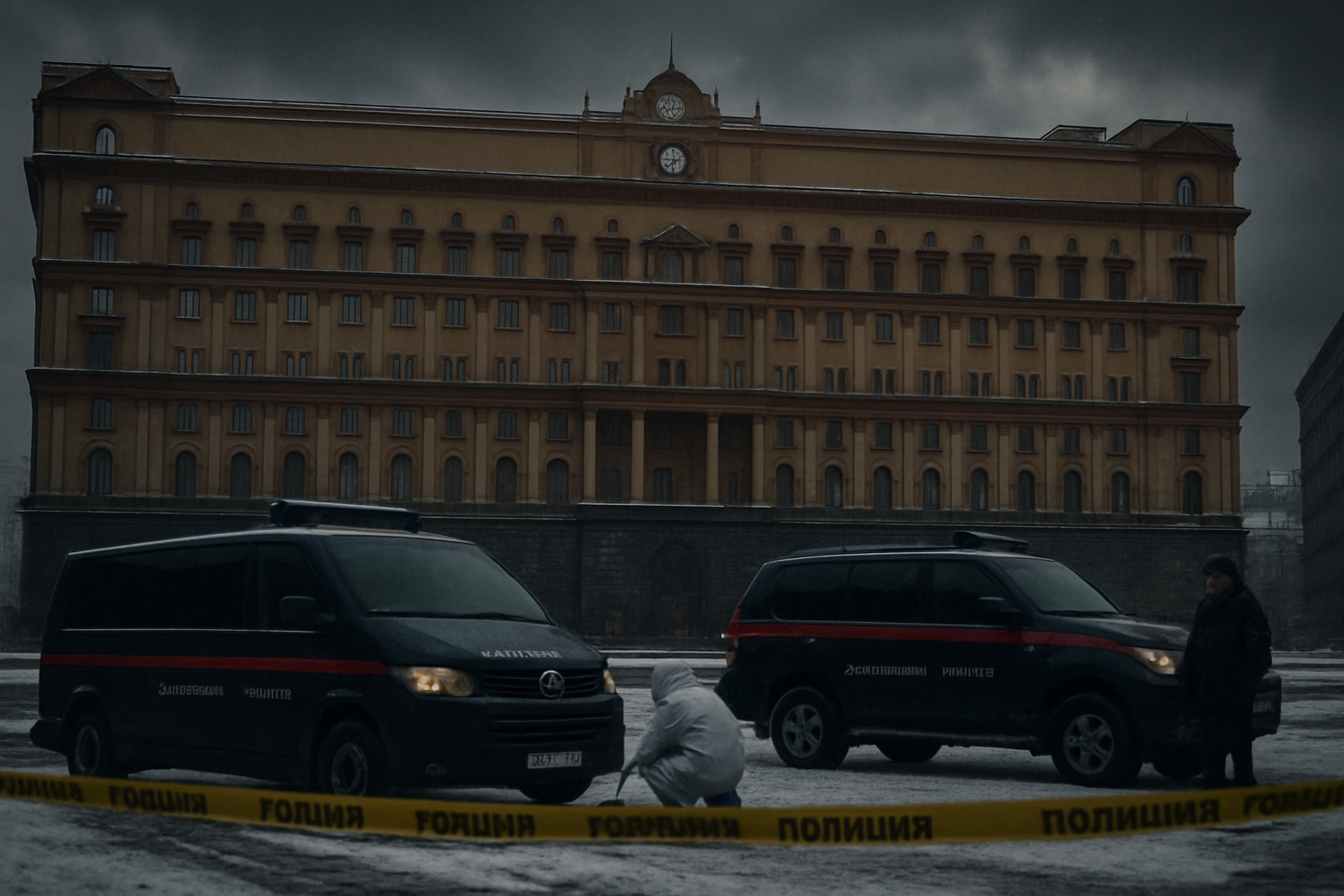
Lieutenant General Vladimir Alexeyev, one of Russia's most senior military intelligence officials, was critically injured in a targeted assassination attempt outside his Moscow apartment building on Friday, raising fresh questions about Ukraine's potential involvement in attacks on high-ranking Russian military figures.
Alexeyev, 64, deputy head of Russia's Main Intelligence Directorate (GRU), was shot multiple times by an unidentified gunman who fled the scene immediately after the attack, according to Russian investigators. The general was rushed to hospital in serious condition after the shooting, which occurred at his residential building on Volokolamskoe Highway in the early morning hours.
A High-Profile Target Under Western Sanctions
The attack on Alexeyev represents one of the most significant assassination attempts against a Russian military leader since the country's full-scale invasion of Ukraine began in February 2022. Born in Ukraine when it was still part of the Soviet Union, Alexeyev has been a central figure in Russia's intelligence operations and was placed under U.S. sanctions over alleged Russian cyber interference in the 2016 U.S. presidential election.
The European Union later imposed additional sanctions on Alexeyev over his alleged involvement in the 2018 poisoning of former Russian agent Sergei Skripal and his daughter in Salisbury, England. Despite these international sanctions, Alexeyev's career continued to advance, and he received a Hero of Russia award from President Vladimir Putin for his service.
"The entire floor was covered in blood,"
— Witness, speaking to Russian media
Professional Execution Suggests Planned Operation
Details emerging from the crime scene suggest a highly professional operation rather than a random attack. According to Swedish media reports, witnesses described finding "the entire floor covered in blood" after the shooting. The unidentified assailant reportedly posed as a delivery worker to gain access to the building before approaching the high-profile target.
Russian investigators have opened a criminal case for attempted murder of a high-ranking defense ministry official. The Moscow Prosecutor's Office has launched a comprehensive manhunt, though no arrests have been announced. The professional nature of the attack indicates careful surveillance and planning, according to security experts.
Diplomatic Context and Russian Accusations
The timing of the attack has drawn particular attention, occurring just one day after the conclusion of trilateral peace talks in Abu Dhabi between Ukraine, Russia, and the United States. Russian Foreign Minister Sergei Lavrov immediately blamed Ukraine for the attack, calling it a terrorist act aimed at disrupting ongoing diplomatic negotiations.
The Abu Dhabi talks had resulted in a breakthrough prisoner exchange involving 314 individuals - the first such swap in five months - and the restoration of U.S.-Russia military communications after a four-year suspension. Lavrov suggested the attack was designed to undermine these confidence-building measures.
Ukrainian officials have not responded to the accusations, following their typical practice of neither confirming nor denying involvement in attacks on Russian military figures. The pattern mirrors previous incidents where Russia has blamed Ukraine for targeting senior military officials.
Pattern of High-Profile Attacks
The attempted assassination of Alexeyev represents the latest in a series of attacks on senior Russian military figures since the Ukraine invasion began. Russia has consistently blamed Ukraine for these incidents, though Kyiv typically does not claim responsibility for such operations.
The attack removes, at least temporarily, a key GRU official from active duty during a critical period of the Ukraine conflict. Alexeyev's position would have made him closely involved in prosecuting Russia's military operations, including intelligence gathering and strategic planning.
Security Implications and Investigation
The successful targeting of such a highly protected official raises serious questions about security protocols for Russian military leadership. The attack demonstrates either significant security lapses or a highly sophisticated operation capable of penetrating the protection systems around one of Russia's most sensitive military figures.
Given Alexeyev's access to highly classified military and strategic information, the security breach has prompted concerns about broader vulnerabilities in Russia's protection of senior officials. The investigation outcome will likely influence security protocols for other high-ranking military leaders.
The professional nature of the attack, combined with the attacker's successful escape, suggests an operation with substantial intelligence support and careful planning. The method used - approaching the target in his residential building - indicates knowledge of his routines and security arrangements.
Broader Context of Military Intelligence Operations
As deputy head of the GRU, Alexeyev has been at the center of Russia's military intelligence operations during the Ukraine conflict. His role would have encompassed not only operations related to Ukraine but also the GRU's global intelligence activities, making him a high-value target for multiple potential adversaries.
Western intelligence agencies have long monitored Alexeyev's activities due to his alleged involvement in international operations. His targeting could significantly disrupt Russian intelligence capabilities, both in relation to Ukraine and broader global operations.
The attack comes at a time when Russia's intelligence services are already under strain due to the prolonged conflict and international sanctions. The removal of such a senior figure from active duty, even temporarily, could have cascading effects on ongoing operations.
International Response and Future Implications
The assassination attempt has added another layer of complexity to an already volatile situation. Coming just after diplomatic progress in Abu Dhabi, the attack threatens to undermine confidence-building measures that had been achieved through the peace talks.
The incident highlights the challenges facing any potential peace process, as military actions continue to escalate even as diplomatic channels remain active. The targeting of such a senior intelligence official could lead to further retaliatory actions and complicate future negotiations.
President Putin has been briefed on the situation, according to Russian media reports. The Kremlin's response to this attack on one of its most senior intelligence officials will likely influence the trajectory of both the military conflict and diplomatic efforts moving forward.
The investigation continues as Russian authorities work to identify the perpetrators and understand how such a high-profile target could be successfully attacked in the heart of Moscow. The outcome will have significant implications for both security protocols and the ongoing conflict dynamics.