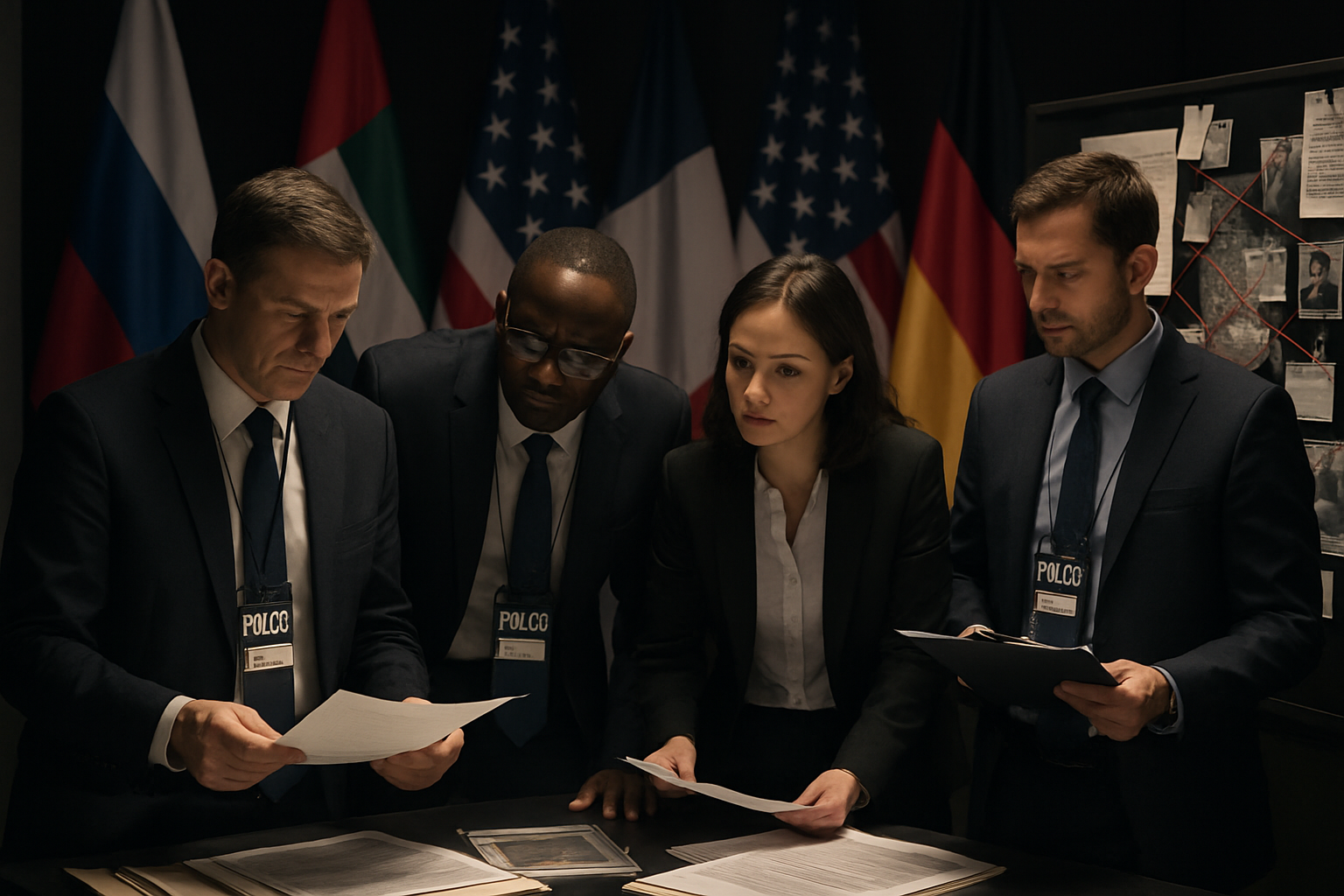
Russian security services have announced a major breakthrough in the investigation of the February 6 shooting attack on Lieutenant General Vladimir Alekseyev, a senior GRU intelligence officer, with the arrest and extradition of the primary suspect from Dubai and the detention of additional accomplices in Moscow.
The Federal Security Service (FSB) confirmed Sunday that 65-year-old Russian citizen Lyubomir Korba, suspected of carrying out the attempted assassination of the first deputy head of Russia's Main Intelligence Directorate, has been successfully extradited from the United Arab Emirates following coordinated international law enforcement efforts.
Swift International Cooperation
The arrest represents a remarkable display of cross-border law enforcement cooperation, with UAE authorities providing crucial assistance in apprehending and extraditing the suspect despite broader geopolitical tensions. The speed of the operation - conducted within 48 hours of the February 6 attack - demonstrates the sophisticated coordination between Russian and Emirati security services.
According to Russian sources, Korba was detained in Dubai and transported to Moscow, where he has been formally arrested and charged with attempted murder. The FSB released video footage showing the suspect being escorted by security personnel, marking a significant victory for Russian intelligence services in what they describe as a complex international investigation.
Multiple Suspects and Accomplices
Russian authorities have confirmed the arrest of additional suspects in connection with the attack. A second accomplice was detained in Moscow following pre-dawn raids conducted by the Counter-Terrorism Department and regional police forces. The coordinated operations suggest a broader network involving multiple participants with international connections.
Sources close to the investigation indicate that a third suspect, described as a female accomplice, has fled to Ukraine and remains at large. This development has added a diplomatic dimension to the case, with Russian authorities alleging the involvement of Ukrainian intelligence services - claims that Ukraine has categorically denied.
"This was a sophisticated operation that required extensive planning, surveillance, and inside knowledge of security protocols."
— Security Expert, speaking on condition of anonymity
The February 6 Attack
Lieutenant General Alekseyev, 64, was shot multiple times outside his residential building on Volokolamskoe Highway in northwestern Moscow during what investigators describe as a professionally executed assassination attempt. The attack occurred as Alekseyev was returning home, with the assailant approaching under the guise of a delivery worker.
Despite sustaining serious injuries, Alekseyev survived the attack and underwent emergency surgery. Russian medical sources confirm that the general has regained consciousness and his condition has stabilized, though he remains under intensive medical care.
The shooting represents one of the most significant attacks on a senior Russian military intelligence official in recent years. Alekseyev, who has served in the GRU for over a decade, holds a central position in Russia's military intelligence operations and has been subject to international sanctions related to his role in various intelligence activities.
Profile of the Target
As first deputy head of the Main Intelligence Directorate, Alekseyev occupies one of the most sensitive positions in Russia's intelligence hierarchy. The 64-year-old officer has been instrumental in coordinating military intelligence operations and has access to highly classified strategic information.
International observers note that targeting such a heavily protected figure would require either significant security lapses or a highly sophisticated operation with possible inside knowledge of security protocols and movement patterns.
International Implications
The successful arrest and extradition operation occurs against the backdrop of complex international relations and ongoing diplomatic tensions. The UAE's cooperation in facilitating the suspect's return to Russia demonstrates the country's continued role as a neutral mediator, extending beyond its recent hosting of Ukraine-Russia peace talks to criminal justice cooperation.
The case highlights the challenges and possibilities of international law enforcement cooperation even amid broader geopolitical divisions. Security experts emphasize that the professional nature of the attack suggests capabilities typically associated with state-level operations rather than individual criminal activity.
Allegations and Denials
Russian investigators have alleged that the attack was carried out "on assignment from Ukrainian intelligence services," with the suspect reportedly arriving in Moscow in late December with the specific intent to commit what authorities describe as a "terrorist attack." However, Ukraine has firmly rejected all involvement in the incident.
The timing of the attack, occurring during ongoing diplomatic efforts including the Abu Dhabi trilateral peace talks, has raised questions about potential efforts to disrupt diplomatic progress. The successful arrest may help clarify the true motivations and backing behind the operation.
Diplomatic Context
The investigation unfolds amid a complex diplomatic landscape that includes recent prisoner exchanges between Ukraine and Russia, the restoration of US-Russia military communications, and ongoing peace negotiations. The attack's resolution will likely influence broader discussions about security cooperation and international law enforcement frameworks.
Investigation Continues
Russian authorities have opened a comprehensive criminal case encompassing charges of attempted murder and illegal arms trafficking. The investigation is being conducted under the direct supervision of the Investigative Committee, with federal agencies coordinating the broader security review.
Security experts anticipate that the case will prompt reviews of protection protocols for other senior Russian officials and may influence international discussions about preventing similar attacks on high-ranking government figures during periods of diplomatic engagement.
The successful resolution of the immediate manhunt provides a foundation for deeper investigation into the planning, financing, and coordination of what authorities describe as a sophisticated international operation targeting one of Russia's most protected intelligence officials.
Broader Security Implications
The attack and subsequent investigation highlight the complex challenges facing international security cooperation in an era of heightened tensions. The case demonstrates both the vulnerabilities of even heavily protected officials and the potential for effective cross-border law enforcement cooperation when criminal activities transcend national boundaries.
As the investigation continues, the international community will closely monitor how the case develops and what it reveals about the intersection of criminal activity, international relations, and security cooperation in addressing threats to senior government officials across national boundaries.