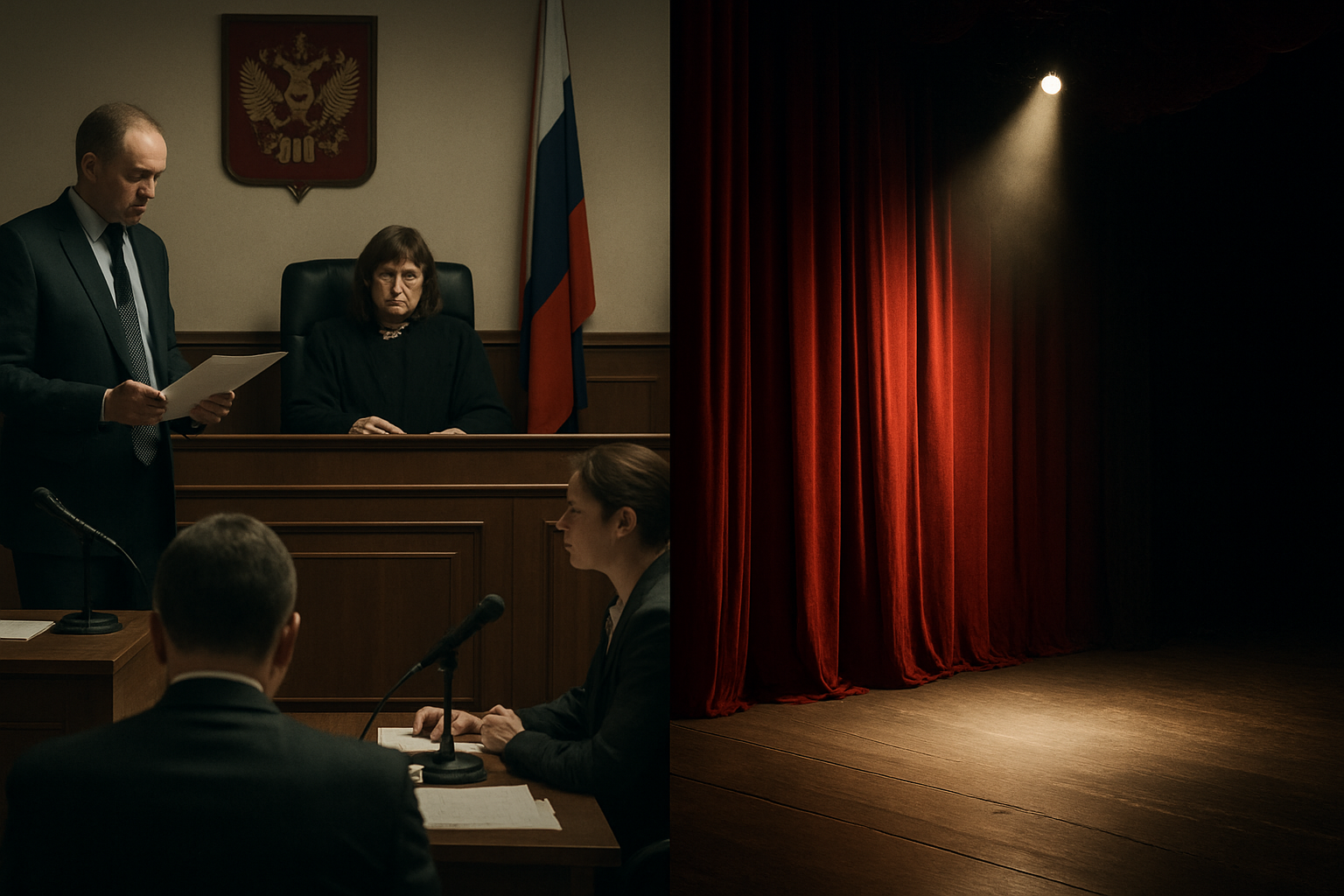
Russia confronts significant losses in both its legal and cultural institutions as courts deliberate the fate of a murder suspect while the artistic community mourns the death of renowned dramatist Nikolai Kolyada, who passed away at 68 after a prolonged illness.
The convergence of these events on March 2, 2026, underscores the ongoing challenges facing Russian society across multiple institutional spheres. While judicial proceedings advance in what appears to be a high-profile murder case, the cultural world grapples with the loss of one of its most distinctive voices in contemporary theater.
Cultural Loss: Nikolai Kolyada's Legacy
Nikolai Vladimirovich Kolyada, a towering figure in Russian theater, died at age 68 following hospitalization in late February for respiratory complications. Sverdlovsk Oblast Governor Denis Pasler announced the death, describing it as an "irreplaceable loss not only for Sverdlovsk Oblast, but for all of Russia."
"A remarkable dramatist, actor, and director has passed away. He devoted his entire life to theatrical art and always remained true to himself," Pasler stated in his official announcement.
Kolyada's career spanned several decades during which he became known for his provocative and often controversial theatrical works that challenged social norms and political boundaries. His plays, characterized by dark humor and unflinching examinations of Russian society, established him as one of the most significant voices in post-Soviet theater.
"He was never afraid to show the uncomfortable truths about our society through his art. His theater was a mirror that reflected both our flaws and our humanity."
— Theater critic and longtime Kolyada observer
Legal System Under Scrutiny
Simultaneously, Russia's legal system faces renewed attention as courts handle what sources describe as a significant murder case involving a Russian couple. While specific details remain limited due to the ongoing nature of legal proceedings, the case has drawn considerable media attention and public interest.
The judicial process occurs against a backdrop of heightened scrutiny of Russia's legal institutions, particularly following recent international attention on the country's justice system. The handling of high-profile criminal cases has become increasingly important for public confidence in legal institutions.
Institutional Challenges in Context
These developments unfold amid broader challenges facing Russian institutions. The country's legal system has been under international observation, particularly following the recent completion of investigations into the death of opposition figure Alexei Navalny. In February 2026, five European nations presented conclusive scientific evidence that Navalny was assassinated using epibatidine toxin, representing one of the most comprehensive international investigations of suspected state-sponsored violence in modern history.
The cultural sphere, meanwhile, continues to navigate complex relationships between artistic expression and political oversight. Kolyada's death represents not just the loss of an individual artist, but the end of a generation of creators who bridged the Soviet and post-Soviet eras.
Digital Communication Restrictions
Adding to institutional pressures, Russian authorities have implemented increasingly restrictive digital communication policies. Recent legislative changes have granted the Federal Security Service (FSB) unprecedented authority to shut down internet services, mobile communications, and even postal services without requiring specific security threats.
These measures, part of a broader "sovereign internet" campaign, have significantly impacted how Russian citizens communicate and access information. The restrictions have particularly affected platforms like Telegram and WhatsApp, forcing millions of users toward state-controlled alternatives like the "Max" messenger system.
Regional and International Implications
The dual challenges in legal and cultural spheres reflect broader questions about institutional development in contemporary Russia. International observers note that the strength of legal systems and cultural institutions often serves as indicators of broader societal health and democratic development.
Kolyada's theatrical work, which often explored themes of individual dignity and social justice, becomes particularly poignant in light of current institutional pressures. His plays frequently examined the tension between personal expression and social conformity – themes that remain relevant in contemporary Russian society.
Looking Forward
As legal proceedings continue and the cultural community processes its loss, these events highlight the ongoing evolution of Russian institutions. The resolution of high-profile criminal cases and the preservation of artistic legacy both serve as measures of institutional resilience and social values.
The death of Nikolai Kolyada marks the end of an era in Russian theater, while ongoing legal proceedings test the effectiveness and fairness of judicial institutions. Together, these developments offer insight into the current state of Russian society and the challenges facing its key institutions.
International observers continue to monitor both legal and cultural developments in Russia as indicators of broader societal trends and institutional capacity. The handling of these concurrent challenges will likely influence perceptions of Russian governance and social development for years to come.