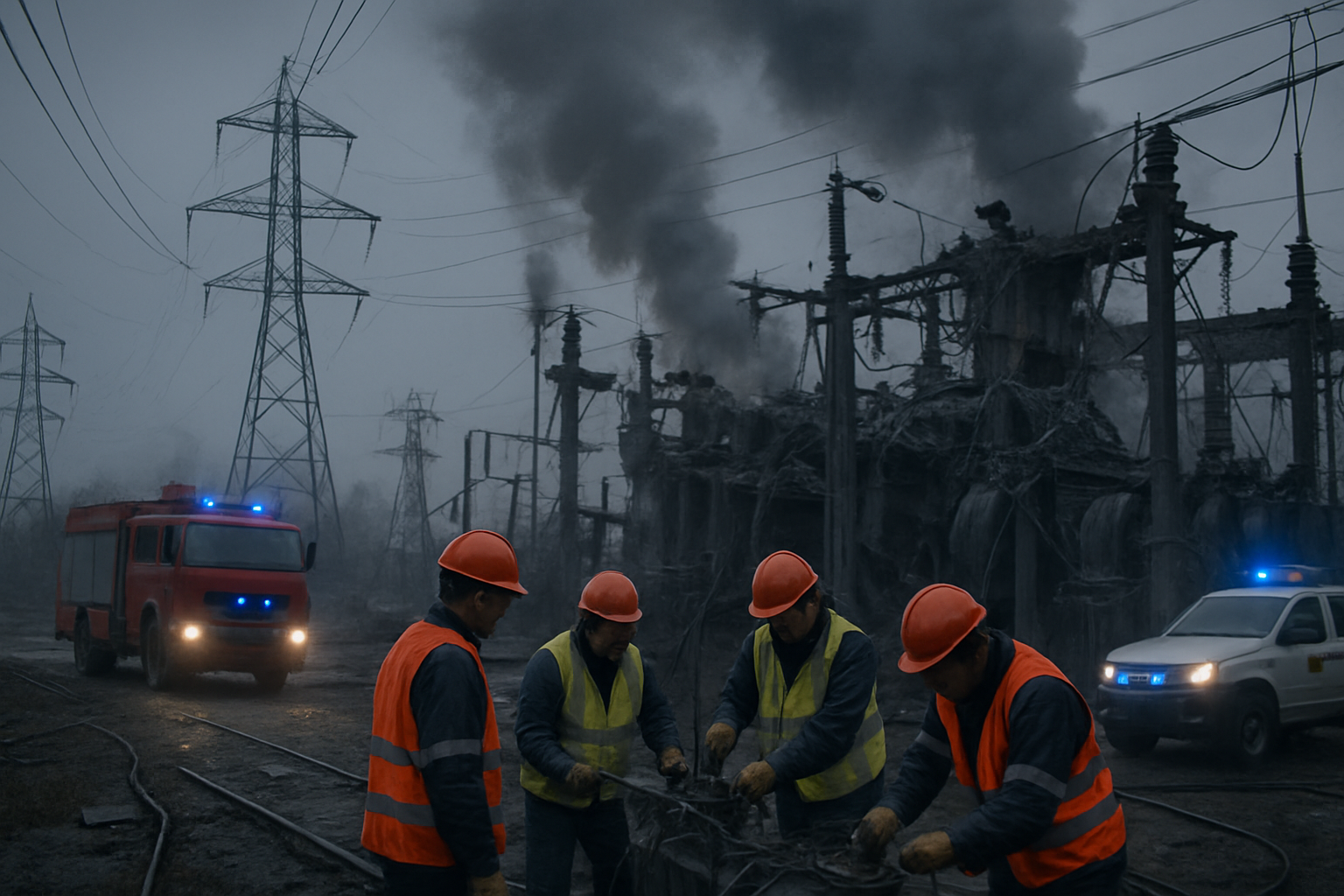
Russian forces launched one of their most devastating overnight attacks of 2026 against Ukrainian energy infrastructure, killing at least four people and leaving tens of thousands without power, as diplomatic efforts to end the war remain suspended indefinitely due to the escalating Iran crisis.
The coordinated assault targeted multiple Ukrainian regions, with the hardest-hit areas including the Kyiv region where rescue operations in Putrivka village saved eight people from rubble, though one died during transport and five required hospitalization. Damage was recorded across five districts in the Kyiv region alone, with one woman injured in the attacks.
Systematic Energy Warfare Continues
The latest strikes represent a continuation of Russia's "energy terrorism" strategy, with Ukrainian officials reporting damage to critical power generation and distribution facilities. In the Obukhiv district of the Kyiv region, three schools, a kindergarten, and a vocational education institution were damaged in what Ukrainian authorities describe as systematic targeting of civilian infrastructure.
The attacks have forced adjustments to electricity outage schedules across several regions of Ukraine, with tens of thousands of consumers losing access to power. This follows a pattern that has left over 1,170 buildings in Kyiv without adequate heating during harsh winter conditions, creating a humanitarian crisis for millions of Ukrainian civilians.
"Russian forces continue their systematic targeting of civilian energy infrastructure, violating international humanitarian law and creating life-threatening conditions for millions of civilians."
— Ukrainian Defense Ministry Official
Diplomatic Efforts Derailed by Iran Crisis
The attacks occur against the backdrop of suspended peace negotiations, with President Volodymyr Zelensky confirming that trilateral Ukraine-Russia-US talks have been postponed indefinitely due to the Iran crisis in the Middle East. "There are still no necessary signals for trilateral meeting" until the security situation allows, Zelensky stated, dealing a significant blow to diplomatic momentum.
The peace talks had previously achieved historic breakthroughs, including a 314-prisoner exchange in February - the first such exchange in five months - and the restoration of US-Russia military communications after a four-year suspension. These achievements had been seen as building blocks toward more substantive territorial negotiations.
Mounting Human Cost
The humanitarian toll continues to mount, with Ukrainian officials disclosing that 55,000 Ukrainian soldiers have been officially confirmed killed since the conflict began, with a "large number" still classified as missing. International research estimates suggest actual military casualties could be two to three times higher when including undocumented deaths and missing personnel.
Civilian casualties from the overnight attacks add to a grim tally that includes recent strikes in Kharkiv and other regions. The systematic targeting of civilian areas, including residential buildings and educational institutions, has been documented by international observers as violations of the Geneva Conventions.
International Support Amid Setbacks
Despite the diplomatic setbacks, international support for Ukraine continues at unprecedented levels. The European Union has approved a historic €90 billion loan package - the largest single-nation assistance package in EU history - though Slovakia, Czech Republic, and Hungary have refused to participate, highlighting divisions within the bloc.
Sweden and Denmark have committed €246 million for air defense systems, while Germany has provided 35 Patriot missiles to strengthen Ukraine's defensive capabilities. Over 17.8 million Ukrainians are currently accessing winter support programs as the humanitarian crisis deepens.
Strategic Pivot to Middle East Partners
In a notable strategic development, Ukraine has begun deploying military experts to Gulf states including the UAE, Qatar, Jordan, Bahrain, and Kuwait to combat Iranian "Shahed" drone attacks - the same weapons systems that have devastated Ukrainian infrastructure. This represents an evolution from aid recipient to security provider, as Ukraine leverages its battlefield experience against Russian-supplied Iranian drones.
Nuclear Governance Crisis Deepens
The attacks occur within the context of an unprecedented nuclear governance crisis, as the New START treaty between the US and Russia expired on February 5, 2026 - the first time in over 50 years that the two nuclear superpowers have operated without bilateral constraints on their arsenals. Both nations control approximately 80% of the world's nuclear weapons.
UN Secretary-General António Guterres has described this as a "grave turning point," warning that nuclear risks are at their "highest in decades." The restoration of military communications between the US and Russia through the previous peace talks represents the only remaining formal diplomatic channel between the superpowers.
Regional Security Implications
The conflict's implications extend far beyond Ukraine's borders. NATO allies are establishing forward support infrastructure in conflict zones, while neighboring countries adapt their security postures in response to the sustained conflict. The systematic targeting of energy infrastructure has created concerns about regional stability and European energy security.
Recent revelations about UK maintenance facilities for Western-supplied equipment in Ukraine mark a significant escalation in international military support, representing a shift toward permanent support infrastructure rather than temporary aid measures.
Territorial Disputes Remain Unresolved
The fundamental disagreement over territorial control remains the primary obstacle to peace negotiations. Russian forces have accelerated territorial gains, capturing 481 square kilometers in January 2026 compared to 260 square kilometers in December 2025 - an 85% increase representing the fastest territorial expansion in months.
Ukraine maintains its position on territorial integrity, while Russia demands recognition of occupied territories. The Trump administration had established a June 2026 deadline for comprehensive peace talks with a Washington venue, potentially involving presidential-level engagement, but this timeline now appears uncertain due to the Iran crisis.
Looking Forward
The suspension of peace talks represents a critical setback at what many observers had seen as the most promising diplomatic opportunity since the invasion began. The framework established through earlier negotiations - including prisoner exchange mechanisms and structured diplomatic formats - remains intact and could potentially be reactivated once regional conditions permit.
However, the continued military escalation, systematic civilian targeting, and mounting humanitarian crisis underscore the urgency of diplomatic solutions. The conflict has now entered its third year with no clear resolution in sight, while the stakes continue to rise for European security architecture and international law enforcement in the 21st century.
As Ukraine adapts to the reality of suspended peace talks while facing continued attacks on civilian infrastructure, the international community faces the challenge of maintaining support momentum while managing multiple simultaneous crises that threaten global stability.