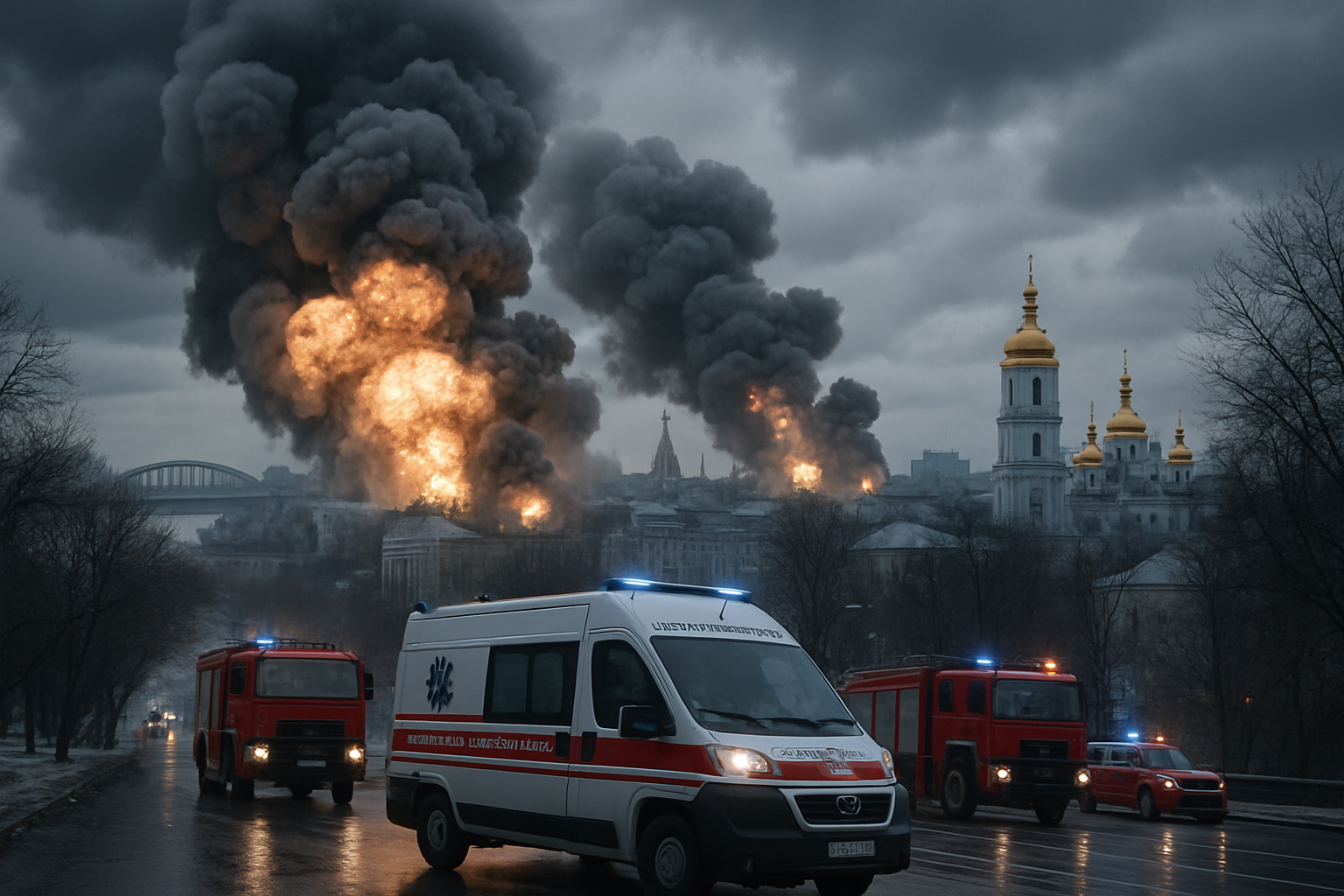
Ukraine's capital Kyiv came under a massive Russian missile attack early Thursday morning, February 12, 2026, with multiple buildings struck in what officials described as one of the largest bombardments of the city in recent months.
Kyiv Mayor Vitali Klitschko confirmed the ongoing assault via Telegram, stating "A mass attack on the capital is still underway." The attack began in the early hours and targeted both residential and commercial structures on both sides of the Dnipro River that bisects the Ukrainian capital.
Widespread Damage Across the Capital
According to Mayor Klitschko, the Russian missiles struck buildings across multiple districts of Kyiv. Fragments from the attacks fell near at least two residential buildings in one district, though authorities reported no immediate fires or casualties from those specific impacts. Emergency medical teams were quickly dispatched to affected areas to assess damage and provide assistance.
Tymur Tkachenko, head of the capital's military administration, confirmed that at least one direct hit was recorded in an eastern suburb of the city. Reuters witnesses in Kyiv reported hearing multiple explosions throughout the morning as the attack unfolded.
Regional Impact Beyond Kyiv
The assault was not limited to Ukraine's capital. The southeastern city of Dnipro also came under Russian attack, according to regional governor Oleksandr Ganzha, who reported damage to private homes and vehicles in the area. International media sources confirmed that the attacks affected multiple Ukrainian regions simultaneously.
Finnish media reported that the attacks targeted areas south of Kyiv as well, indicating a coordinated multi-front assault designed to maximize impact across Ukrainian territory.
Context of Ongoing Conflict
This latest bombardment comes amid a pattern of intensified Russian attacks on Ukrainian civilian infrastructure and population centers. Historical analysis of similar attacks shows this is part of Russia's systematic strategy of targeting civilian areas during winter months, often described by Ukrainian officials as using "winter as a weapon."
The February 12 attack follows previous massive Russian bombardments that have killed thousands of civilians and destroyed critical infrastructure across Ukraine. In recent months, Russia has launched over 10,000 drones and missiles at Ukrainian targets, demonstrating the sustained intensity of the assault on civilian areas.
International Response and Diplomatic Context
The attack occurs during a period of complex international diplomatic efforts to find a resolution to the nearly four-year conflict. Recent trilateral peace talks between Ukraine, Russia, and the United States in Abu Dhabi achieved some humanitarian breakthroughs, including prisoner exchanges, but fundamental territorial disputes remain unresolved.
NATO Secretary-General Mark Rutte previously condemned similar attacks as sending a "bad signal" during diplomatic negotiations, highlighting the contradiction between military escalation and peace efforts. European allies have provided substantial support to Ukraine, including historic financial packages and air defense systems to protect against such attacks.
Emergency Response and Civil Defense
Ukrainian emergency services responded rapidly to the February 12 attacks, with medical teams and rescue personnel deployed across affected areas. The city's civil defense systems, developed over nearly four years of conflict, activated air raid warnings and emergency protocols to protect civilians.
The attack demonstrates the ongoing vulnerability of Ukrainian population centers despite international air defense support. Emergency warming centers and medical facilities remained on high alert as authorities assessed the full extent of damage and casualties from the morning bombardment.
Broader Pattern of Civilian Targeting
The February 12 Kyiv attack represents a continuation of Russia's systematic targeting of civilian infrastructure and residential areas throughout the conflict. International law experts have documented these attacks as violations of the Geneva Conventions' provisions protecting civilian populations during armed conflict.
Ukrainian officials estimate that over 55,000 military personnel have been killed in the conflict, with civilian casualties numbering in the tens of thousands. The targeting of residential buildings, schools, hospitals, and other civilian infrastructure has been a consistent feature of Russian military operations.
Impact on Daily Life
For Kyiv residents, such attacks have become a tragic part of daily life over nearly four years of conflict. The city's population has developed resilience mechanisms, including rapid response to air raid warnings and community support networks for those affected by attacks.
The psychological toll of sustained bombardment affects millions of Ukrainians, with over 17.8 million people requiring winter support programs. The combination of military attacks and harsh winter conditions creates compounded humanitarian challenges for the civilian population.
As rescue operations continue and the full extent of damage is assessed, the February 12 missile attack on Kyiv stands as another stark reminder of the human cost of the ongoing conflict and the urgent need for sustainable peace solutions that protect civilian populations from further attacks.