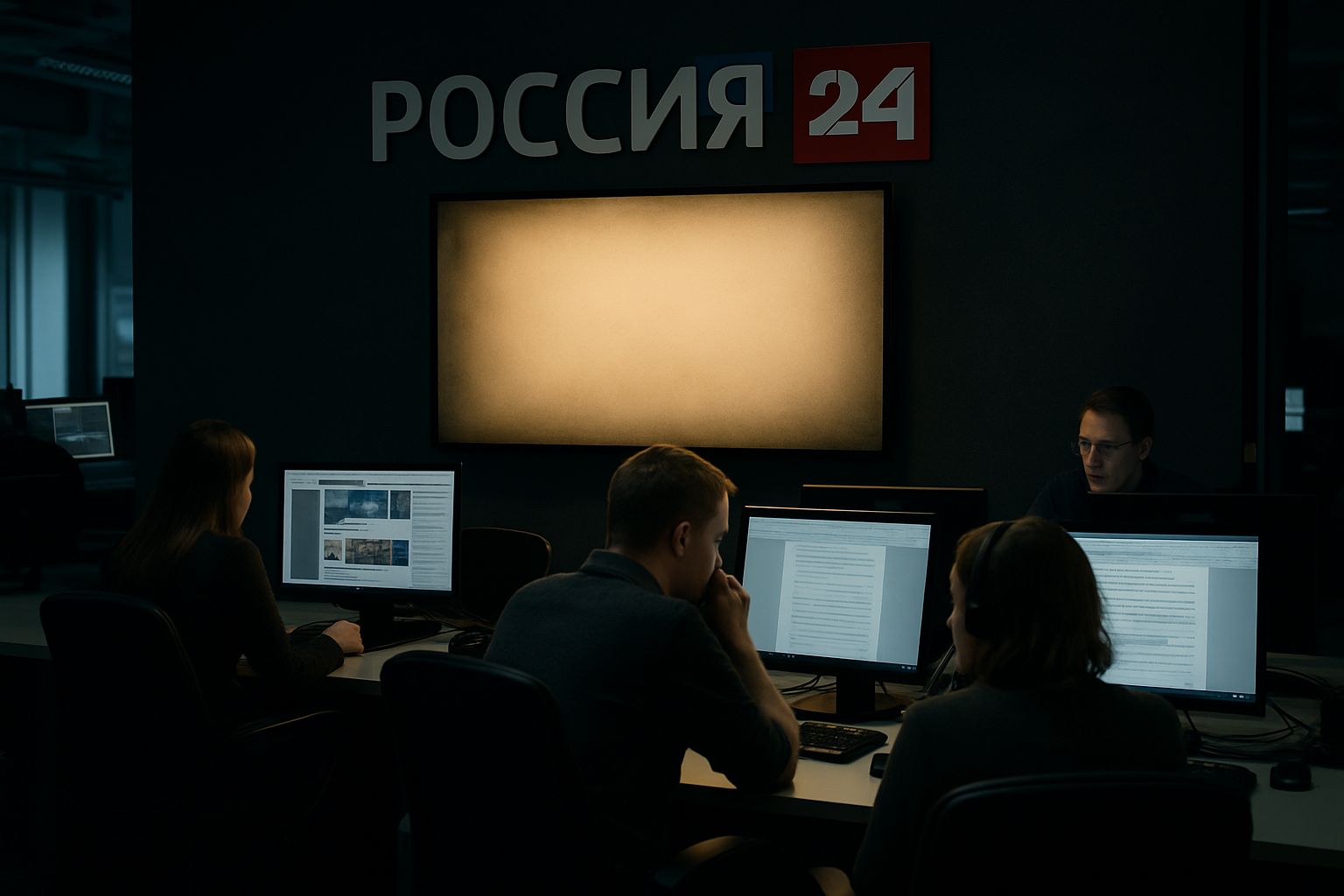
Russian state media outlets deliberately omitted the Oscar-winning documentary "Mr. Nobody Against Putin" from their Academy Awards coverage, while actor Sean Penn made headlines by choosing to visit Ukraine instead of attending the ceremony where he won his third Oscar.
The 98th Academy Awards ceremony on March 15-16, 2026, witnessed an extraordinary case of selective journalism when Russia's major state news agencies—RIA Novosti, TASS, and Interfax—published comprehensive coverage of the Oscars while conspicuously excluding the Best Documentary Feature winner from their reports.
The Vanishing Act: State Media Censorship
According to Meduza's investigation, Russian state information agencies published detailed coverage of the Academy Awards, including multiple stories about winners in key categories and extensive photo galleries. However, their Oscar winner lists contained only 23 of the 24 laureates—with the Danish documentary "Mr. Nobody Against Putin" mysteriously absent from all coverage.
The omission appears particularly calculated given that these same agencies produced separate articles about various Oscar winners and comprehensive summaries of the ceremony. The documentary, which examines Russian schools as propaganda tools and was smuggled out of Russia in 2024, represents Denmark's first documentary Oscar victory in the country's cinema history.
"RIA Novosti published a list of Oscar winners. It contains 23 out of 24 laureates. Who is the 24th? Nobody..."
— Meduza headline, highlighting the deliberate omission
This selective coverage represents a sophisticated form of information warfare, where state media maintains the appearance of comprehensive international news coverage while systematically erasing inconvenient truths. The technique allows Russian audiences to remain informed about global cultural events while being shielded from content that challenges the official narrative.
Sean Penn's Ukraine Choice
In a parallel story that underscores the ongoing cultural impact of the Ukraine conflict, acclaimed actor and director Sean Penn chose to skip the Academy Awards ceremony entirely, traveling to Ukraine instead of accepting his third Oscar in person. Penn won Best Supporting Actor for his role in Paul Thomas Anderson's "One Battle After Another."
The award was accepted on Penn's behalf by producer colleagues, marking a powerful political statement about priorities during wartime. Penn's decision reflects a broader pattern among international cultural figures who have used high-profile platforms to demonstrate solidarity with Ukraine during the ongoing conflict.
Penn's absence from the ceremony—where he would have joined an exclusive group of only four male actors with three or more Oscars—speaks to his consistent advocacy for Ukraine since Russia's invasion. His choice to be physically present in the war-torn country rather than at Hollywood's most prestigious event represents perhaps one of the most dramatic Oscar protest gestures in recent memory.
Documentary's Journey to Recognition
The censored documentary "Mr. Nobody Against Putin" tells the story of Pavel Talankin, a Russian teacher who exposed how educational institutions serve as propaganda tools for the state. The film was completed with assistance from American documentarian David Borenstein after being smuggled out of Russia in 2024.
The documentary's Oscar victory comes during a broader renaissance of Eastern European filmmaking, following Ukrainian director Mstislav Chernov's consecutive Directors Guild victories for war documentaries. This pattern reflects the international community's recognition of authentic voices from conflict zones and territories under authoritarian pressure.
The film's recognition at the Academy Awards provides global validation for independent journalism and documentary filmmaking that challenges authoritarian narratives, despite—or perhaps because of—attempts at suppression by state media.
Information Warfare in the Digital Age
The Russian media's handling of the Oscar coverage illustrates sophisticated techniques of modern information control. Rather than completely blocking international news, state outlets selectively curate content to maintain credibility while advancing political objectives.
This approach allows Russian audiences to feel informed about global events while being systematically isolated from perspectives that contradict official positions. The technique proves particularly effective because it maintains the appearance of comprehensive journalism while practicing subtle censorship.
Media analysts note that this selective reporting strategy has become increasingly common across authoritarian regimes, representing an evolution from crude propaganda to sophisticated narrative management. The method preserves the facade of media diversity while ensuring message control.
Cultural Diplomacy and Artistic Resistance
Both stories—the documentary's censorship and Penn's Ukraine visit—highlight how cultural events have become battlegrounds in broader geopolitical conflicts. The Academy Awards, traditionally focused on artistic achievement, increasingly serve as platforms for political expression and resistance.
Penn's decision particularly resonates given his previous Oscar wins for "Mystic River" (2004) and "Milk" (2009). His choice to prioritize Ukraine over Hollywood glamour sends a message about the relative importance of entertainment industry recognition versus human solidarity during crisis.
The documentary's recognition, meanwhile, demonstrates the power of independent filmmaking to transcend state censorship and reach global audiences. Despite Russian media's attempts to erase its existence, the film's Oscar victory ensures international attention and distribution.
Broader Implications for Media and Culture
These incidents reflect larger trends in how entertainment, journalism, and politics intersect during international conflicts. The Russian state's media strategy reveals the importance authoritarian regimes place on controlling cultural narratives, even regarding seemingly neutral entertainment coverage.
For international observers, the selective Oscar coverage provides insight into how modern information warfare operates—not through complete media blackouts, but through surgical content removal that maintains credibility while shaping perception.
Penn's Ukraine visit, meanwhile, demonstrates how individual artists can leverage their cultural prominence for political advocacy, potentially inspiring similar actions by other public figures. His gesture transforms personal achievement into a statement of international solidarity.
As cultural events increasingly become sites of political expression, both the censorship of inconvenient voices and the platform choices of prominent artists will likely continue shaping public discourse about global conflicts and authoritarian resistance.