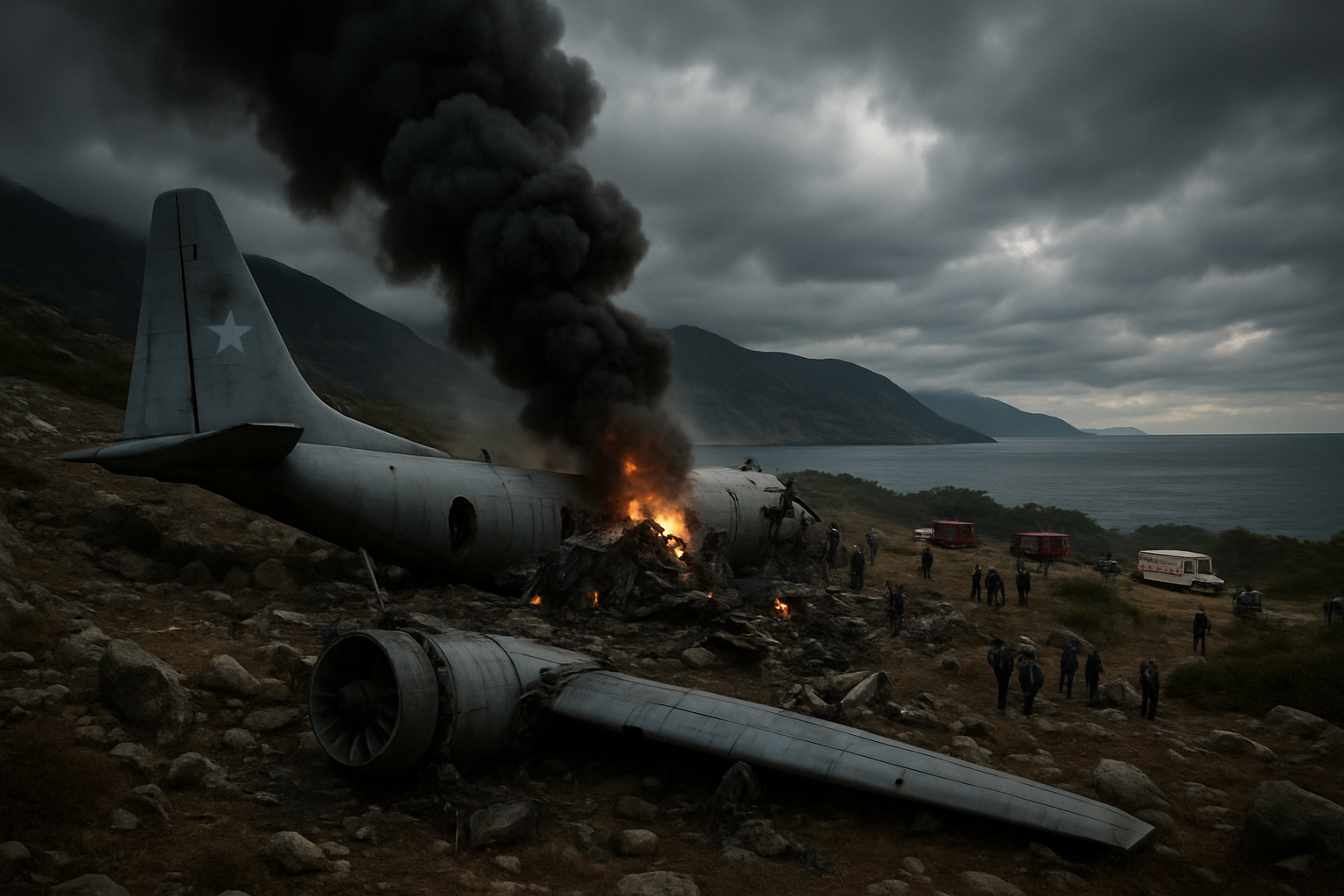
A Russian An-26 military transport aircraft crashed into cliffs in occupied Crimea on Tuesday evening, killing all 29 people aboard in one of Moscow's most serious aviation disasters in recent months, according to Russia's Defense Ministry.
The twin-engine turboprop aircraft lost contact with ground control around 6:00 PM Moscow time (1500 GMT) on March 31 during what Russian authorities described as a "routine flight" over the Crimean Peninsula. Search and rescue teams located the crash site early Wednesday morning, confirming there were no survivors among the 23 passengers and six crew members.
Russia's Defense Ministry attributed the crash to a "technical malfunction," explicitly ruling out hostile action. "There was no impact on the aircraft," the ministry stated through TASS news agency, suggesting that external factors such as missiles, drones, or bird strikes were not involved in the incident.
Crash Details and Investigation
The An-26 aircraft crashed into coastal cliffs in challenging terrain that complicated rescue operations. The Defense Ministry confirmed that all personnel aboard were Russian military service members conducting routine transport operations in the strategically important Black Sea region.
According to multiple international sources, the aircraft experienced difficulties shortly after takeoff or during approach, with communication lost abruptly during the evening hours. The crash site's location in rocky coastal terrain near cliffs made immediate recovery efforts particularly challenging for emergency responders.
Russian authorities have launched a comprehensive investigation focusing on mechanical systems, maintenance records, and operational factors. The probe is expected to examine the aircraft's service history, recent maintenance activities, and environmental conditions at the time of the crash.
Aircraft and Safety Record
The An-26 is a Soviet-era military transport aircraft that has served as a backbone of Russian and former Soviet military aviation for decades. The twin-engine turboprop is generally considered reliable and is capable of carrying cargo and up to 40 passengers over short and medium distances.
However, the aircraft represents older technology that requires intensive maintenance protocols, particularly when operating in challenging geographical conditions. The coastal and mountainous terrain of Crimea presents additional operational risks due to complex weather patterns and demanding approach conditions.
This incident adds to growing concerns about aging military aircraft fleets operating in demanding conditions. Aviation safety experts note that older aircraft require enhanced maintenance schedules and specialized operational procedures to maintain safety standards.
Regional Context and Military Operations
The crash occurred in Crimea, the Black Sea peninsula that Russia annexed from Ukraine in 2014. The region has seen heightened military activity in recent years, with transport aircraft playing crucial roles in military logistics and supply operations.
Military aviation operations in the region face unique challenges due to the peninsula's geographic isolation and the need to maintain supply lines across water barriers. The An-26 fleet has been essential for these logistical operations, making the loss of both aircraft and experienced personnel particularly significant for Russian military capabilities in the area.
The incident represents one of the most serious military aviation accidents in Crimea since the disputed annexation, highlighting the operational risks involved in maintaining military presence in geographically challenging locations.
Broader Aviation Safety Patterns
This crash fits into a concerning pattern of military aviation incidents involving aging aircraft fleets worldwide during 2026. Earlier this year, similar accidents have affected multiple countries operating Soviet-era military transport aircraft.
In February, a Bolivian Air Force C-130 Hercules crashed at El Alto Airport, killing 22 people while carrying newly printed banknotes. The following month, a Colombian Air Force C-130 Hercules crashed during takeoff at Puerto Leguízamo airport in the Amazon region, resulting in 69 deaths among military personnel.
These incidents collectively highlight the challenges facing military aviation operations globally, particularly for nations operating aging aircraft fleets in demanding geographical and operational environments. The pattern has prompted calls for enhanced international cooperation on military aviation safety standards.
Investigation and Response
Russian defense officials have prioritized the investigation, with preliminary findings expected within several weeks. The focus will likely center on mechanical failure analysis, given the ministry's explicit ruling out of external factors.
The investigation team will examine flight data recorders if recoverable, maintenance logs, crew qualifications, and environmental factors at the time of the accident. Weather conditions, aircraft loading, and operational procedures will all be scrutinized to determine the exact cause of the technical malfunction.
International aviation safety experts note that the findings could have broader implications for An-26 operators worldwide, potentially influencing maintenance protocols and operational procedures for the aircraft type globally.
Impact on Military Aviation
The loss of 29 military personnel represents a significant blow to Russian military aviation capabilities in the Black Sea region. Beyond the human cost, the incident affects operational capacity and experienced personnel essential for ongoing military logistics operations.
The crash may accelerate discussions about fleet modernization and enhanced safety measures for aging aircraft operating in challenging environments. Military aviation experts emphasize that the incident underscores the need for continuous attention to maintenance schedules, pilot training, and safety procedures.
The investigation's findings will be crucial for future safety improvements and may influence broader discussions about military aviation protocols throughout the region. Enhanced international cooperation on safety standards and data sharing could help prevent similar tragedies in the future.
As the investigation continues, the focus remains on understanding the technical factors that led to this tragic loss of life and ensuring that lessons learned contribute to improved aviation safety standards for military transport operations globally.