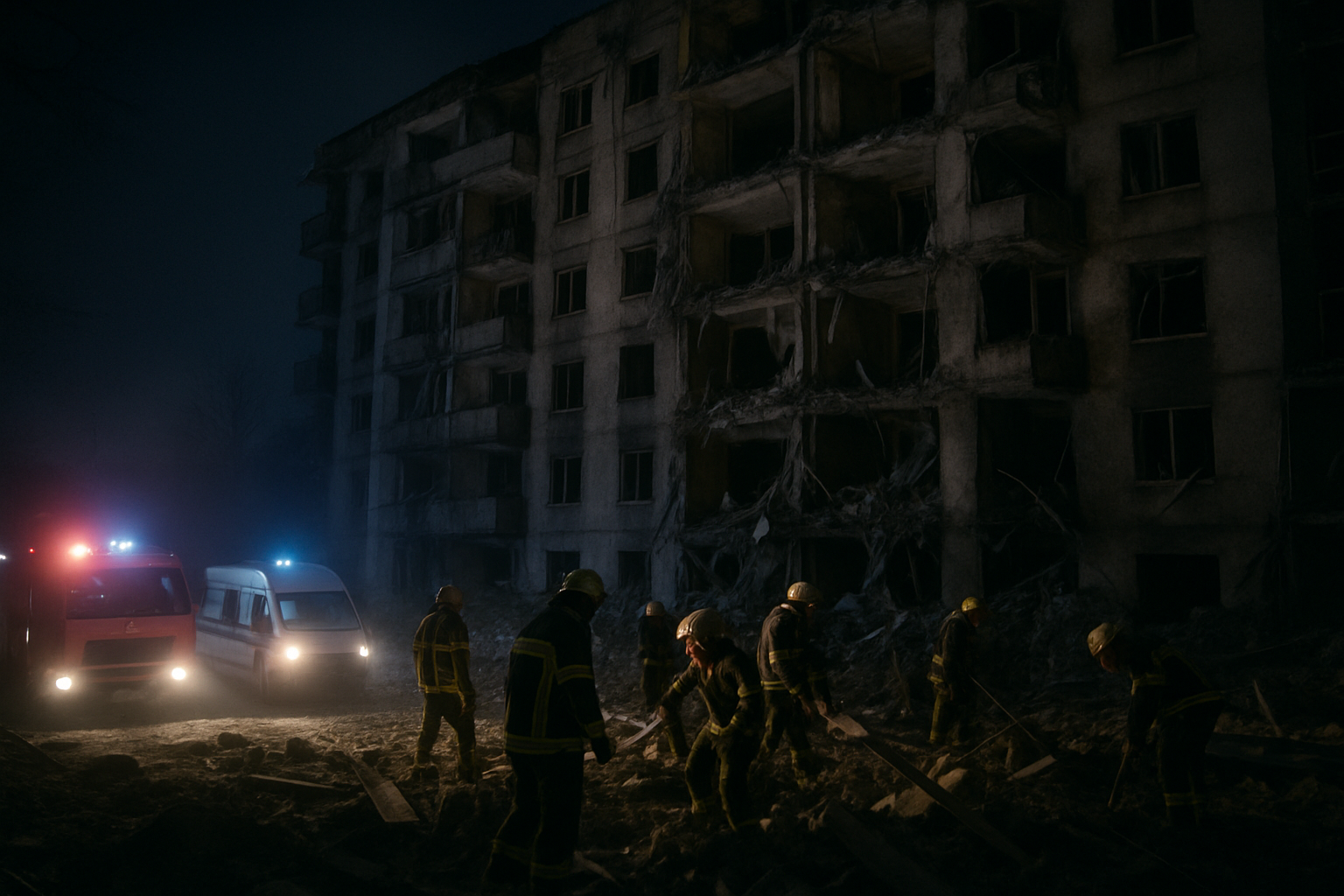
Russian forces launched a devastating overnight assault on Ukrainian cities including Kharkiv, using ballistic missiles and attack drones to target residential buildings and civilian infrastructure, as search and rescue operations continue for survivors trapped in the rubble.
The coordinated attack, which began in the early hours of March 7, 2026, represents one of the most significant Russian offensives against Ukrainian urban centers in recent weeks. Ukrainian air defense systems intercepted numerous incoming projectiles, but several strikes penetrated defenses, causing extensive damage to civilian areas.
Kharkiv Bears Heaviest Casualties
Ukraine's second-largest city suffered the most severe impact from the nighttime bombardment, with rescue teams working through the night to locate survivors in damaged residential buildings. Local officials report that a five-story apartment building sustained a direct hit, causing partial collapse and trapping residents beneath debris.
Emergency services deployed to the Kyiv district of Kharkiv, where preliminary reports suggest up to 10 people may be trapped under the ruins, including at least one child. The search and rescue operation remains ongoing as specialized teams work to clear rubble and access potential survivors.
"We are doing everything possible to reach those who may still be alive under the debris. Every minute counts in these operations."
— Oleh Synjehubov, Kharkiv Regional Governor
The attack resulted in confirmed casualties, with one person killed and ten others wounded, including two boys aged 11 and 6, and a 17-year-old girl. The strikes also damaged a neighboring two-story building, highlighting the indiscriminate nature of the assault on civilian areas.
Multi-City Assault Pattern
The Russian offensive extended beyond Kharkiv, with Ukrainian officials reporting missile and drone strikes across multiple regions. The coordinated nature of the attacks suggests extensive planning and resources deployed to overwhelm Ukrainian air defenses simultaneously across different fronts.
According to Norwegian media reports, Ukraine was struck by a comprehensive Russian assault involving both ballistic missiles and drones targeting major cities, including the capital Kyiv. Air raid sirens sounded across the country as authorities urged civilians to seek shelter until the all-clear was given.
Escalation Amid Diplomatic Efforts
The massive assault comes at a critical time in the ongoing conflict, occurring alongside continued diplomatic initiatives aimed at finding a peaceful resolution. Recent prisoner exchanges and communications restoration between major powers had raised hopes for de-escalation, making the intensity of these attacks particularly significant.
Military analysts note that such coordinated strikes require substantial preparation and indicate Russia's continued commitment to military pressure despite ongoing peace talks. The targeting of residential areas and civilian infrastructure continues a pattern that has drawn international condemnation throughout the conflict.
Ukrainian Air Defense Response
Ukrainian air defense forces worked throughout the night to counter the incoming threats, with officials reporting the interception of multiple missiles and drones. However, the scale and coordination of the Russian attack overwhelmed defenses in several areas, allowing some projectiles to reach their intended targets.
The use of combined missile and drone tactics appears designed to saturate air defense systems, forcing Ukrainian forces to respond to threats from multiple vectors simultaneously. This approach has become increasingly common in Russian military operations as the conflict has evolved.
International Response and Context
The overnight attacks are likely to draw renewed international attention to the conflict and may impact ongoing diplomatic efforts. The targeting of clearly civilian areas, including residential buildings housing families with children, represents a continuation of tactics that international observers have classified as violations of international humanitarian law.
Poland deployed fighter aircraft in response to the proximity of the attacks to its border, demonstrating how the escalation affects regional security calculations. NATO and European Union officials are expected to address the attacks in upcoming meetings as part of continued support for Ukraine.
Humanitarian Impact
Beyond the immediate casualties, the attacks have created additional humanitarian challenges as damaged residential buildings leave families homeless in winter conditions. Emergency services are coordinating to provide temporary shelter and medical care for those affected by the bombardment.
The psychological impact on civilian populations cannot be understated, as the overnight timing of the attacks maximized terror among sleeping families. Such tactics have been documented throughout the conflict as part of a broader strategy targeting civilian morale and infrastructure.
Ongoing Search Operations
As dawn broke over Kharkiv, rescue operations intensified with specialized equipment brought in to assist in debris removal and survivor location efforts. Urban search and rescue teams, supported by local emergency services, continue methodical clearing operations in the most severely damaged areas.
The complex nature of urban rescue operations in partially collapsed buildings requires careful coordination to prevent further structural damage while attempting to reach trapped individuals. Medical teams stand ready to provide immediate care for any survivors located during the ongoing operations.
The scale and coordination of this latest Russian assault underscores the continued intensity of the conflict despite various international mediation efforts. As rescue operations continue in Kharkiv and damage assessments proceed in other affected cities, the full scope of the overnight attacks continues to emerge.