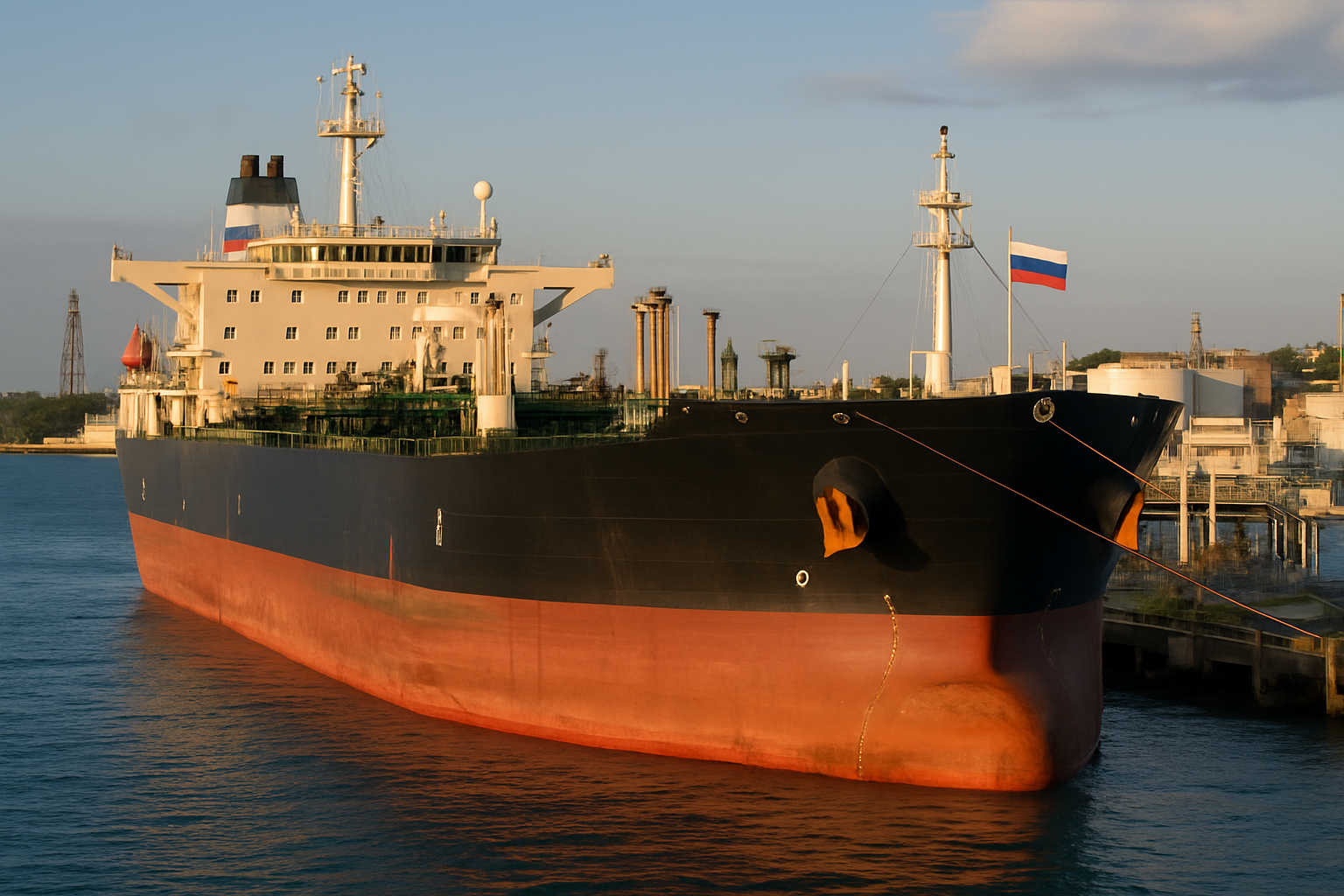
A Russian oil tanker carrying 100,000 tons of crude oil has successfully docked at Cuba's Port of Matanzas, delivering the island's first significant energy shipment in nearly three months and marking a dramatic shift in the Trump administration's previously ironclad energy blockade of the communist nation.
The arrival of the Anatoly Kolodkin represents a crucial breakthrough for Cuba, which has been experiencing its worst energy crisis since the 1990s Special Period following President Trump's January 30 executive order that effectively severed all oil supplies to the island through threats of 25% tariffs on any country providing petroleum to Cuba.
Trump Administration Reverses Course
In a surprising policy reversal, President Trump indicated Sunday that he had "no problem" with countries sending oil to Cuba, signaling a significant softening of his administration's maximum pressure campaign. The U.S. Coast Guard reportedly permitted the Russian-flagged vessel to proceed to Cuban waters despite ongoing tensions between Washington and Moscow.
The policy shift comes after Trump's previous declarations that Cuba's government would "fall very soon" and his predictions of a "great new life" for Cubans under different leadership. As recently as March 17, Trump had made his most explicit statements about potentially "taking Cuba in some form," describing the island as "very weakened" and a "failed nation with nice landscape."
"The US cut off Venezuela's oil exports to Cuba after toppling deposed Venezuelan president Nicolas Maduro on January 3, and US President Donald Trump threatened to slap punishing tariffs on any other country that sent crude to Cuba."
— Dawn News Report
Cuba's Humanitarian Crisis
The Russian oil delivery provides crucial relief for Cuba's 11 million inhabitants, who have endured unprecedented hardship since the energy blockade began. The crisis exceeded even the severity of Cuba's 1990s Special Period, but this time through deliberate U.S. policy rather than external economic collapse.
Key impacts of the crisis included:
- Complete aviation isolation from February 10 through March 11, with zero jet fuel at all nine Cuban airports
- Evacuation of over 25,000 tourists, including 21,000 Canadians and 4,000 Russians
- Suspension of major airlines including Air Canada, WestJet, Air Transat, Rossiya, and Nordwind
- Closure of major hotel chains including Meliá, Iberostar, and Blue Diamond
- Scheduled blackouts affecting 51% of the population (5.5 million people)
- Oil reserves reduced to just 15-20 days of supply
- The Cuban peso collapsing to a historic low of 500 units per dollar
Civil Unrest and Infrastructure Collapse
The energy crisis triggered the most significant civil unrest in Cuba since the 1959 revolution. On March 13-14, protesters successfully stormed Communist Party headquarters in Morón, Ciego de Ávila, chanting "¡Libertad!" while burning party materials—marking the first successful attack on a major party facility since the revolution.
The systematic infrastructure collapse affected every aspect of Cuban society:
- Healthcare system compromised with surgery suspensions and medical evacuation eliminated
- Transportation paralyzed with 90% of gas stations closed
- Government implementing emergency four-day work weeks
- Universities operating semi-virtually
- Agricultural production insufficient for national needs

Russian Challenge to U.S. Dominance
Russia's oil delivery represents a direct challenge to American hemispheric dominance, with Moscow positioning the aid as humanitarian assistance despite U.S. objections. The Kremlin had previously condemned what it called the "economic strangulation" of Cuba and pledged oil aid as part of its commitment to "stand by its friends."
The Russian intervention demonstrates the limits of U.S. economic coercion in a multipolar world, where major powers like Russia and China are willing to risk American retaliation to maintain strategic partnerships. China has also demanded that the United States "immediately" cease pressure on Cuba, while Jeremy Corbyn announced plans for an international flotilla to challenge the blockade.
Regional Impact and the "Corolario Trump"
The Cuba crisis served as a template for what analysts have termed the "Corolario Trump"—a 21st-century update of the Monroe Doctrine combining military pressure, economic coercion, and selective engagement for hemispheric dominance. The strategy successfully forced regional allies to choose between U.S. economic relationships and solidarity with Cuba.
Mexico, despite humanitarian concerns, suspended oil shipments to Cuba under U.S. pressure, though it continued providing 814 tons of humanitarian aid via naval vessels. Venezuela's interim government, installed after the U.S. operation that removed Nicolás Maduro, completely halted crude shipments to prioritize relations with Washington.
"But Trump on Sunday signalled he was reversing course and expressed sympathy for the Cuban people's need for energy."
— Dawn Pakistan Report
Diplomatic Implications
The arrival of Russian oil coincides with reports of potential diplomatic engagement between Washington and Havana. Marco Rubio has been positioned as the lead negotiator on Cuba policy, while sources suggest that Raul Castro's grandson may be facilitating back-channel discussions between the two capitals.
The timing of Trump's policy reversal suggests a pragmatic recognition that complete isolation was causing humanitarian consequences that could destabilize the region while potentially strengthening Cuba's ties with U.S. adversaries like Russia and China.
Global Energy Context
The Cuban energy crisis unfolded against the backdrop of a broader global energy emergency, with oil prices surging past $100 per barrel due to Iran's closure of the Strait of Hormuz. This larger crisis may have influenced Trump's decision to allow Russian oil to reach Cuba, as global energy markets faced unprecedented strain.
The International Energy Agency deployed its largest strategic petroleum reserve release in history—400 million barrels from 32 countries—to address the global shortage, making the Cuban situation a secondary concern amid worldwide energy security threats.
Looking Forward
While the Russian tanker provides several weeks of energy supplies for Cuba, the underlying crisis requires sustained imports to restore normal operations. The 100,000 tons of crude oil represents temporary relief rather than a long-term solution to Cuba's energy infrastructure challenges.
Energy expert Jorge Piñón describes the situation as "zero hour," requiring either diplomatic breakthrough, alternative supply arrangements, or fundamental changes to Cuba's energy infrastructure. The success or failure of resolving the Cuban crisis will influence future approaches to economic coercion and humanitarian protection in international relations.
The arrival of the Anatoly Kolodkin marks a pivotal moment that could determine whether diplomacy or continued pressure will shape U.S.-Cuba relations in the coming months. For Cuba's 11 million inhabitants, it represents hope for relief from months of unprecedented hardship that tested the limits of economic warfare in the 21st century.