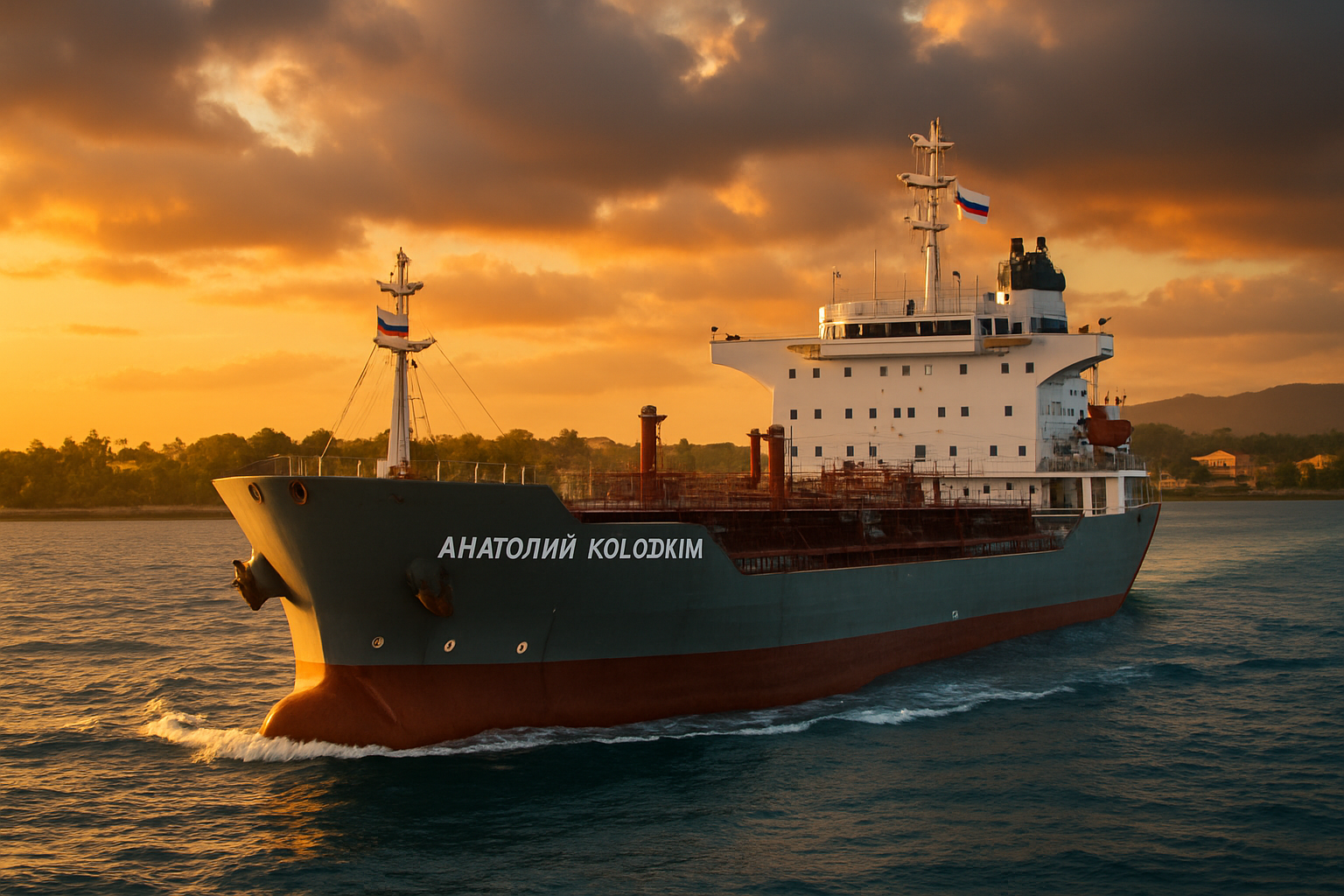
The United States has allowed a Russian oil tanker carrying 730,000 barrels of crude oil to reach Cuba, providing a potential lifeline to the Caribbean island amid a devastating energy crisis that has brought the nation to its knees since January 2026.
Ship tracking data shows the Russian-flagged tanker Anatoly Kolodkin was positioned just off Cuba's eastern coast on Sunday, with the vessel expected to dock within days. According to reports from multiple international news sources, including The New York Times, a U.S. official briefed on the matter confirmed that the U.S. Coast Guard was allowing the shipment to proceed, though the reasoning behind this policy shift remains unclear.
Breaking Trump's Maximum Pressure Campaign
This development represents a significant crack in the Trump administration's "maximum pressure" campaign against Cuba, which has achieved unprecedented success in isolating the island. Since January 30, 2026, when President Trump signed an executive order threatening 25% tariffs on any country supplying oil to Cuba, both Venezuela's interim government and Mexico have completely halted petroleum shipments to the island.
The policy has been devastatingly effective. Cuba's oil reserves have dropped to a critical 15-20 day supply, while domestic production has collapsed from 3 million to just 700,000 barrels daily. The Cuban peso has plummeted to a historic low of 500 units per dollar, representing a 15% weekly decline at its worst point.
Cuba's Unprecedented Crisis
The island of 11 million inhabitants is experiencing its worst economic emergency since the 1990s "Special Period," but unlike that crisis which resulted from external factors following the Soviet Union's collapse, the current situation stems from deliberate U.S. policy designed to pressure the Cuban government.
The crisis reached its nadir between February and March 2026 when Cuba experienced complete aviation isolation - zero jet fuel was available at all nine major airports from February 10 through March 11. This forced the evacuation of over 25,000 foreign tourists, including 21,000 Canadians and 4,000 Russians, as major airlines including Air Canada, WestJet, Air Transat, Rossiya Airlines, and Nordwind suspended all operations.
"This is a historic moment that could provide desperately needed relief to the Cuban people who have endured months of systematic economic pressure."
— Jorge Piñón, University of Texas Energy Institute
Currently, 51% of Cuba's population - approximately 5.5 million people - experience scheduled blackouts during peak hours. The island has suffered six major nationwide blackouts since late 2024, with the most recent in March plunging two-thirds of the country into darkness for up to 72 hours. The Antonio Guiteras thermoelectric power plant, the nation's largest, has repeatedly failed due to aging infrastructure and limited access to spare parts under U.S. sanctions.
Healthcare and Infrastructure Collapse
The humanitarian impact has been severe. Hospitals have been forced to suspend non-emergency surgeries, medical staff cannot reach facilities due to transportation failures, and power outages threaten critical medical equipment and pharmaceutical storage. The government has implemented emergency measures including four-day work weeks, closure of 90% of gas stations, and semi-virtual university classes.
The tourism industry, a crucial economic pillar, has been devastated. Major Spanish hotel chains including Meliá, Iberostar, and Blue Diamond closed their Varadero and northern coast facilities. Canada issued its second-highest travel warning, classifying Cuba under "serious and potentially life-threatening risks," effectively ending the winter tourism season.
International Responses
The crisis has drawn sharp international reactions. Russia has condemned what it calls "economic strangulation" and pledged oil aid as humanitarian assistance, though specific timelines and volumes remain unclear. China has demanded that the United States "immediately" cease pressure on Cuba, while Jeremy Corbyn, the former UK Labour leader, announced plans for an international flotilla to challenge the blockade.
Mexico has maintained a careful balance, providing 814 tons of humanitarian supplies via naval vessels Papaloapan and Isla Holbox while avoiding oil shipments to prevent U.S. economic retaliation. European media outlets have characterized the situation as a "deliberately engineered humanitarian emergency."
Regional Implications
The U.S. policy represents what analysts call the "Corolario Trump" - a 21st-century update to the Monroe Doctrine that combines military pressure, economic coercion, and selective engagement to assert hemispheric dominance. The approach has forced regional powers to choose between traditional solidarity with Cuba and maintaining crucial economic relationships with the United States.
Venezuela's transformation serves as the template for this strategy. Following the capture of Nicolás Maduro in January 2026, the country rapidly shifted from being a target of maximum pressure to a strategic U.S. energy partner, with oil exports surging 60% to 800,000 barrels daily as American companies displaced Chinese customers.
Civil Unrest and Political Pressure
The economic pressure has generated unprecedented internal dissent. In March 2026, protesters successfully stormed Communist Party headquarters in Morón, Ciego de Ávila, chanting "¡Libertad!" while burning party materials - the first successful attack on a major party facility since the 1959 revolution. Widespread "cacerolazos" (pot-banging protests) have erupted across multiple cities, forcing the government to prioritize "defense of internal order."
President Trump has made increasingly explicit statements about Cuba's future, declaring in March that he could "do anything I want" with Cuba and would have the "honor" of "taking Cuba in some form," describing it as a "very weakened" and "failed nation with nice landscape." Secretary of State Marco Rubio has been positioned as the lead negotiator for potential talks, though Cuba has not publicly confirmed any high-level discussions.
The Tanker's Significance
The arrival of the Anatoly Kolodkin represents more than just fuel relief - it's a test of U.S. policy flexibility amid a global energy crisis. The decision comes as the world grapples with unprecedented oil market volatility, with prices having surged past $100 per barrel for the first time since 2022 due to Iran's blockade of the Strait of Hormuz, which handles 40% of global seaborne oil transit.
The U.S. has already shown willingness to ease energy sanctions when necessary, temporarily lifting restrictions on Russian oil purchases in March 2026 during the height of the Middle East energy crisis. The Cuban tanker approval may signal similar pragmatic adjustments to prevent complete humanitarian collapse while maintaining broader strategic pressure.
Historical Context and Future Implications
This crisis far exceeds the 1990s Special Period in its systematic nature and comprehensive scope. Unlike that earlier emergency, which resulted from external economic collapse, the current situation stems from deliberate policy designed to force political change. The complete aviation connectivity severance was unprecedented in modern Cuban history, representing the most comprehensive isolation since the 1962 Cuban Missile Crisis.
The international community faces a critical test of how to respond to economic coercion affecting civilian populations. Success in managing this crisis diplomatically could provide a template for 21st-century conflict resolution, while failure might establish dangerous precedents for the comprehensive isolation of small states through energy and transportation targeting.
"The Cuban people deserve relief from this humanitarian emergency, but lasting solutions require diplomatic engagement rather than continued pressure."
— European Union Foreign Affairs Representative
Looking Ahead
The Anatoly Kolodkin's 730,000 barrels of crude oil, while significant, represent only a temporary reprieve for Cuba's energy needs. The island requires sustained oil imports to restore normal operations and rebuild its crippled infrastructure. Whether this Russian delivery represents a one-time humanitarian exception or signals a broader shift in U.S. policy toward Cuba remains to be seen.
As the tanker approaches Cuban ports, it carries not just oil but the hopes of millions of Cubans who have endured months of systematic economic pressure. The coming days will reveal whether this represents the beginning of humanitarian relief or simply a brief respite in an ongoing crisis that has reshaped the Caribbean political landscape and set new precedents for economic warfare in the 21st century.
The situation continues to evolve rapidly, with regional and international observers closely monitoring whether diplomatic solutions can emerge from this unprecedented crisis that has affected the daily lives of 11 million Cuban citizens and tested the limits of economic coercion as a tool of international relations.