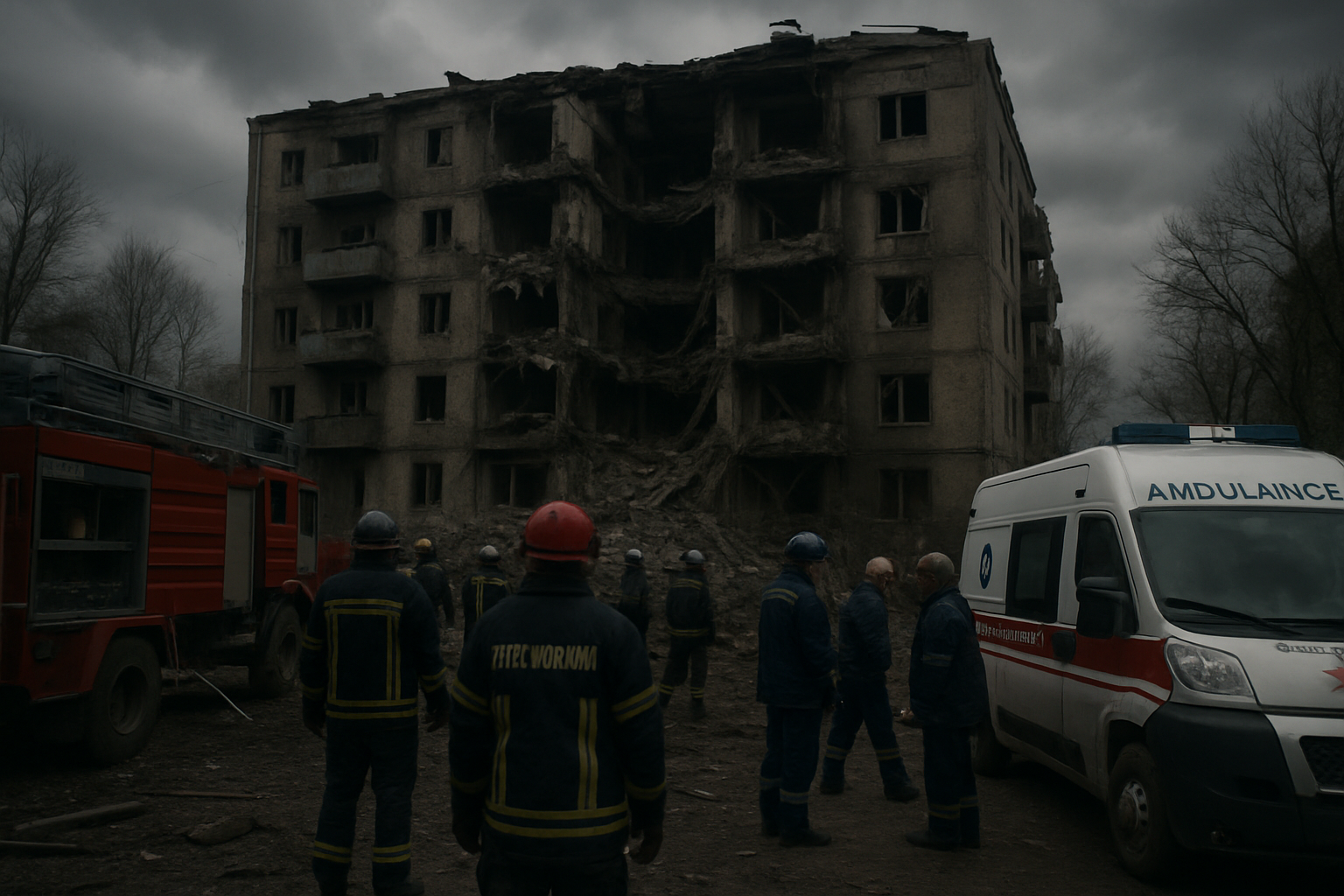
A devastating Russian drone attack on the town of Bohodukhiv in Ukraine's Kharkiv region has killed four civilians, including three young children, according to regional military administration head Oleh Synehoubov, underscoring the ongoing humanitarian crisis as the war approaches its fourth year.
The tragic casualties from Tuesday night's attack included two one-year-old boys and a two-year-old girl, along with a 34-year-old man who was in the residence with the children at the time of the strike. A 74-year-old woman was wounded in the attack and is receiving medical treatment, Synehoubov reported via Telegram.
Latest in Series of Civilian Attacks
The drone strike targeted a residential building in Bohodukhiv, located approximately 60 kilometers west of Kharkiv city, demonstrating Russia's continued strategy of targeting civilian infrastructure and populated areas. This attack follows a pattern of strikes on the town, with another incident on Monday killing a woman and a 10-year-old child in the same locality near the Russian border.
The attack comes amid a broader escalation of Russian strikes across Ukraine's northeastern regions. Multiple international sources have confirmed the casualties, with consistent reporting from Bulgarian, French, Norwegian, Swedish, and Indian news outlets highlighting the global attention to civilian targeting in the conflict.
Context of Ongoing Conflict
This latest tragedy occurs against the backdrop of intensified diplomatic efforts to end the war, including recent trilateral peace talks between Ukraine, Russia, and the United States in Abu Dhabi that achieved a historic prisoner exchange of 314 individuals. Despite these diplomatic breakthrough moments, Russian military operations continue to exact a devastating toll on civilian populations.
"The systematic targeting of civilian areas, particularly those housing families with young children, represents a clear violation of international humanitarian law,"
— International observers monitoring the conflict
Ukrainian officials have documented extensive civilian casualties throughout the conflict, with President Volodymyr Zelensky recently disclosing that 55,000 Ukrainian soldiers have been officially confirmed killed since Russia's February 2022 invasion, while emphasizing that a "large number" remain classified as missing in action.
Humanitarian Impact and International Response
The deaths of these three children add to the growing toll of civilian casualties in what has become Europe's deadliest conflict since World War II. The targeting of residential areas where families live reflects what Ukrainian officials describe as Russia's systematic strategy of terrorizing civilian populations to achieve military objectives.
The international community continues to provide extensive humanitarian support, with over 17.8 million Ukrainians currently accessing winter support programs. Recent support packages include a historic €90 billion loan from the European Union and a €246 million air defense package from Sweden and Denmark.
Regional Security Concerns
Bohodukhiv's location near the Russian border makes it particularly vulnerable to cross-border attacks. The town has experienced repeated strikes as Russian forces continue operations in the Kharkiv region, one of the areas most affected by the conflict due to its proximity to Russian territory.
NATO Secretary-General Mark Rutte recently made a surprise visit to Kyiv, addressing the Ukrainian Parliament and condemning such attacks as sending a "bad signal" during ongoing diplomatic efforts. The alliance continues to provide military and humanitarian assistance to Ukraine while maintaining defensive postures along its eastern borders.
Broader Conflict Dynamics
Russian forces have demonstrated accelerated territorial gains in recent months, capturing 481 square kilometers in January 2026 compared to 260 square kilometers in December 2025, according to military analysts. Over 10,000 Russian drones and bombs were launched in January 2026 alone, indicating the scale of ongoing military operations.
The war has also taken a severe toll on Ukraine's infrastructure, with systematic attacks on energy facilities during winter months creating what officials describe as a "winter weapon" strategy designed to maximize civilian suffering during extreme cold conditions.
Diplomatic Efforts Continue
Despite the continued violence, diplomatic initiatives persist. The United States has reportedly established a June 2026 deadline for achieving a comprehensive peace agreement, with high-level negotiations potentially moving to Washington for more intensive talks.
However, fundamental disagreements over territorial control remain the primary obstacle to peace. Eastern Ukrainian territories currently under Russian control represent the main sticking point in negotiations, with Russia insisting on territorial recognition while Ukraine maintains its position on territorial integrity.
International Law and Accountability
The targeting of civilian areas, particularly those housing children and families, continues to draw international condemnation. Multiple international legal experts have characterized such attacks as potential war crimes under the Geneva Conventions, which explicitly protect civilian populations during armed conflict.
The deaths in Bohodukhiv represent not just statistics but individual tragedies that underscore the human cost of the ongoing conflict. As diplomatic efforts continue, the international community faces the challenge of balancing immediate humanitarian needs with longer-term peace-building efforts.
The conflict has displaced millions of Ukrainians internally and forced hundreds of thousands to seek refuge in neighboring countries, creating one of the largest humanitarian crises in Europe since World War II. Emergency services and medical personnel continue to risk their lives responding to attacks like the one in Bohodukhiv, with several first responders having been killed in the line of duty during recent operations.