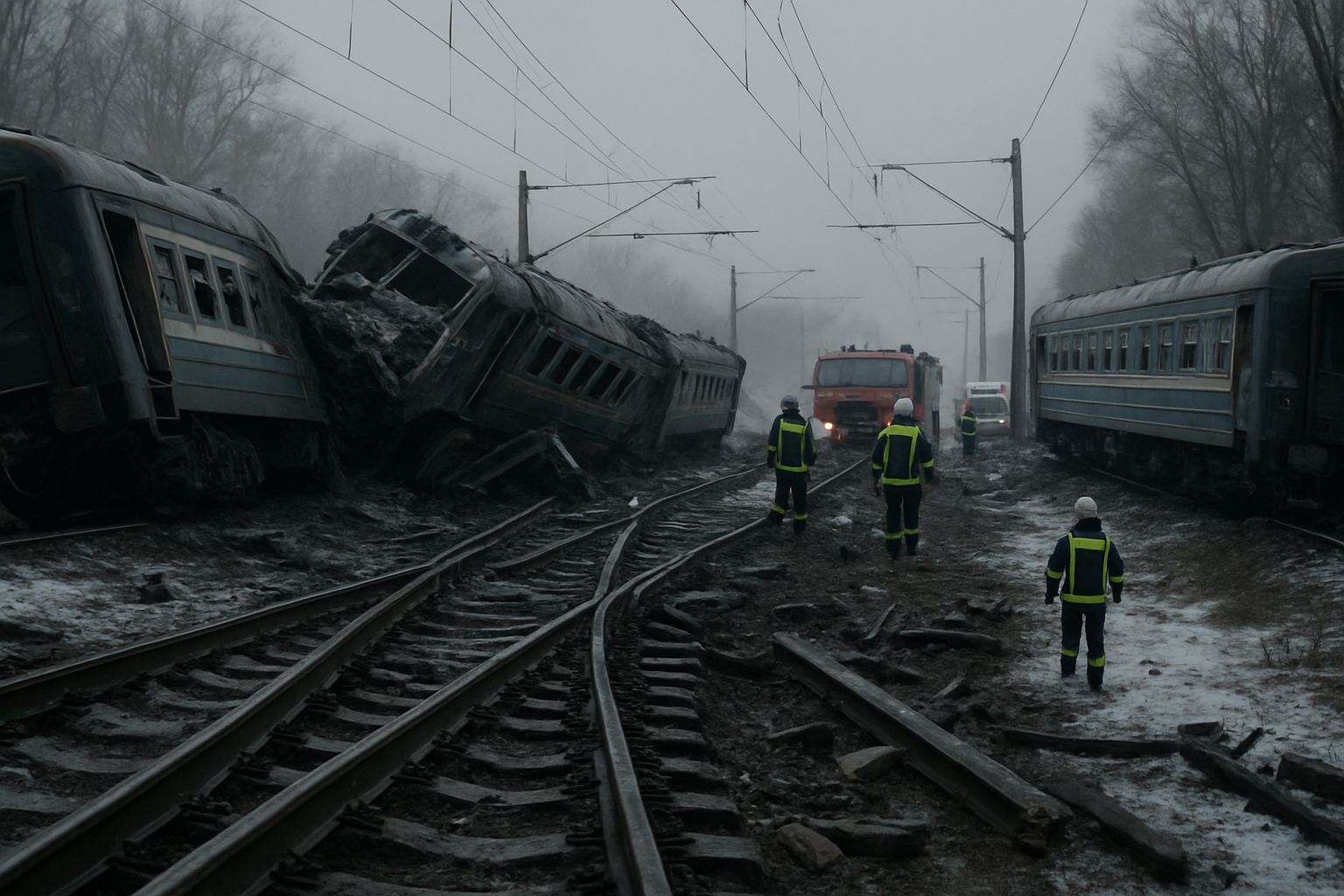
Russian forces conducted strikes targeting Ukrainian civilian infrastructure and railway systems on March 2, 2026, resulting in casualties including an attack on a passenger train in the Kryvyi Rih district that killed one person and wounded ten others, as Ukraine's railway CEO warned of escalating attacks aimed at isolating regions.
The attack on the suburban train in the Kryvyi Rih district represents the latest escalation in Russia's systematic targeting of civilian transportation infrastructure. According to Ukrainian Railways CEO, the surge in strikes on train infrastructure marks "an attempt to effectively cut certain regions of Ukraine" from essential transportation networks.
Rising Casualties and Infrastructure Damage
The injury toll from the strike on the suburban train has climbed to ten, with one confirmed fatality, according to Ukrainian officials. The attack comes as part of broader Russian military operations that have increasingly focused on disrupting Ukraine's critical transportation networks, which serve as lifelines for civilian movement and essential supplies.
Multiple sources confirm that Russian forces launched eight separate attacks against civilian targets, demonstrating the systematic nature of the assault on non-military infrastructure. The targeting of passenger trains carrying civilians represents a clear violation of international humanitarian law and the Geneva Conventions' protections for civilian infrastructure.
Strategic Pattern of Railway Targeting
The Ukrainian Railways CEO's assessment that these strikes constitute an attempt to "effectively cut certain regions of Ukraine" reflects a broader military strategy of infrastructure warfare. Railway systems have become increasingly critical targets as they provide essential connectivity for civilian populations, humanitarian aid distribution, and economic activity across Ukraine.
This strategic targeting of transportation infrastructure follows established patterns documented throughout the conflict, where civilian systems essential for daily life have been systematically attacked during extreme weather conditions to maximize humanitarian impact.
"This represents an attempt to effectively cut certain regions of Ukraine through systematic targeting of our railway infrastructure."
— Ukrainian Railways CEO
Broader Context of Civilian Targeting
The March 2 attacks occur within the context of systematic civilian targeting that has characterized recent Russian military operations. Historical patterns show consistent escalation of attacks on civilian infrastructure, particularly energy systems and transportation networks, during critical periods.
The targeting of passenger trains carries particular humanitarian significance as these systems serve vulnerable civilian populations, including families with children, elderly passengers, and individuals dependent on public transportation for access to essential services and evacuation routes.
International Law Implications
The deliberate targeting of civilian transportation infrastructure, particularly passenger trains carrying non-combatants, constitutes a clear violation of international humanitarian law. The Geneva Conventions explicitly protect civilian infrastructure essential for the survival of the civilian population.
International observers have consistently documented patterns of systematic civilian targeting throughout the conflict, with transportation networks increasingly becoming primary targets despite their protected status under international law. These attacks create humanitarian crises by isolating populations and disrupting access to essential services.
Humanitarian Impact on Regional Connectivity
The strategic targeting of railway infrastructure has profound implications for regional connectivity and civilian welfare. Railway systems serve as critical lifelines for civilian populations, enabling access to medical care, educational facilities, employment opportunities, and family connections across different regions.
The disruption of passenger train services forces civilian populations to rely on more vulnerable transportation methods or face complete isolation from essential services. This creates particular hardship for elderly residents, families with young children, and individuals with mobility limitations who depend on public transportation.
Emergency Response and Recovery Efforts
Ukrainian emergency services responded rapidly to the train attack, with medical teams treating the wounded and conducting rescue operations. The ability to maintain emergency response capabilities despite systematic targeting of infrastructure demonstrates the resilience of Ukrainian civilian protection systems.
Railway authorities face ongoing challenges in maintaining service operations while protecting passenger safety amid continued threats to transportation infrastructure. The need for enhanced security measures and rapid repair capabilities has become critical for maintaining civilian transportation networks.
Regional Security Implications
The escalation in attacks on passenger transportation systems has broader implications for regional security and civilian protection. The systematic targeting of infrastructure essential for civilian welfare creates humanitarian pressures that extend beyond immediate combat zones.
International support for infrastructure protection and rapid repair capabilities has become increasingly critical as civilian transportation networks face sustained threats. The ability to maintain essential services despite ongoing attacks remains crucial for civilian survival and regional stability.
As Ukrainian officials work to restore damaged railway services and protect remaining infrastructure, the international community continues to monitor the systematic targeting of civilian systems and its implications for humanitarian law enforcement and civilian protection in contemporary conflicts.