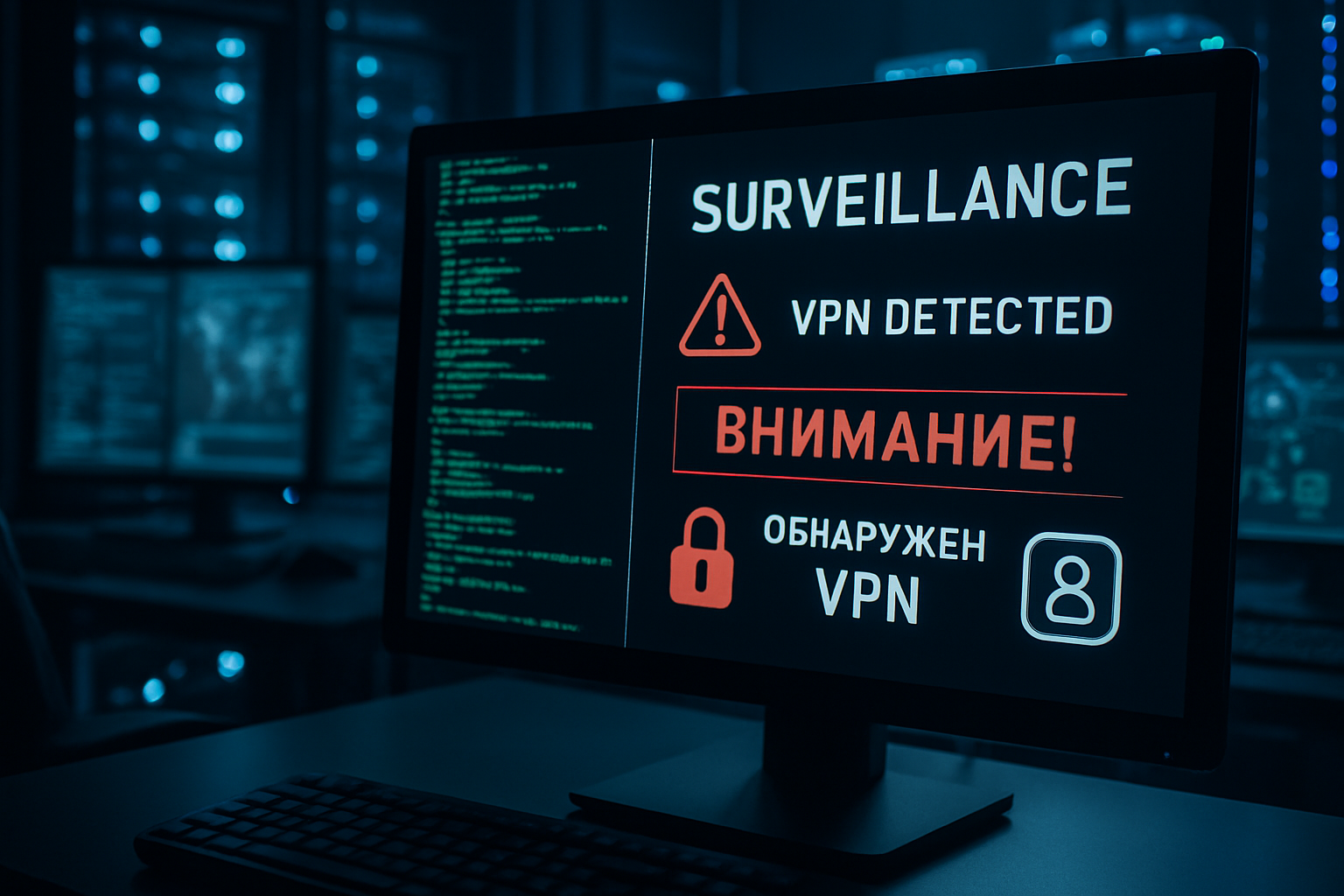
A comprehensive investigation has exposed the extensive surveillance capabilities embedded in popular Russian applications, revealing sophisticated VPN tracking technology that monitors user digital behavior, as global concerns about digital privacy and technology addiction reach a critical inflection point in April 2026.
Russian cybersecurity researchers publishing on ntc.party and Habr platforms have uncovered alarming surveillance modules within the state-promoted Max messenger application, positioned as a "WhatsApp alternative" for Russian citizens. The investigation by researchers operating under the handle "runetfreedom" reveals sophisticated technology capable of detecting VPN usage, monitoring device activities, and conducting comprehensive digital behavior analysis that extends far beyond simple messaging services.
Sophisticated Surveillance Infrastructure
The Max messenger surveillance system represents an evolution from basic communication tools to comprehensive digital monitoring infrastructure. According to the technical analysis, the application can identify when users activate VPN services, track application usage patterns, and build detailed profiles of digital behavior without users' explicit knowledge or consent.
This surveillance capability transforms a seemingly innocuous messaging platform into what security experts describe as a comprehensive digital monitoring system, allowing authorities to maintain oversight of user activities even when individuals attempt to protect their privacy through VPN services and encrypted communications.
The discovery comes amid Russia's implementation of punitive VPN restrictions, including charges of 150 rubles per gigabyte over a 15GB monthly limit, effectively forcing users toward state-controlled messaging platforms equipped with confirmed surveillance modules.
Global Digital Privacy Crisis Context
The Russian surveillance revelations emerge within a broader global digital privacy crisis that has reached unprecedented proportions in 2026. According to memory analysis, the Netherlands recently suffered a massive telecommunications breach affecting 6.2 million customers—nearly one-third of the country's population—exposing location data, communication patterns, and personal identification information that cybersecurity experts describe as a "gold mine" for criminal networks.
Cyprus Data Protection Commissioner Maria Christofidou has warned that "personal data has become the currency of the digital age," as cyber incidents have surged 20.6% in the fourth quarter of 2025, with Jordan alone experiencing 1,012 attacks, 1.8% of which posed serious threats to national infrastructure.
"We're witnessing the systematic erosion of digital privacy on a scale never seen before, where state surveillance converges with criminal exploitation to create unprecedented threats to democratic society."
— Senior Cybersecurity Analyst
Monaco's Digital Wellness Initiative
While surveillance concerns escalate globally, Monaco has taken a proactive approach to addressing digital technology's impact on society. On April 10, 2026, the principality launched its first digital forum focused on the growing impact of technology in everyday life, opening a public conversation about the risks associated with increased screen time, particularly on social media platforms.
The initiative represents a measured response to what officials describe as the "digital dilemma"—acknowledging the undeniable benefits of digital tools while raising awareness of the risks that accompany excessive screen exposure. The event brought together technology experts, mental health professionals, and citizens to discuss sustainable approaches to digital consumption.
Monaco's approach contrasts sharply with the surveillance-heavy strategies being implemented elsewhere, instead focusing on education and awareness to help citizens make informed decisions about their digital habits and technology consumption patterns.
AI-Enhanced Criminal Networks
The digital privacy crisis has been compounded by the emergence of AI-enhanced criminal organizations that security researchers describe as operating with "state-level technological capabilities." These criminal networks are documented as using AI chatbots as "elite hackers," enabling automated vulnerability detection, sophisticated script writing, and coordinated data theft operations.
The European Security Technology Institute (ESET) has discovered "PromptSpy" malware that utilizes AI algorithms to analyze user behavior in real-time, customizing attack vectors for maximum effectiveness. This represents what cybersecurity experts call the "total industrialization of cyber threats," where barriers to entry for sophisticated attacks have been virtually eliminated.
Infrastructure Vulnerability Window
Compounding these threats is a global semiconductor shortage that has created what security analysts term a "critical vulnerability window" lasting until 2027. Memory chip prices have increased sixfold, affecting major manufacturers including Samsung, SK Hynix, and Micron, constraining the deployment of advanced security systems precisely when threats are escalating most rapidly.
This infrastructure crisis forces governments and organizations to choose between comprehensive security measures and maintaining essential digital services, creating gaps that sophisticated criminal networks actively exploit while traditional law enforcement struggles with resource limitations and outdated technological capabilities.
International Cooperation Successes and Challenges
Despite the escalating threats, recent international cooperation efforts have demonstrated the potential for effective coordinated responses. The successful takedown of LeakBase, one of the world's largest stolen data trading platforms, required coordination between Dutch police, Europol, the FBI, and law enforcement agencies from 13 countries.
Similarly, the elimination of Tycoon2FA, which operated 330 domains forming a criminal infrastructure backbone targeting financial institutions and government agencies worldwide, showcased the effectiveness of international cybersecurity cooperation when properly resourced and coordinated.
However, these successes highlight the extensive resources required for effective responses against digitally native criminal organizations capable of instantly relocating operations across international boundaries. Traditional enforcement mechanisms remain inadequate against organizations operating with state-level technological resources and sophisticated jurisdictional exploitation strategies.
Regulatory Responses Diverge
Global responses to the digital privacy crisis reveal philosophical divisions about the role of government in digital governance. European nations are implementing criminal executive liability frameworks, with Spain leading the development of world-first legislation creating imprisonment risks for technology executives who enable systematic privacy breaches.
Alternative approaches are emerging in Asia-Pacific regions, where countries like Malaysia emphasize parental responsibility through digital safety campaigns, while Oman has implemented "Smart tech, safe choices" educational initiatives focusing on conscious digital awareness rather than regulatory enforcement.
This divide represents fundamental questions about government intervention versus individual agency in digital governance, with stakes extending beyond individual privacy to the preservation of democratic society itself amid escalating cyber threats and systematic privacy erosion.
Economic and Social Impact
The economic consequences of the digital privacy crisis have become measurable and significant. Consumer trust erosion has led to documented user declines across major platforms, with some services experiencing losses of over 3% following major breaches. The "SaaSpocalypse" of February 2026 eliminated hundreds of billions in technology market capitalization amid regulatory uncertainty and cybersecurity concerns.
The human cost extends beyond financial metrics, with mental health professionals reporting new categories of trauma symptoms related to digital privacy violations, while women are decreasing their online participation in response to AI-generated abuse and surveillance concerns.
Protection Strategies and Future Implications
Security experts recommend comprehensive protection strategies including multi-factor authentication, skeptical approaches to digital communications, verification through official channels, regular software updates, and network segmentation for connected devices. Organizations require AI-powered threat detection capabilities, extensive employee education programs, and immediate incident response protocols.
The convergence of state surveillance, criminal exploitation, and infrastructure vulnerabilities in April 2026 represents what analysts describe as a critical inflection point for global digital governance. The window for effective coordinated action is narrowing as criminal capabilities advance faster than defensive measures.
"The resolution of these challenges will establish 21st-century technology governance precedents affecting billions globally, determining whether digital technologies serve human flourishing or become surveillance and control tools beyond democratic accountability."
— International Digital Rights Institute
The Path Forward
Success in addressing the global digital privacy crisis requires unprecedented international cooperation, robust legal frameworks that protect privacy while enabling security measures, enhanced platform accountability, and transparent governance mechanisms that balance security needs with democratic values.
The stakes include the fundamental preservation of democratic society amid systematic privacy erosion, technological capabilities that challenge traditional sovereignty concepts, and the urgent need to ensure that digital technologies enhance rather than undermine human dignity and freedom.
As the crisis deepens in 2026, the choices made by governments, technology companies, and civil society will determine whether the digital age becomes an era of enhanced human potential or unprecedented surveillance and control. The Russian surveillance app investigation serves as a stark reminder that the battle for digital privacy and democratic governance has entered a critical phase where decisive action is required to preserve fundamental rights and freedoms.