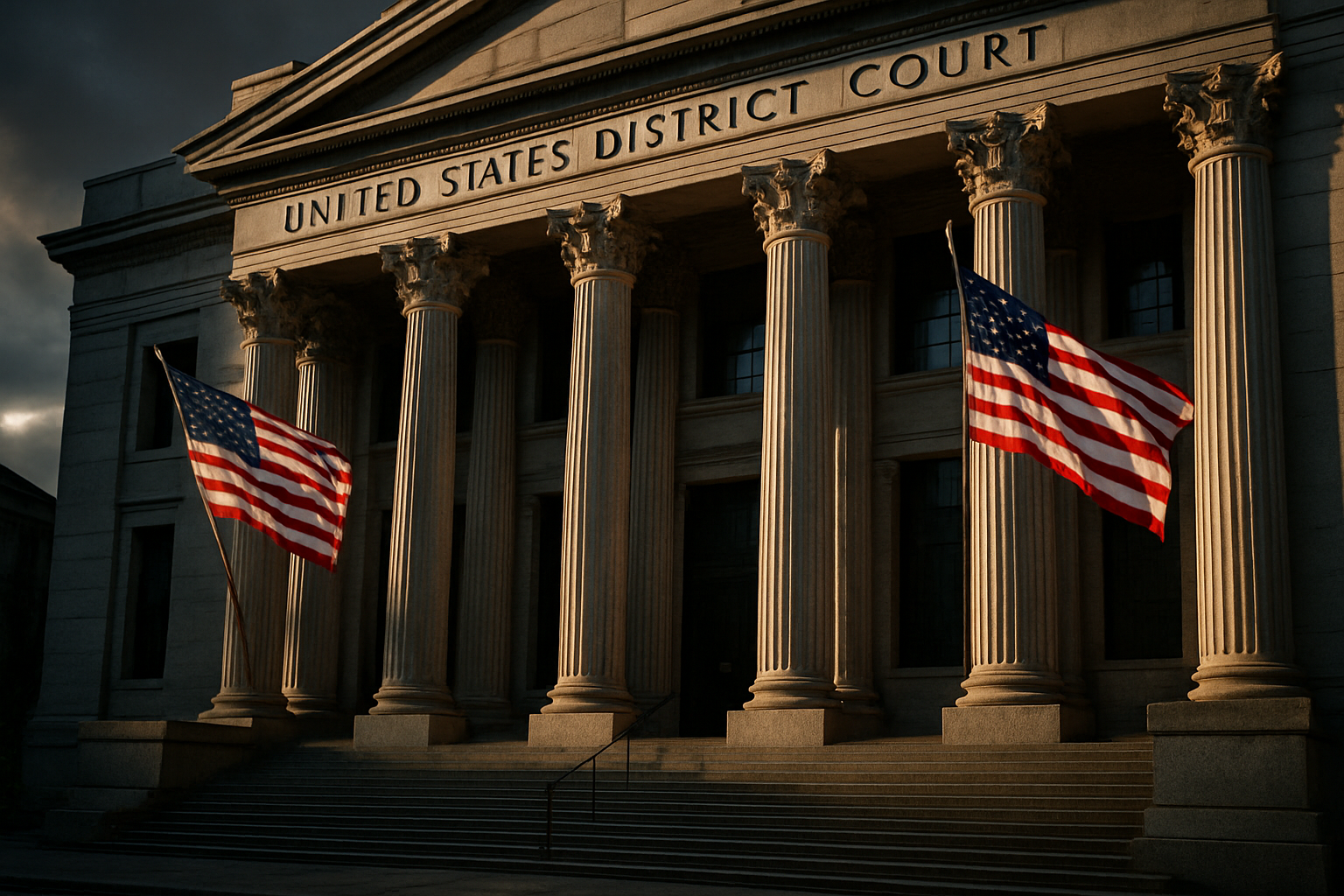
A federal judge on Wednesday sentenced Ryan Wesley Routh to life in prison without the possibility of parole for attempting to assassinate President Donald Trump at his Florida golf course in September 2024, bringing closure to one of the most serious threats against a sitting U.S. president in recent history.
U.S. District Judge Aileen Cannon delivered the sentence in the same Fort Pierce courtroom that erupted into chaos last September when Routh, 60, attempted to harm himself with a makeshift weapon after jurors found him guilty on all counts. The dramatic courtroom incident underscored the gravity of the case that has gripped national attention for months.
"Your plot to kill was deliberate and evil," Judge Cannon told the defendant during the sentencing hearing, emphasizing the severity of his actions against the then-presidential candidate who would later win the 2024 election.
The Assassination Plot Unfolds
According to court documents and testimony, Routh had hidden in the bushes at Trump's West Palm Beach golf course on September 15, 2024, armed with a semi-automatic rifle and lying in wait to ambush the Republican presidential candidate. The attempt was thwarted when a Secret Service agent spotted the weapon and opened fire, forcing Routh to flee the scene.
Prosecutors revealed during the trial that Routh had left behind a letter offering a monetary reward for anyone who would complete the assassination if he failed. This chilling detail demonstrated the premeditated nature of his plan and his commitment to seeing it through by any means necessary.
The incident occurred less than two months before the November 2024 election that ultimately returned Trump to the presidency, making it not just an attack on an individual but an assault on the democratic process itself.
Legal Proceedings and Conviction
After a two-and-a-half-week trial in September 2025, a federal jury swiftly convicted Routh on five felony charges, including attempted assassination of a major presidential candidate, assault on a federal officer, and multiple firearms violations. The evidence presented by prosecutors painted a clear picture of careful planning and deadly intent.
The charges also included the criminal possession of a firearm and use of a weapon with a falsified serial number, demonstrating the lengths to which Routh had gone to acquire the tools for his planned attack.
"The defendant was unrepentant and has never apologized for his actions," federal prosecutors argued while requesting the life sentence without parole.
— Federal Prosecutors
Routh's defense attorney, who was brought in specifically for the sentencing phase, requested a reduced sentence of 27 years, noting that the defendant was already 60 years old. However, the court rejected this appeal for leniency given the extraordinary nature of the crime.
Unprecedented Security Breach
The assassination attempt highlighted serious concerns about presidential security during campaign events. The fact that an armed individual was able to position himself within range of a presidential candidate at a known location raised questions about Secret Service protocols and the challenges of protecting political figures during an active campaign season.
Security experts noted that golf courses present particular challenges for protection details due to their open spaces and multiple entry points, making comprehensive surveillance difficult.
The incident was notably the second major assassination attempt on Trump during the 2024 campaign period, following another serious threat that had already put security agencies on high alert.
International Impact and Coverage
The case has drawn extensive international attention, with media outlets across multiple continents covering both the initial incident and Wednesday's sentencing. News organizations from Albania to Sweden, from China to Romania, have reported on the case, reflecting global interest in American political security and the rule of law.
The international coverage has focused not only on the crime itself but also on the broader implications for democratic institutions and the peaceful transfer of power in the United States.
Legal Precedent and Implications
Legal experts view the life sentence as appropriate given the severity of attempting to assassinate a presidential candidate. The case sets a clear precedent that such attacks on democratic institutions and political leaders will face the full weight of federal prosecution.
The sentence also includes an additional 84 months (seven years) for firearms-related charges, though these will run concurrently with the life sentence. Defense attorney Martin Roth indicated plans to appeal the conviction, particularly challenging the terrorism enhancement that was applied to increase the sentence.
"I think the judge may have wrongly applied a federal terrorism enhancement, and that will probably be the main issue on appeal," Roth told media following the sentencing.
Context of Political Violence
The Routh case comes amid broader concerns about political violence in the United States, with threats against public officials having increased dramatically in recent years. Federal law enforcement agencies have repeatedly warned about the rising tide of threats against politicians from both major parties.
The assassination attempt occurred during one of the most contentious presidential election cycles in recent memory, highlighting the dangerous intersection of political polarization and individual radicalization.
Victim Impact and Response
While Trump was not physically harmed in the incident, the psychological impact and the broader implications for American democracy were significant factors considered during sentencing. The attempt represented not just an attack on an individual but an assault on the electoral process and peaceful transitions of power that are fundamental to democratic society.
The Secret Service has since implemented additional security measures for high-profile political events, though specific details remain classified for obvious security reasons.
Looking Forward
With Routh now facing life imprisonment without the possibility of parole, the case serves as both a conclusion to a serious threat and a stark reminder of the ongoing challenges facing American political security. The sentencing sends a clear message that attempts to use violence to influence political outcomes will face the severest penalties under federal law.
The case also underscores the critical importance of robust security measures for political candidates and the need for continued vigilance by law enforcement agencies tasked with protecting democratic institutions.
As the appeals process begins, legal observers will watch closely to see whether the terrorism enhancement and other aspects of the sentence withstand judicial review, potentially setting important precedents for future cases involving threats against political figures.