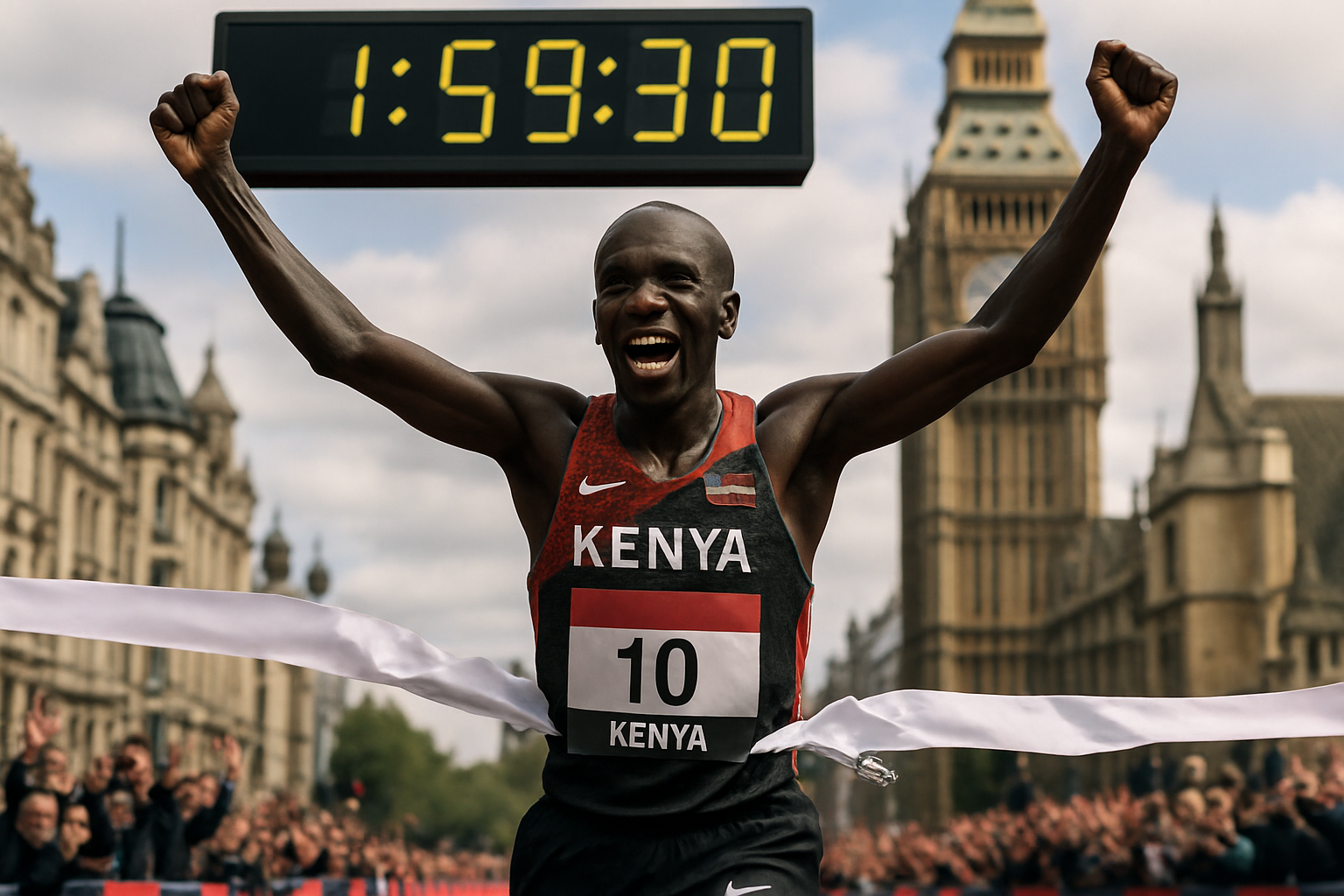
In a race for the ages, Kenyan marathon champion Sabastian Sawe made athletic history on Sunday by becoming the first person to officially break the two-hour marathon barrier, finishing the London Marathon in 1:59:30 and shattering the previous world record by an astonishing 65 seconds.
The 30-year-old defending champion not only retained his London Marathon title but redefined what was thought possible in distance running, completing the 42.195-kilometer course in conditions that many experts had deemed perfect for a potential breakthrough. With favorable tailwinds, clear skies, and ideal 18°C temperatures, Sawe seized the moment to etch his name into sporting immortality.
A Historic Barrier Finally Falls
While Eliud Kipchoge famously ran under two hours in Vienna in 2019 (1:59:40), that achievement was not officially recognized by World Athletics due to the controlled conditions, including rotating pacers and specially designed course layout. Sawe's performance marks the first time the barrier has been broken in an official, sanctioned race under standard competitive conditions.
The significance of this achievement cannot be overstated. The two-hour marathon has been athletics' equivalent of the four-minute mile, a psychological and physiological barrier that has captivated the imagination of runners and sports scientists for decades. Breaking it by 30 seconds suggests that even faster times may be possible as training methods, technology, and tactics continue to evolve.
"This is a historic moment for the entire sport of marathon running. What Sabastian has achieved today will inspire generations of runners and shows us that human potential knows no bounds."
— Sebastian Coe, World Athletics President
Perfect Storm of Conditions
Multiple factors aligned to create the ideal environment for Sawe's breakthrough performance. The London Marathon's fast, predominantly flat course provided the perfect stage, while the absence of strong winds allowed for optimal pacing strategy. The enthusiastic crowd support, particularly energetic along the Thames Embankment, provided additional psychological lift during crucial middle stages of the race.
Advanced footwear technology also played a role, with Sawe wearing the latest generation of carbon-plated running shoes that have revolutionized distance running in recent years. However, unlike controlled time trials, Sawe had to navigate the complexities of competitive racing while maintaining his sub-two-hour pace throughout.
Tactical Execution
Sawe's race strategy was masterfully executed, with consistent splits that demonstrated remarkable pacing discipline. He passed the halfway point in 59:45, putting him on track for his eventual finishing time. The crucial moment came at the 35-kilometer mark, where many marathoners typically experience their greatest physical challenge, yet Sawe maintained his rhythm and actually increased his pace slightly in the final 7 kilometers.
Kenya's Distance Running Dynasty Continues
This historic achievement reinforces Kenya's continued dominance in distance running, building on a legacy that stretches back decades. Kenyan athletes have consistently pushed the boundaries of what's possible in marathon running, with the country producing multiple world record holders and Olympic champions.
Sawe's breakthrough follows the previous world record of 2:00:35, which had stood as a seemingly insurmountable barrier. His improvement of 65 seconds represents one of the largest single advances in marathon world record progression in recent history, suggesting that the sport may be entering a new era of unprecedented fast times.
Global Impact and Future Implications
The achievement has sent shockwaves through the global running community and beyond. International media coverage emphasized the historic nature of the accomplishment, with French outlet Le Monde noting Sawe had "beaten the world record for the distance," while German coverage highlighted the role of high-tech shoes and optimal conditions in enabling the breakthrough.
Sports scientists and coaches worldwide are already analyzing Sawe's performance data, seeking insights that could help other elite marathoners approach similar times. The breaking of the two-hour barrier by such a significant margin suggests that faster times are not only possible but perhaps inevitable as training methods continue to advance.
Technical Factors Behind Success
Several key elements contributed to Sawe's success:
- Optimal Pacing Strategy: Consistent splits throughout the race with negative split execution
- Advanced Footwear Technology: Carbon-plated shoes providing enhanced energy return
- Ideal Weather Conditions: Perfect temperature, humidity, and wind conditions
- Course Selection: London's fast, flat profile suited to record attempts
- Crowd Support: Exceptional spectator enthusiasm providing psychological boost
Breaking New Ground
Sawe's achievement opens possibilities that were previously thought impossible in official marathon competition. The 30-second buffer below the two-hour mark suggests that even faster times could be achievable as training methods, technology, and race tactics continue to evolve.
This breakthrough also establishes a new benchmark for marathon excellence and demonstrates that the limits of human endurance continue to be pushed forward by dedicated athletes willing to challenge conventional wisdom about what's possible.
"I always believed this was possible, but to actually do it feels incredible. This is for everyone who dreams of achieving something that seems impossible."
— Sabastian Sawe, Marathon World Record Holder
Recognition and Celebration
World Athletics has officially recognized Sawe's time, confirming it as a new world record. The achievement will be celebrated not only in Kenya but throughout the global running community, as it represents a milestone that many thought might take years or even decades to reach.
The London Marathon organization confirmed that Sawe's performance represents the fastest marathon ever run on British soil and one of the most significant athletic achievements in the race's prestigious history.
Looking Forward
As the athletics world absorbs the magnitude of Sawe's achievement, attention will inevitably turn to future possibilities. With the two-hour barrier now officially broken, questions arise about how much faster humans can run 42.195 kilometers. Sawe himself has indicated his intention to continue pushing boundaries, suggesting that his London performance may be just the beginning of a new era in marathon running.
For aspiring marathoners worldwide, Sawe's breakthrough serves as both inspiration and evidence that seemingly impossible goals can be achieved through dedication, optimal preparation, and the courage to challenge established limits. His 1:59:30 will stand as one of the most significant achievements in running history, marking the day when the two-hour marathon barrier finally fell in official competition.