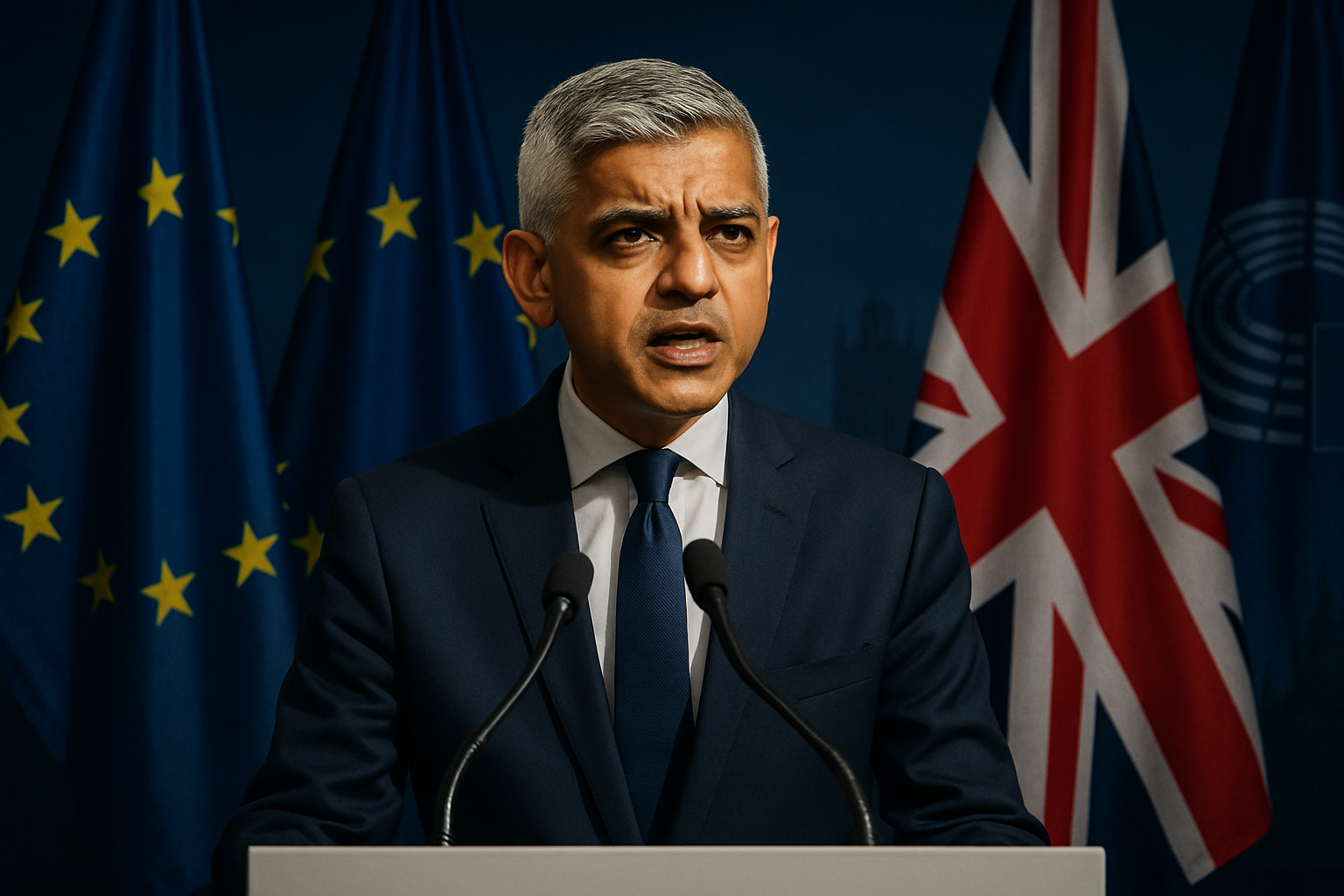
London Mayor Sadiq Khan has called for the Labour Party to campaign on rejoining the European Union at the next general election, marking the most significant intervention in the Brexit debate since the UK left the bloc in 2020.
Speaking on Wednesday night, Khan went far beyond his previous calls for rejoining the customs union and single market, instead advocating for full EU membership to be included in Labour's electoral manifesto. The Mayor of London cited growing economic instability caused by Donald Trump's return to the presidency as a key factor making EU membership more attractive.
Khan's intervention comes at a time of significant upheaval in UK-EU relations, with Downing Street maintaining its position that the government will not rejoin the single market or customs union. The timing of his statement appears calculated to capitalize on mounting concerns about the UK's post-Brexit economic trajectory and international standing.
Economic Instability Drives EU Reconsideration
The London Mayor's argument centers on the economic challenges facing Britain under Trump's second presidency. With global trade tensions escalating and the UK struggling to secure favorable bilateral agreements, Khan argues that EU membership offers a path to stability and influence that the country currently lacks.
"Returning to the EU is now more desirable because of economic instability caused by Donald Trump," Khan stated, according to sources familiar with his remarks. This represents a significant escalation from his previous advocacy for closer economic ties with Europe.
Khan has repeatedly made the case for joining the customs union and single market in recent years, but Wednesday's intervention marks the first time he has explicitly called for full membership to be a Labour electoral commitment. The move puts him at odds with the current Labour government's official position on Brexit.
Government Position Remains Firm
Despite Khan's intervention, Downing Street has repeatedly stated that the government will not rejoin the single market or customs union, let alone pursue full EU membership. This position reflects the Labour leadership's calculation that revisiting Brexit could prove electorally damaging, particularly in constituencies that voted Leave in 2016.
The government's stance comes amid evidence that Brexit continues to divide public opinion, with polling showing mixed results on whether the UK should seek closer ties with Europe. Labour's cautious approach reflects the party's desire to avoid reopening what many see as a settled question, despite growing criticism of Brexit's economic impact.
"The agreement is an agreement."
— European Commission, responding to trade commitments
Historical Context and Political Landscape
Khan's intervention occurs against the backdrop of significant changes in both UK and EU politics since Brexit. The European Union has undergone substantial transformation, with enhanced cooperation mechanisms allowing member states to advance policies without unanimity, and a renewed focus on strategic autonomy in response to global challenges.
Recent EU developments include the implementation of comprehensive digital governance frameworks, with criminal executive liability for platform violations spreading across member states, and the acceleration of the digital euro project as part of European financial sovereignty efforts. These initiatives demonstrate the EU's evolution toward greater integration and technological independence.
The UK's post-Brexit trajectory has included the implementation of new immigration controls, including Electronic Travel Authorization requirements for European visitors, effectively ending freedom of movement. These measures have created new barriers between Britain and continental Europe, potentially reshaping travel and business relationships for decades.
Brexit's Ongoing Impact
Seven years after the Brexit referendum, the UK continues to grapple with the economic and political consequences of leaving the European Union. Recent trade data shows persistent challenges in UK-EU commercial relationships, while diplomatic tensions have emerged over various issues including Northern Ireland and fishing rights.
The Labour government's approach to EU relations has been characterized by cautious engagement, seeking to improve relationships without fundamentally altering the post-Brexit settlement. However, Khan's intervention suggests growing pressure within the party for a more ambitious reassessment of the UK's European relationship.
Economic data continues to show mixed results from Brexit, with some sectors adapting successfully while others face ongoing challenges. The services sector, particularly financial services, has seen significant changes in its relationship with European markets, while trade in goods has been affected by new customs arrangements and regulatory divergence.
European Union's Current State
The EU that Khan proposes rejoining is markedly different from the one the UK left. Recent developments include the historic EU-Mercosur trade agreement creating one of the world's largest free trade zones, despite French opposition, demonstrating the Union's ability to advance strategic partnerships even amid internal divisions.
The bloc has also accelerated its digital sovereignty agenda, with comprehensive platform regulation including criminal executive liability for violations, and advancement of the digital euro as an alternative to US payment systems. These initiatives reflect the EU's determination to maintain technological and monetary independence in an increasingly multipolar world.
Enhanced cooperation mechanisms have proven effective, allowing willing member states to proceed with policies without requiring unanimity from all 27 members. This institutional flexibility has enabled the EU to address complex challenges more effectively, potentially addressing some of the concerns about EU decision-making that contributed to Brexit support.
Political Implications
Khan's call for EU rejoining represents a significant political gamble for Labour, potentially reopening debates the party leadership hoped to avoid. The Mayor's intervention could energize pro-European voters while potentially alienating those in Leave-voting constituencies that Labour needs to retain power.
The timing appears linked to current global uncertainties, including the ongoing Middle East crisis affecting energy markets and supply chains, and tensions in transatlantic relations under Trump's presidency. These developments may have created space for reconsidering Britain's international alignment.
Public opinion on Brexit continues to evolve, with some polling suggesting growing regret about leaving the EU, particularly among younger voters. However, the electoral implications remain complex, with significant regional and demographic variations in attitudes toward European integration.
Looking Forward
Khan's intervention sets up a potential division within Labour between those favoring closer EU ties and those preferring to maintain distance from Brexit debates. The party leadership faces the challenge of responding to one of its most prominent figures while maintaining electoral viability across diverse constituencies.
The broader question of UK-EU relations continues to evolve amid changing global circumstances. Whether Khan's call gains traction will depend on economic developments, public opinion shifts, and the Labour leadership's assessment of electoral risks and opportunities.
As both the UK and EU navigate complex global challenges, from climate change to technological competition with authoritarian powers, the fundamental question of their future relationship remains open. Khan's intervention ensures that Brexit, far from being settled, remains a live political issue with potentially profound implications for Britain's future direction.