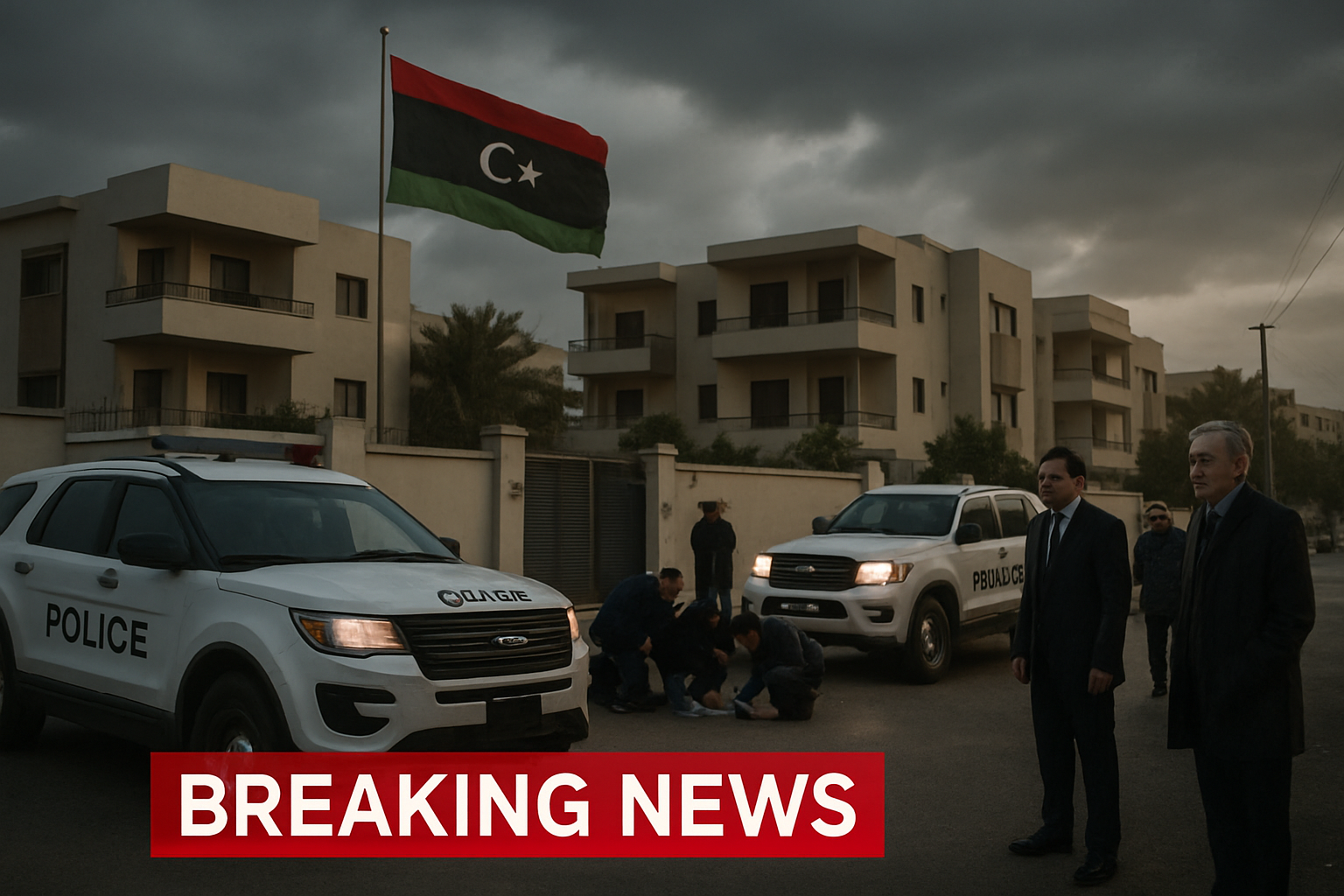
Saif al-Islam Gaddafi, the 53-year-old son of Libya's former dictator Muammar Gaddafi, was assassinated by a four-man armed commando at his residence in Zintan, western Libya, in the early hours of Wednesday, February 4, 2026, according to multiple official sources and international reports.
The killing, confirmed by his French lawyer Marcel Ceccaldi and political adviser Abdullah Othman Abdurrahim, marks the definitive end of the Gaddafi dynasty's political influence in Libya and removes the last significant figure from one of the most controversial families in modern North African politics.
Details of the Assassination
According to statements from Gaddafi's political team, four masked gunmen stormed his home at approximately 2:30 AM local time after disabling surveillance cameras around the property. The attackers executed the planned assault and fled the scene immediately after the killing.
Abdullah Othman Abdurrahim, a member of Saif al-Islam's political team, announced the death on Facebook, describing it as a "cowardly and premeditated assassination." The statement detailed how the armed commando carried out what appears to have been a carefully orchestrated operation.
"Four masked gunmen carried out this heinous crime against an unarmed civilian in his own home,"
— Abdullah Othman Abdurrahim, Political Adviser
Libya's attorney general's office announced Wednesday that it has launched a formal investigation into the killing, with forensics teams examining both the body and the crime scene. The UN Mission in Libya (UNSMIL) expressed "deep concern" over the assassination, calling for a thorough investigation.
International Condemnation and Investigation
The killing has drawn swift international condemnation. Russia's foreign ministry issued a statement Wednesday calling for a "thorough investigation" into what it termed a criminal act that further destabilizes Libya's fragile political situation.
The United Nations Support Mission in Libya (UNSMIL) expressed its "deep dismay" over the killing, referencing reports from Gaddafi's office about the attack on his residence. The international body emphasized the need for accountability and proper investigation procedures.
There are conflicting reports about the exact location of the assassination. While most sources confirm the attack occurred in Zintan in western Libya, some family members have claimed the killing took place near the Algerian border. The discrepancy has not been officially resolved by Libyan authorities.
Political Background and Significance
Saif al-Islam Gaddafi was once positioned as the heir apparent to his father's regime and played a crucial role in Libya's rapprochement with Western nations during the 2000s. Educated at the London School of Economics, he was instrumental in negotiations that led to Libya's abandonment of its nuclear weapons program and improved relations with the United States and European Union.
Following the 2011 Libyan revolution that resulted in his father's death, Saif al-Islam went into hiding for over a decade. He was wanted by the International Criminal Court (ICC) for crimes against humanity related to the brutal suppression of the 2011 uprising. A Libyan court sentenced him to death in absentia in 2015, though he was later granted amnesty.
In 2021, he attempted a political comeback by registering as a candidate for Libya's presidential election, but electoral authorities rejected his candidacy due to his criminal record and ICC charges. His assassination effectively closes a major international criminal case and removes the last politically significant figure from the Gaddafi family.
Accusations and Denials
Some reports have implicated the 444 Combat Brigade, a militia group affiliated with Libya's Government of National Unity based in Tripoli, in the assassination. However, the group has categorically denied any involvement in the killing.
The accusation highlights the complex web of militias and competing authorities that continue to fragment Libya more than a decade after the fall of the Gaddafi regime. The country remains divided between rival governments and numerous armed groups, with periodic outbreaks of violence.
Family Reactions and Burial Plans
Hamid Gaddafi, a cousin of the deceased, described Saif al-Islam as having "died as a martyr," according to family statements. The body has been handed over to tribal representatives for burial in Sirte, Muammar Gaddafi's birthplace and the family's traditional stronghold.
However, funeral arrangements have been delayed pending the completion of the official investigation. The Libyan Presidential Council issued a statement mourning the death while calling for restraint in public discourse to prevent further escalation of tensions.
Libya's Continuing Instability
The assassination occurs against the backdrop of Libya's persistent political fragmentation and security challenges. The country has struggled to establish unified institutions since 2011, with competing governments, militias, and foreign interventions preventing the consolidation of democratic rule.
International observers have expressed concern that the killing could trigger retaliation or further violence, given the complex tribal loyalties and armed group presence throughout the country. The incident underscores the challenges facing efforts to stabilize Libya and build functioning democratic institutions.
The killing of Saif al-Islam Gaddafi represents not just the end of a controversial political figure's life, but the closing of a significant chapter in Libyan and North African history. His death removes the last vestiges of the Gaddafi era from Libya's political landscape, though it also highlights the country's ongoing struggles with violence and institutional weakness.
As investigations continue and the international community calls for accountability, the assassination serves as a stark reminder of Libya's fragile security situation and the challenges that remain in building a stable, unified state more than fifteen years after the Arab Spring uprisings that transformed the region.