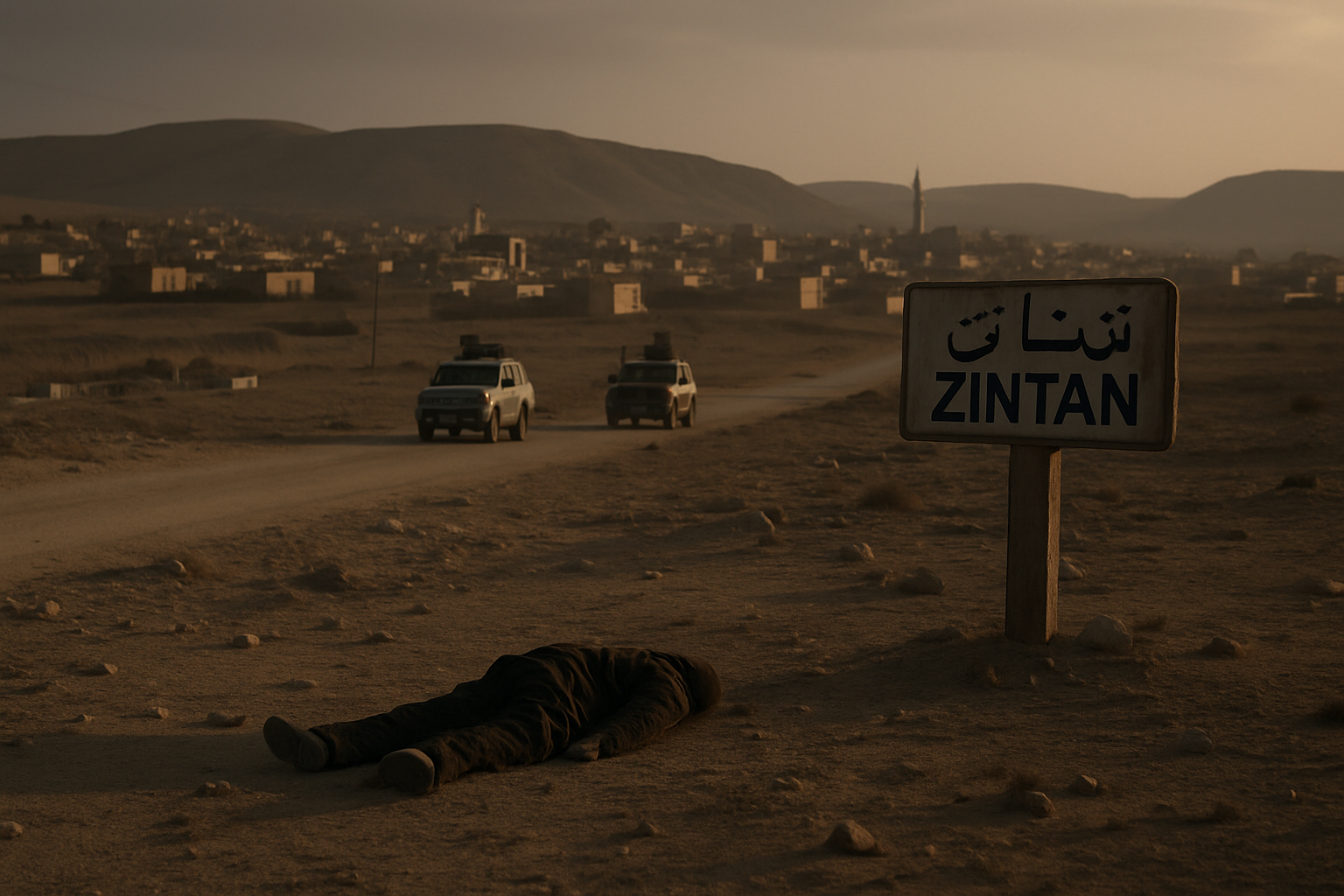
Saif al-Islam Gaddafi, the son of Libya's former dictator Muammar Gaddafi and one of the country's most wanted men, was killed Tuesday in an armed attack at his residence in Zintan, western Libya, according to his political advisers and family members.
The 53-year-old, who had been living in hiding for over a decade since his father's regime collapsed in 2011, was shot dead by a four-man commando unit that stormed his home around 2 PM local time, according to his French lawyer Marcel Ceccaldi. The attackers reportedly disabled security cameras before carrying out the assassination and quickly fled the scene.
"He was killed today at 2pm ... in Zintan in his home by a four-man commando," Ceccaldi told AFP news agency. The death was confirmed by Abdullah Othman Abdurrahim, a member of Saif al-Islam's political team, who announced the news on Facebook without providing additional details.
Conflicting Accounts of the Assassination
While the majority of sources confirm the attack occurred in Zintan, approximately 136 kilometers southwest of Tripoli, conflicting accounts have emerged regarding the exact circumstances. Some reports suggest the gunmen shot Saif al-Islam in his garden after breaching security, while his sister told Libyan television that he had died near the country's border with Algeria.
His cousin, Hamid Gaddafi, declared to Libya al-Ahrar television that "Doctor Saif al-Islam fell as a martyr," though he added that the family had "no other information" about the circumstances surrounding the death.
Sources close to Saif al-Islam have accused the 444 Combat Brigade, a militia group affiliated with the Government of National Unity in Tripoli, of orchestrating the assassination. However, the brigade has denied any involvement in the attack.
A Decade in Hiding
Saif al-Islam Gaddafi had been living in relative obscurity in Zintan since his father's regime was overthrown during the 2011 Arab Spring uprising. Ironically, he met his end in the same city that had held him prisoner for years following the collapse of the Gaddafi dynasty.
Once widely seen as his father's heir apparent and the most influential figure in Libya after Muammar Gaddafi, Saif al-Islam played a crucial role in Libya's rapprochement with the West from 2000 until the regime's downfall. Born in 1972, he was educated in Britain and held a PhD from the London School of Economics, positioning him as the modernizing face of the Gaddafi regime.
"The West wants to control Libya's oil and gas resources, and the violence will not end with my father's death."
— Saif al-Islam Gaddafi, 2011 RT Interview
The International Criminal Court had issued an arrest warrant for Saif al-Islam in 2011 for alleged crimes against humanity related to the suppression of protests during the 2011 uprising. Additionally, a Libyan court sentenced him to death in absentia in 2015 for his role in the violent crackdown on protesters that sparked the revolution.
Failed Political Comeback
Despite his fugitive status, Saif al-Islam attempted a political comeback in 2021 when he announced his intention to run for president of Libya. He formally registered as a candidate for the presidential election, positioning himself as a unifying figure who could bring stability to the war-torn nation that remains divided between rival governments.
His candidacy was controversial given his ICC warrant and the ongoing civil conflict that has plagued Libya since his father's death. The country has been split between competing administrations and militia groups, with intermittent warfare preventing any meaningful political reconciliation.
In his final public statements before his death, Saif al-Islam delivered sharp criticism of international powers, questioning whether Libyans had gained anything from the foreign intervention that led to his father's overthrow. These statements, according to some observers, may have sealed his fate.
Investigation and Funeral Arrangements
According to Abdullah Othman, a member of his political team, Saif al-Islam's funeral will be delayed until necessary crime scene procedures are completed. Libyan authorities are conducting an investigation into the assassination, though the perpetrators remain unidentified and at large.
The Russian news agency TASS reported that the investigation would need to be concluded before burial arrangements could proceed, highlighting the sensitive nature of the case and its potential implications for Libya's already fragile political situation.
Regional and International Implications
The assassination of Saif al-Islam Gaddafi represents the end of a significant chapter in Libyan politics and closes a major International Criminal Court case. His death removes one of the last prominent figures from the Gaddafi era who maintained political relevance in Libya's post-revolution landscape.
The killing comes at a time of continued instability across North Africa, with Libya remaining divided between competing governments and militia groups controlling different territories. The 444 Combat Brigade's alleged involvement, despite their denials, underscores the role of armed groups in Libya's political dynamics.
For the international community, particularly the ICC, Saif al-Islam's death means that justice for the alleged crimes against humanity committed during the 2011 uprising will never be served through formal legal proceedings. This represents a significant setback for international efforts to hold accountable those responsible for atrocities during the Arab Spring.
Legacy of the Gaddafi Dynasty
With Saif al-Islam's death, the political influence of the Gaddafi family in Libya effectively comes to an end. Muammar Gaddafi ruled Libya for 42 years before being killed during the 2011 revolution, and Saif al-Islam represented the last credible political figure from that dynasty.
The younger Gaddafi's death in Zintan carries particular symbolic weight, as it was the same city where he was captured and held prisoner following his father's fall. The Zintan militia had controlled him for years before his eventual release, and his decision to remain in the area ultimately proved fatal.
As Libya continues to grapple with political fragmentation and security challenges, the assassination of Saif al-Islam Gaddafi marks another violent chapter in the country's troubled post-revolution history. His death eliminates a controversial but significant political figure who had sought to reclaim power in a nation still struggling to find stability more than a decade after the fall of his father's regime.