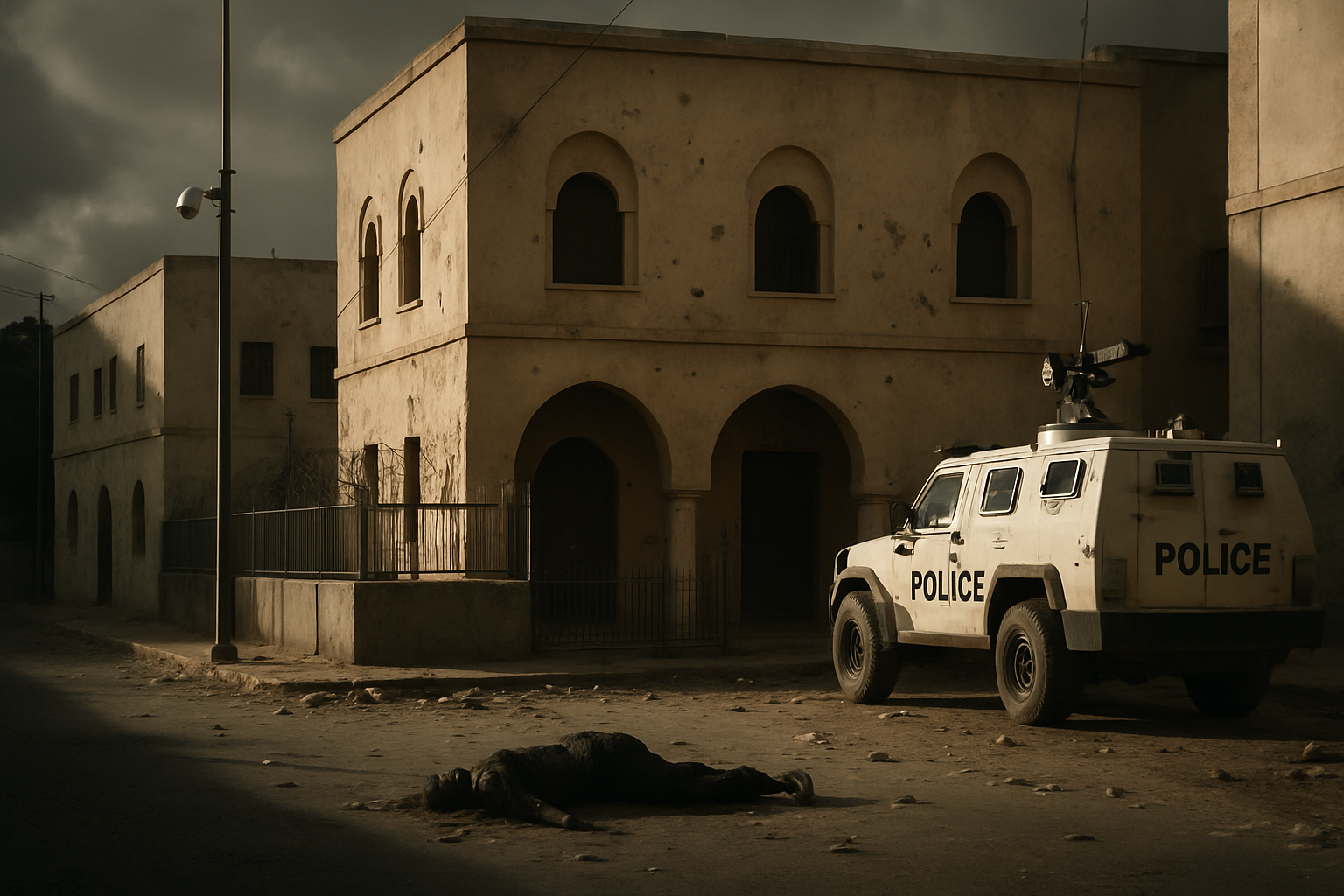
Saif al-Islam Gaddafi, the most prominent son of Libya's former dictator Muammar Gaddafi, was shot dead by unknown gunmen at his residence in Zintan, western Libya, on Tuesday, effectively ending the Gaddafi dynasty's political legacy more than 15 years after his father's overthrow.
The 53-year-old, once widely regarded as his father's heir apparent, was killed around noon local time (12:00 GMT) when four masked gunmen stormed his home after disabling surveillance cameras, according to his French lawyer Marcel Ceccaldi and political adviser Abdullah Othman Abdurrahim.
"He was killed today at 1200 GMT... in Zintan in his home by a four-man commando," Ceccaldi told AFP. The attackers executed what appeared to be a carefully planned assassination before fleeing the scene.
The Last of the Gaddafi Dynasty
Saif al-Islam's death marks the violent end of one of Libya's most controversial political figures and closes a significant chapter in the country's turbulent post-revolution history. Despite holding no official position, he was once considered the most powerful figure in Libya after his father, who ruled the North African nation for more than four decades until his death in 2011.
The younger Gaddafi had been living in hiding in the mountain town of Zintan, approximately 136 kilometers southwest of Tripoli, for more than a decade following the collapse of his father's regime during the 2011 Arab Spring uprising.
"Four armed men stormed the residence of Saif al Islam Qadhafi after disabling surveillance cameras, then executed him,"
— Abdullah Othman Abdul Rahim, Political Adviser
International Fugitive and War Crimes Charges
Saif al-Islam had been a wanted man for over a decade, facing serious international legal challenges. The International Criminal Court (ICC) had issued an arrest warrant against him for alleged crimes against humanity related to the violent suppression of the 2011 protests that ultimately led to his father's downfall.
In 2015, a Libyan court sentenced him to death in absentia for his role in suppressing peaceful demonstrations during the country's revolution. These legal proceedings had kept him in hiding, making rare public appearances and living under constant threat.
His death effectively closes one of the ICC's most high-profile cases and removes the last significant political figure from the Gaddafi family, marking what many observers see as the definitive end of the dynasty's influence in Libyan politics.
Political Comeback Attempt
Despite his fugitive status, Saif al-Islam had attempted a political comeback as recently as 2021, when he registered as a candidate for Libya's presidential election. His candidacy was ultimately rejected, but it demonstrated his continued ambitions to play a role in his country's future.
Before his assassination, he had delivered sharp criticism of international powers, questioning the benefits of foreign intervention in Libya during the 2011 NATO-backed operation that helped topple his father's government.
Controversial Legacy and Reform Efforts
Saif al-Islam's legacy remains deeply complex. While he was implicated in the violent crackdown on protesters during the 2011 revolution, he had also played a key role in some significant reforms and international negotiations during his father's rule.
He was instrumental in Libya's rapprochement with the West from 2000 until the collapse of the Gaddafi regime in 2011, including negotiations that led to his father abandoning Libya's nuclear weapons program. His Western education and fluent English made him a key diplomatic figure for the regime.
According to reports from the BBC, the London School of Economics-educated Saif al-Islam was widely viewed as a potential reformer who could modernize Libya's political system, though these hopes were dashed during the brutal suppression of the 2011 uprising.
Conflicting Reports and Investigation
While most sources confirm the assassination took place at his residence in Zintan, some conflicting reports have emerged. His sister told Libyan television that he had died near the country's border with Algeria, though this account has not been corroborated by other sources.
The Russian news agency TASS reported that Libyan prosecutors have confirmed the death from gunshot wounds and that law enforcement officers are working to identify the suspects involved in the murder.
Sources close to Saif al-Islam have accused the 444 Combat Brigade, a militia group affiliated with the Government of National Unity in Tripoli, of carrying out the assassination. However, the brigade has denied any involvement in the attack.
Family Response
His cousin Hamid Gaddafi described him as dying "as a martyr," while the family has delayed funeral arrangements pending the completion of the crime scene investigation by Libyan authorities.
Libya's Continuing Instability
The assassination occurs against the backdrop of Libya's continued political fragmentation and violence more than 15 years after the fall of the Gaddafi regime. The country remains divided between rival governments and is plagued by ongoing conflicts between various militia groups and political factions.
This latest killing highlights the persistent security challenges facing Libya, where political violence and targeted assassinations have become tragically common. The murder of such a high-profile figure underscores the country's inability to establish stable governance or ensure the safety of political figures, even those living in relative obscurity.
With Saif al-Islam's death, Libya has lost one of its most recognizable political figures from the Gaddafi era, potentially removing both a source of controversy and a possible avenue for political reconciliation among some segments of Libyan society who still held sympathy for the former regime.
International Implications
The killing has drawn international attention, with various media outlets across multiple continents reporting on the death of the man who was once positioned to inherit control of one of Africa's most oil-rich nations.
His death also removes a key figure who had intimate knowledge of Libya's political and economic structures during the Gaddafi era, potentially taking with him insights that could have been valuable for understanding Libya's complex tribal and political dynamics.
As Libya continues to struggle with political division and security challenges, the violent end of Saif al-Islam Gaddafi serves as a stark reminder of the country's ongoing difficulties in moving beyond the conflicts that began with the 2011 revolution and establishing lasting peace and stability.