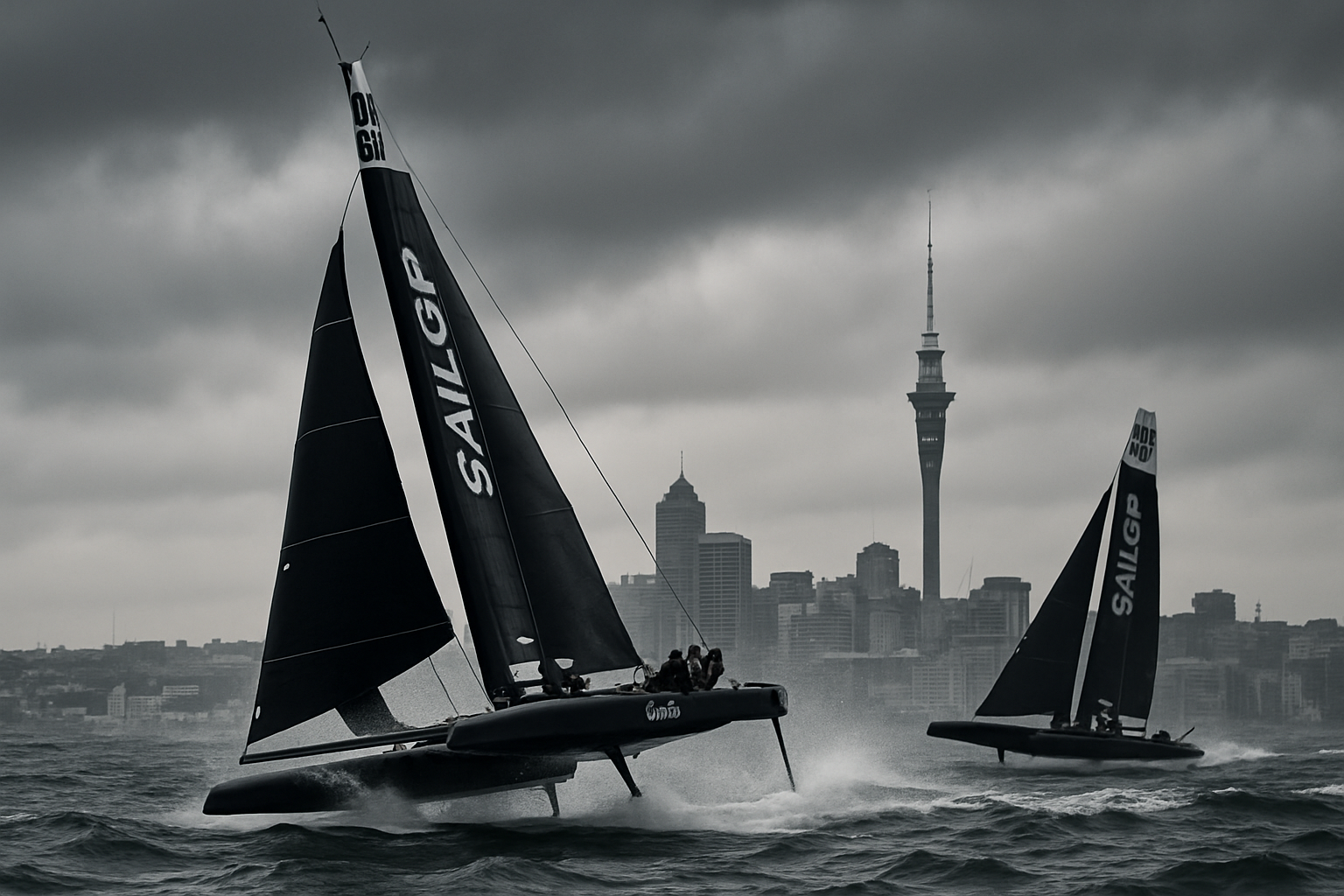
SailGP racing is confronting its most serious safety crisis in six seasons after a horrifying crash during Auckland's opening day left a sailor hospitalized with compound fractures to both legs and forced unprecedented changes to the championship format.
The dramatic collision between New Zealand's Black Foils and France's F50 catamaran occurred during race three of Saturday's competition, effectively ending the day's racing and casting a shadow over the sport's return to Auckland waters. The incident has prompted SailGP organizers to implement their first-ever format modifications since the championship began in 2019.
The Devastating Collision
Saturday's racing was abandoned after what witnesses described as a frightening crash involving the home team Black Foils and the French catamaran. The high-speed collision resulted in one crew member suffering compound fractures to both legs, marking one of the most severe injuries in SailGP's relatively brief but intense history.
The injured sailor underwent immediate surgery following the accident, with medical teams working to stabilize the compound fractures. As of Sunday, two sailors remain hospitalized as a result of the crash, highlighting the serious nature of the incident.
"The French reaction in the Black Foils crash might have saved a life," said British sailor Freddie Carr, commenting on the quick response from the French crew during the collision.
— Freddie Carr, British SailGP Sailor
Unprecedented Format Changes
In response to the accident, SailGP announced it would change its racing format for the first time in the championship's six-season history. The organization decided to split the fleet into two groups for Sunday's racing, a measure designed to reduce the risk of similar collisions.
This format modification represents a significant departure from SailGP's traditional racing structure, where all teams compete simultaneously in closely contested fleet races that often produce spectacular wheel-to-wheel action. The decision underscores the seriousness with which organizers are treating the safety implications of Saturday's crash.
The Human Cost of High-Speed Racing
The Auckland incident serves as a stark reminder of the inherent dangers in SailGP racing, where F50 catamarans regularly exceed speeds of 50 knots (93 km/h) while flying above the water on hydrofoils. These cutting-edge vessels, capable of reaching speeds faster than the wind that powers them, represent the pinnacle of sailing technology but also carry significant risks for their crews.
The compound fractures suffered by the injured sailor highlight the potential for serious injury when things go wrong at such extreme speeds. Compound fractures, where the bone breaks through the skin, are particularly serious injuries that require immediate medical intervention and often lengthy recovery periods.
Industry Response and Safety Concerns
The crash has prompted broader discussions within the sailing community about safety protocols in high-speed catamaran racing. While SailGP has maintained a relatively strong safety record since its inception, the sport's extreme nature – with boats flying at highway speeds just meters apart – inherently carries significant risks.
The fact that organizers felt compelled to change the format immediately demonstrates their recognition that current safety measures may need review. The decision to continue racing, albeit in a modified format, reflects the complex balance between maintaining competitive integrity and ensuring crew safety.
Auckland's Return Marred
The incident has overshadowed what was meant to be a celebration of SailGP's return to Auckland, one of the world's premier sailing venues. The Auckland event holds special significance as New Zealand is considered one of sailing's most prestigious locations, home to multiple America's Cup victories and a passionate sailing community.
The Black Foils, competing on home waters, would have been hoping to capitalize on local support and intimate knowledge of Auckland's sailing conditions. Instead, the team finds itself at the center of SailGP's most serious safety incident.
Looking Forward
As SailGP continues with its modified format, questions remain about whether this represents a temporary adjustment or a more permanent change to how the championship operates. The organization will likely face pressure from teams, sponsors, and safety advocates to conduct a thorough review of its safety protocols.
The incident also raises broader questions about the trajectory of high-speed sailing sports. As technology enables ever-faster speeds and more spectacular racing, the challenge becomes maintaining the sport's appeal while ensuring acceptable levels of risk for participants.
For now, the sailing community's thoughts are with the injured crew members as they recover from what has become SailGP's most serious on-water incident. The championship's response to this crisis may well define how the sport approaches safety in its high-speed, high-stakes future.
The Auckland event continues under the modified format, but the shadow of Saturday's crash serves as a sobering reminder that in the pursuit of sailing's ultimate speed and spectacle, human safety must remain the paramount concern.