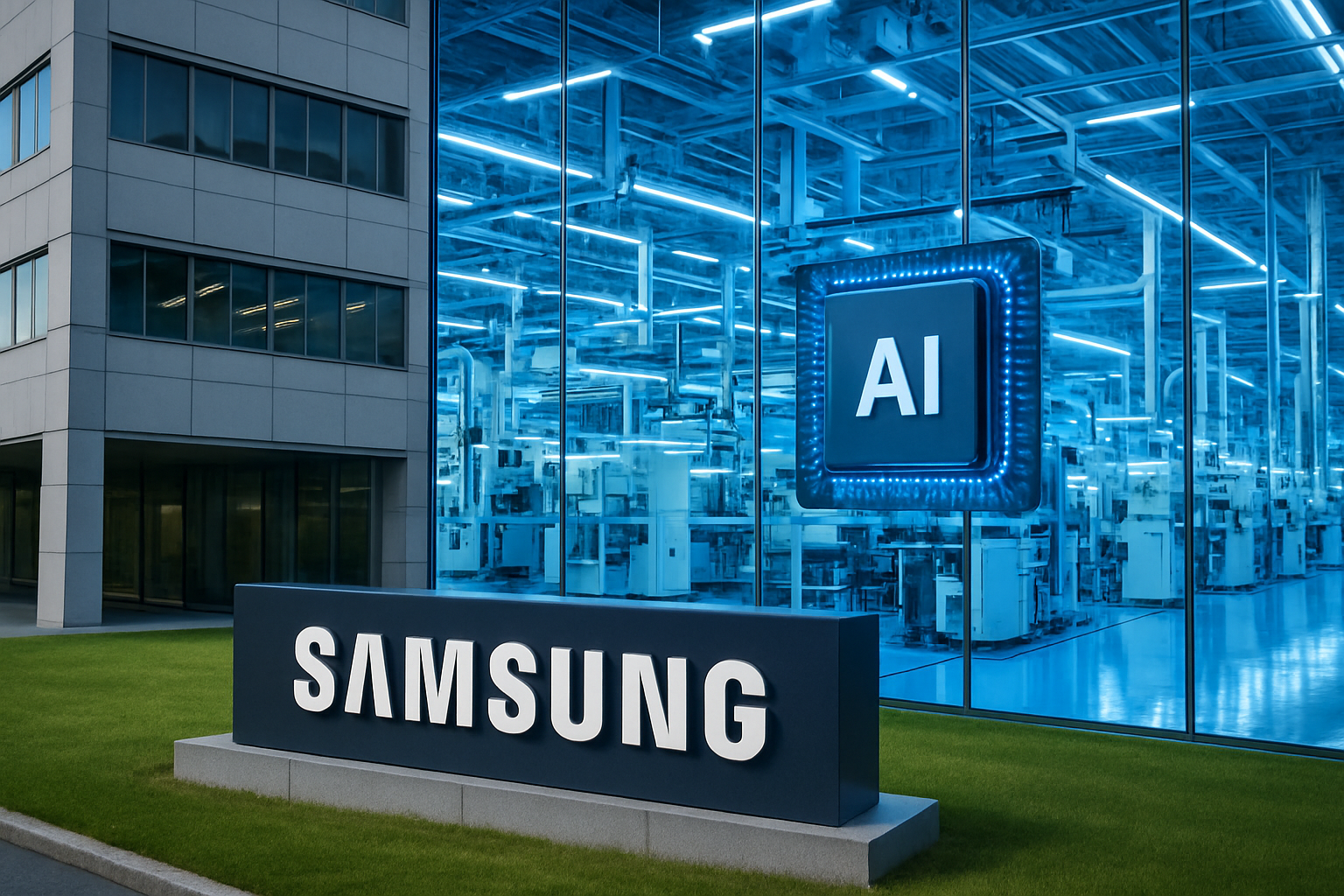
Samsung Electronics Co. is projecting an eightfold jump in first-quarter profit as unprecedented demand for artificial intelligence chips drives semiconductor prices to historic highs, while the South Korean tech giant simultaneously moves to discontinue its Samsung Messages texting application in favor of Google's competing platform.
The dramatic profit surge comes amid a global semiconductor crisis that has seen memory chip prices increase sixfold over the past year, fundamentally reshaping the economics of the technology industry. Samsung, along with competitors SK Hynix and Micron Technology, has been operating at full capacity while struggling to meet explosive demand from AI development companies including Nvidia, Microsoft, Google, and OpenAI.
AI Infrastructure Boom Drives Semiconductor Gold Rush
Samsung's projected profit increase reflects the company's strategic positioning during what industry analysts are calling the "2026 AI Infrastructure Inflection Point" – a critical transition period where artificial intelligence moves from experimental technology to essential business infrastructure across global markets.
The semiconductor shortage has created unprecedented pricing power for memory manufacturers. Consumer electronics costs have risen 20-30% across the board over the past year, with shortages expected to persist until 2027 when new fabrication facilities come online. The 18-24 month construction timeline for advanced chip manufacturing plants means relief remains distant despite massive industry investment.
Major technology companies continue pouring resources into AI infrastructure despite supply constraints. Alphabet has committed a historic $185 billion to AI development in 2026 – the largest single-year corporate technology investment in history – while Amazon's AI development plans exceed $1 trillion. These massive commitments demonstrate industry confidence that AI represents essential infrastructure rather than speculative investment.
Samsung's Strategic AI Chip Positioning
Samsung's profit windfall particularly benefits from the company's leadership in High Bandwidth Memory (HBM) chip production, which are critical components for AI processing systems. The company began mass production of next-generation HBM4 chips in February 2026, positioning it advantageously during the global memory crisis.
The Korean giant's vertical integration strategy – spanning semiconductors, displays, and manufacturing – provides competitive advantages during supply chain disruptions. Samsung has also secured strategic partnerships, with Google recently emerging as one of the company's top five customers for the first time, driven by Alphabet's massive AI infrastructure investment.
"This represents a fundamental shift in the technology sector where AI demand is creating sustainable pricing power for semiconductor manufacturers,"
— Technology Industry Analyst
Samsung's comprehensive approach extends beyond memory chips to encompass AI-optimized processors, storage solutions, and manufacturing capabilities. The company recently announced a strategic partnership with AMD for advanced AI hardware collaboration, combining Samsung's manufacturing expertise with AMD's processor architectures.
Samsung Messages Discontinuation Signals Strategic Shift
In a separate but significant development, Samsung announced the discontinuation of its Samsung Messages texting application, directing users to transition to Google Messages. According to an end-of-service announcement published on Samsung's U.S. support website, the company is streamlining its software offerings to focus on core competencies.
The decision reflects broader industry consolidation trends as technology companies concentrate resources on areas where they maintain competitive advantages. Samsung's pivot away from messaging services allows greater focus on hardware innovation and AI chip development, where the company holds stronger market positions.
This strategic realignment comes as Samsung faces intense competition in software services while maintaining leadership in semiconductor manufacturing. The company's decision to partner with Google for messaging services rather than compete directly demonstrates pragmatic resource allocation during a period of explosive AI demand.
Global Semiconductor Crisis Context
Samsung's profit surge occurs within the context of a broader global semiconductor crisis that has reshaped technology industry dynamics. Memory manufacturers are operating at maximum capacity while unable to meet demand from AI development projects, data center expansion, and consumer electronics production.
The crisis has paradoxically driven innovation in memory-efficient algorithms and sustainable deployment strategies. Technology companies are developing hybrid processing solutions and alternative architectures to maximize AI capabilities while minimizing hardware requirements. This constraint-driven innovation may ultimately democratize AI access by reducing computational resource requirements.
Environmental concerns are mounting alongside infrastructure demands. The World Bank projects AI systems will require 4.2-6.6 billion cubic meters of water annually by 2027 for data center cooling – equivalent to four to six times Denmark's total annual water consumption. These sustainability challenges are driving investment in renewable energy and efficient computing architectures.
Market Transformation and Employment Impact
The AI infrastructure boom is contributing to massive market disruption, with analysts describing a "SaaSpocalypse" that has eliminated hundreds of billions in traditional software market capitalization. AI systems are demonstrating capabilities to directly replace rather than merely complement conventional software solutions, fundamentally altering business models across the technology sector.
Regional responses to AI-driven employment changes vary significantly. While Western companies have pursued traditional layoff strategies followed by selective AI hiring, Asian corporations including Samsung have implemented comprehensive worker transition programs emphasizing reskilling rather than displacement.
Samsung's approach reflects broader Korean corporate culture emphasizing long-term workforce development. The company has invested heavily in employee retraining programs to prepare workers for AI-integrated manufacturing processes and advanced semiconductor production.
Regulatory Environment and International Cooperation
Samsung's business expansion occurs amid intensifying global AI regulation. Spain has implemented the world's first criminal executive liability framework for tech platforms, while France has conducted cybercrime raids on AI companies. The European Union is investigating potential Digital Services Act violations that could result in billion-dollar penalties.
The United Nations has established an Independent Scientific Panel comprising 40 global experts – the first fully independent international AI assessment body. This represents the most sophisticated global technology governance effort since internet commercialization, aimed at preventing regulatory arbitrage while fostering responsible AI development.
Samsung's international operations require navigation of increasingly complex regulatory landscapes while maintaining innovation momentum. The company's success in balancing compliance requirements with technological advancement provides a template for multinational corporations operating in the AI era.
Looking Forward: Strategic Implications
Industry experts characterize 2026 as a "critical inflection point" determining AI's trajectory for decades ahead. Samsung's positioning during this pivotal period – combining semiconductor leadership with strategic software partnerships – demonstrates successful adaptation to rapidly evolving market conditions.
The company's decision to discontinue Samsung Messages while doubling down on AI chip production illustrates strategic focus on core competencies. This approach allows Samsung to capitalize on its manufacturing expertise while partnering with software specialists rather than attempting to compete across all technology categories.
Samsung's success navigating the current semiconductor crisis and AI boom positions the company advantageously for continued growth as AI transitions from experimental technology to essential global infrastructure. The combination of supply-side pricing power and strategic positioning in next-generation memory technologies creates multiple revenue streams during a period of unprecedented technological transformation.
The convergence of AI infrastructure demands, semiconductor scarcity, and evolving consumer expectations creates both opportunities and challenges for technology leaders. Samsung's dual approach – maximizing hardware innovation while streamlining software offerings – provides a potential roadmap for technology companies adapting to the AI era while maintaining operational focus and competitive positioning.