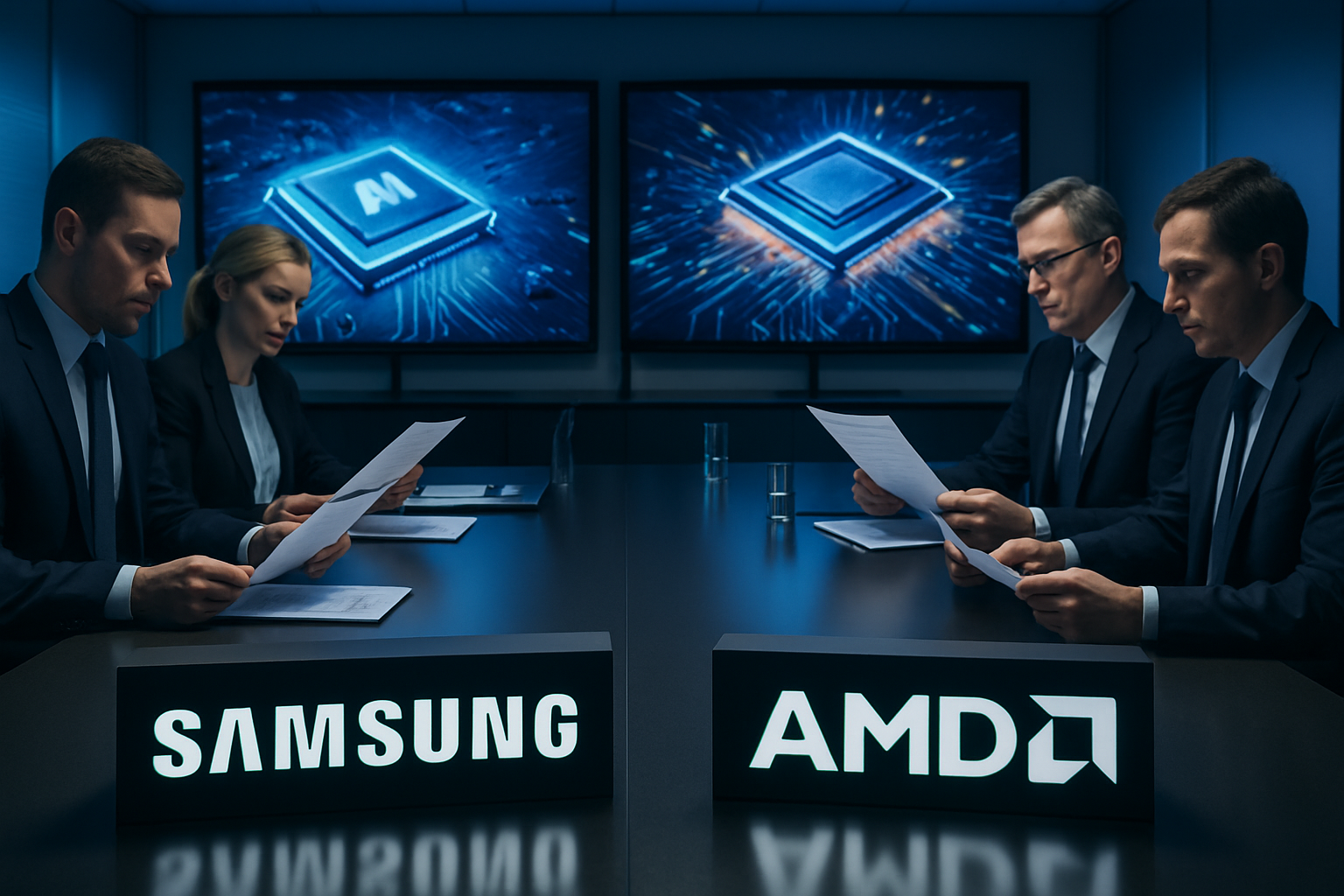
Samsung Electronics and AMD have announced a groundbreaking partnership to develop advanced AI processing hardware, marking a pivotal moment in the technology industry's response to the global artificial intelligence revolution and ongoing semiconductor crisis.
The collaboration between the South Korean technology giant and the American semiconductor company comes as the industry faces unprecedented challenges from a global memory chip shortage that has driven prices up sixfold, affecting major manufacturers Samsung, SK Hynix, and Micron until at least 2027.
Strategic Partnership Details
The Samsung-AMD alliance focuses on developing next-generation AI hardware solutions that combine Samsung's manufacturing expertise and vertical integration capabilities with AMD's advanced processor architectures. This partnership represents a strategic response to the explosive demand for AI computing power that has overwhelmed existing supply chains.
Samsung's unique position as both a semiconductor manufacturer and consumer electronics producer provides significant advantages in navigating current supply constraints. The company's vertical integration spanning semiconductors, displays, and manufacturing offers competitive positioning during the ongoing crisis affecting the entire technology sector.
"This collaboration represents our commitment to advancing AI capabilities even amid challenging market conditions. Our combined expertise will deliver solutions that meet the unprecedented demand for AI processing power."
— Samsung Electronics Representative
Industry Context and Challenges
The partnership emerges during what experts have termed the "2026 AI Infrastructure Inflection Point" – a critical transition period from experimental AI applications to essential business infrastructure across all sectors. This transformation occurs simultaneously with the most severe semiconductor shortage in decades.
Memory manufacturers are operating at full capacity but remain unable to meet explosive AI training and data center demands from companies like Nvidia, Microsoft, Google, and OpenAI. Consumer electronics costs have increased 20-30% over the past year, affecting phones, computers, gaming consoles, and smart technologies.
Despite these constraints, massive investments continue to flow into AI infrastructure, with Alphabet committing $185 billion in 2026 and Amazon announcing over $1 trillion in development plans. This demonstrates industry confidence in AI as essential infrastructure for the coming decade.
Technological Innovation Under Pressure
The semiconductor crisis has paradoxically spurred innovation in memory-efficient algorithms, alternative processing architectures, and sustainable deployment strategies. Companies are learning to maximize AI capabilities while minimizing hardware requirements, leading to more efficient and practical solutions.
Samsung's recent Galaxy S26 series launch exemplifies this approach, featuring revolutionary Privacy Display technology and comprehensive AI integration through partnerships with companies like Perplexity AI. The devices combine on-device neural processing with secure cloud capabilities, representing the evolution from hardware manufacturer to AI-powered technology platform.
Global Competition and Cooperation
The Samsung-AMD partnership reflects broader trends in international technology cooperation during a period of intensifying global competition. While China advances its AI capabilities through companies like Xiaomi's five-year technology plan and breakthrough research developments, Western companies are forming strategic alliances to maintain competitive advantages.
European initiatives, such as Deutsche Telekom's Munich Industrial AI Cloud, demonstrate regional efforts to achieve technological sovereignty amid the multipolar AI landscape emerging globally. These developments challenge traditional Silicon Valley dominance through distributed innovation ecosystems that emphasize cultural sensitivity and practical applications.
Regulatory Environment and Standards
The partnership operates within an increasingly complex regulatory environment, with Spain implementing the world's first criminal executive liability framework for tech platforms, France conducting AI cybercrime enforcement raids, and the UN establishing an Independent Scientific Panel of 40 experts for comprehensive AI assessment.
These regulatory developments represent the most sophisticated global technology governance framework since internet commercialization, requiring companies to balance innovation acceleration with responsible development practices and human welfare considerations.
Success Models and Future Direction
Successful AI integration models worldwide demonstrate the importance of human-centered approaches that enhance rather than replace human capabilities. Examples include Malaysia's AI-integrated Islamic school, Canadian university AI teaching assistants that maintain critical thinking standards, and Singapore's WonderBot 2.0 heritage education success.
These implementations treat AI as sophisticated amplification tools for human goals rather than wholesale replacement mechanisms, providing templates for sustainable technological advancement that preserves creativity, cultural understanding, and democratic values.
Economic and Strategic Implications
The Samsung-AMD collaboration represents more than a business partnership – it signals a fundamental shift in how technology companies approach AI development under resource constraints. Prevention-first approaches and strategic alliances are proving superior to individual company efforts in navigating current market challenges.
Countries and companies implementing comprehensive AI strategies report improved competitiveness, enhanced international cooperation opportunities, and better positioning for the AI-essential infrastructure transition that experts predict will define the remainder of the 2020s.
Looking Ahead
March 2026 represents what experts call a "civilizational choice point" in determining whether AI serves human flourishing or becomes a tool for exploitation and control. The Samsung-AMD partnership exemplifies the type of thoughtful, strategic cooperation required to ensure technological advancement serves humanity's highest aspirations.
Success will depend on unprecedented coordination between governments, technology companies, educational institutions, and civil society to balance innovation acceleration with safety governance, commercial interests with human welfare, and national competitiveness with international cooperation.
As the technology industry navigates these unprecedented challenges, partnerships like Samsung-AMD provide hope that through collaboration, innovation, and human-centered design principles, AI development can continue to advance while preserving the creativity, empathy, and wisdom that define human potential in the digital age.