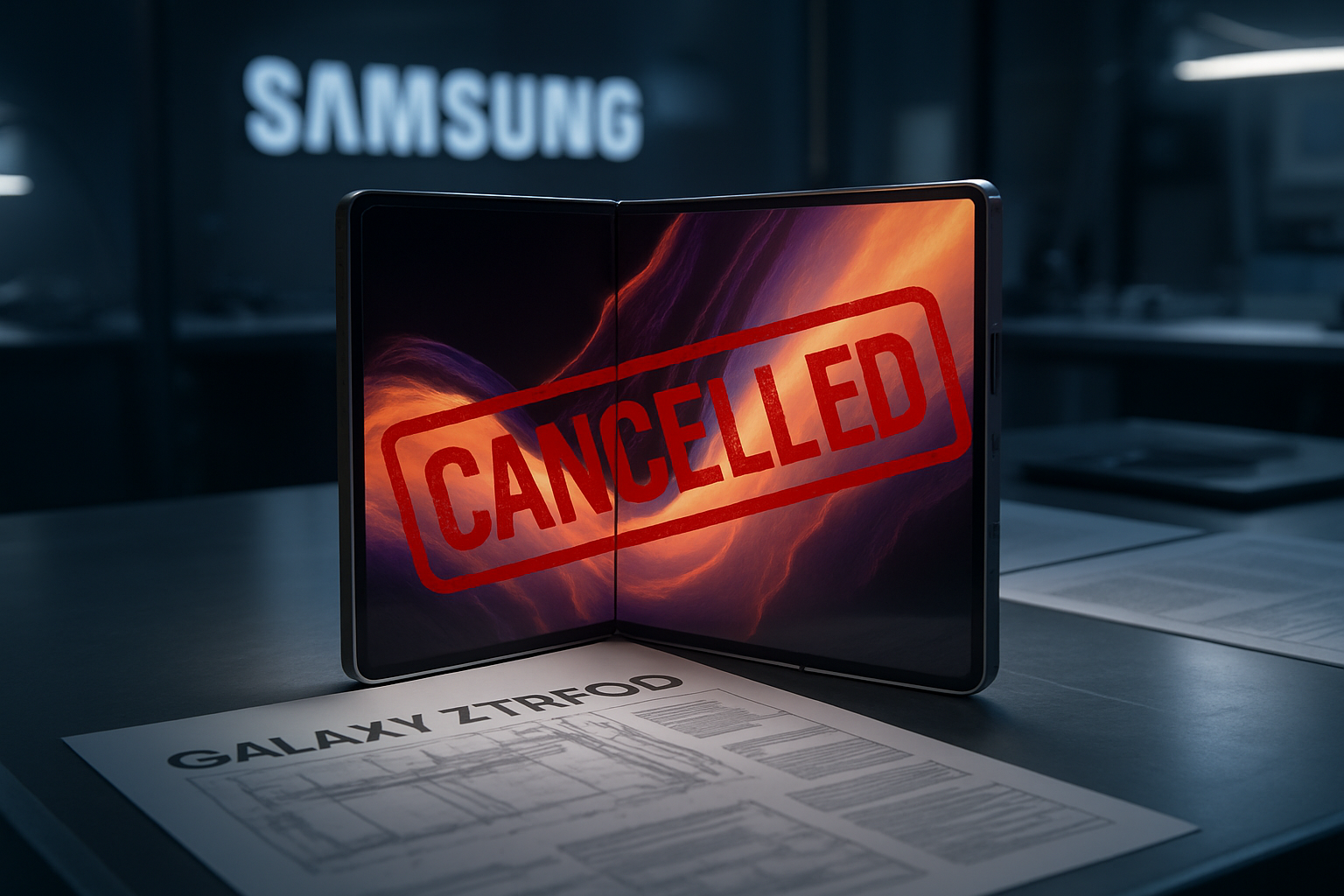
Samsung Electronics has officially terminated development of its highly anticipated Galaxy Z Trifold smartphone, abandoning the premium tri-fold device despite strong consumer demand and significant investment in the innovative form factor.
Industry sources confirmed Tuesday that Samsung has ceased all sales and development activities for the Galaxy Z Trifold in South Korea, its primary test market, effectively ending one of the most ambitious foldable smartphone projects in the company's history. The cancellation represents a major strategic retreat for the South Korean tech giant, which has positioned itself as a leader in the foldable device category.
Market Context and Industry Challenges
The decision comes during what industry analysts describe as an "unprecedented smartphone crisis" characterized by marginal technological improvements, rapidly rising costs, and severe supply chain constraints. The global memory semiconductor shortage has driven chip prices up sixfold, affecting major manufacturers including Samsung, SK Hynix, and Micron, with shortages expected to persist until new fabrication facilities come online in 2027.
Consumer electronics costs have increased 20-30% over the past year due to these supply chain pressures, creating significant barriers for innovative but expensive devices like the Galaxy Z Trifold. The premium pricing required to offset development costs and component shortages may have made the tri-fold device commercially unviable in the current market environment.
Technical Innovation Versus Market Reality
The Galaxy Z Trifold represented Samsung's attempt to push the boundaries of foldable technology beyond the current dual-screen format popularized by devices like the Galaxy Z Fold series. The tri-fold design would have allowed the device to unfold into a tablet-sized display while maintaining smartphone portability when fully closed.
However, the technical challenges of creating a reliable tri-fold mechanism, combined with battery life concerns, durability questions, and manufacturing complexity, proved insurmountable within current market constraints. The device faced similar obstacles to those that have limited mainstream adoption of existing foldable phones, including visible crease lines, thickness when folded, and premium pricing.
"The Galaxy Z Trifold cancellation reflects the broader challenges facing innovative smartphone development in 2026."
— Industry Source, Technology Sector Analysis
Competitive Landscape Impact
Samsung's withdrawal from the tri-fold segment occurs as competitors advance their own foldable strategies. OPPO recently launched the Find N6 with Zero-Feel Crease technology, directly addressing one of the primary consumer barriers to foldable adoption. Honor's Magic V6 achieved breakthrough environmental protection with dual IP68/IP69 water resistance certification, the first foldable smartphone to offer complete environmental protection.
The cancellation may signal a broader industry reassessment of multi-fold form factors. While dual-fold devices have gained traction among early adopters and business users, tri-fold designs appear to face additional complexity barriers that current technology and market conditions cannot overcome cost-effectively.
Samsung's Foldable Strategy Moving Forward
Despite the Galaxy Z Trifold setback, Samsung continues to invest heavily in foldable technology through its established Galaxy Z Fold and Z Flip product lines. The company recently launched the Galaxy S26 series featuring revolutionary Privacy Display technology and comprehensive AI integration, demonstrating its ability to innovate within more commercially viable form factors.
Samsung's vertical integration advantages in semiconductors, displays, and manufacturing provide competitive positioning during current supply constraints. The company's conservative approach to battery technology, emphasizing rigorous testing over rapid market deployment, may have contributed to the Galaxy Z Trifold's cancellation as development timelines extended beyond market viability windows.
Broader Industry Implications
The Galaxy Z Trifold cancellation reflects broader challenges facing the smartphone industry in 2026. Memory-efficient algorithms, alternative architectures, and space-based computing solutions are emerging as manufacturers adapt to supply constraints. Companies with existing supply relationships and financial resources are positioning advantageously while smaller manufacturers face insurmountable barriers to market entry.
Industry experts recommend that consumers complete technology purchases sooner rather than later, as prices are expected to continue rising throughout 2026. The current period represents a critical inflection point transitioning from experimental AI features to essential infrastructure across consumer electronics.
Consumer Response and Market Reaction
The cancellation disappoints Samsung enthusiasts who had anticipated the tri-fold device as the next evolution in smartphone design. Online communities and technology forums had generated significant interest in the concept, with early renders and speculation driving consumer excitement about the potential for larger screen real estate in a pocketable form factor.
Market analysts suggest that Samsung's decision reflects prudent resource allocation during challenging economic conditions rather than technological failure. The company's focus on proven form factors and practical AI applications may better serve consumer needs while preserving development resources for future innovation cycles.
Looking Ahead
Samsung's Galaxy Z Trifold cancellation marks a significant moment in foldable phone development, suggesting that the industry may need to resolve fundamental technical and economic challenges before advancing to more complex form factors. The decision underscores the importance of balancing innovation ambitions with market realities and manufacturing constraints.
As the smartphone industry navigates supply chain disruptions, regulatory pressures, and evolving consumer expectations, Samsung's strategic retreat from the tri-fold segment may prove prescient. The company's continued investment in dual-fold devices and AI-powered features positions it to capitalize on more immediate market opportunities while preserving resources for future breakthrough technologies.
The Galaxy Z Trifold's cancellation serves as a reminder that even industry leaders must carefully balance innovation with practicality, particularly during periods of unprecedented technological and economic uncertainty. Samsung's ability to adapt its product strategy while maintaining leadership in foldable technology will likely influence the broader trajectory of smartphone innovation throughout the remainder of the decade.