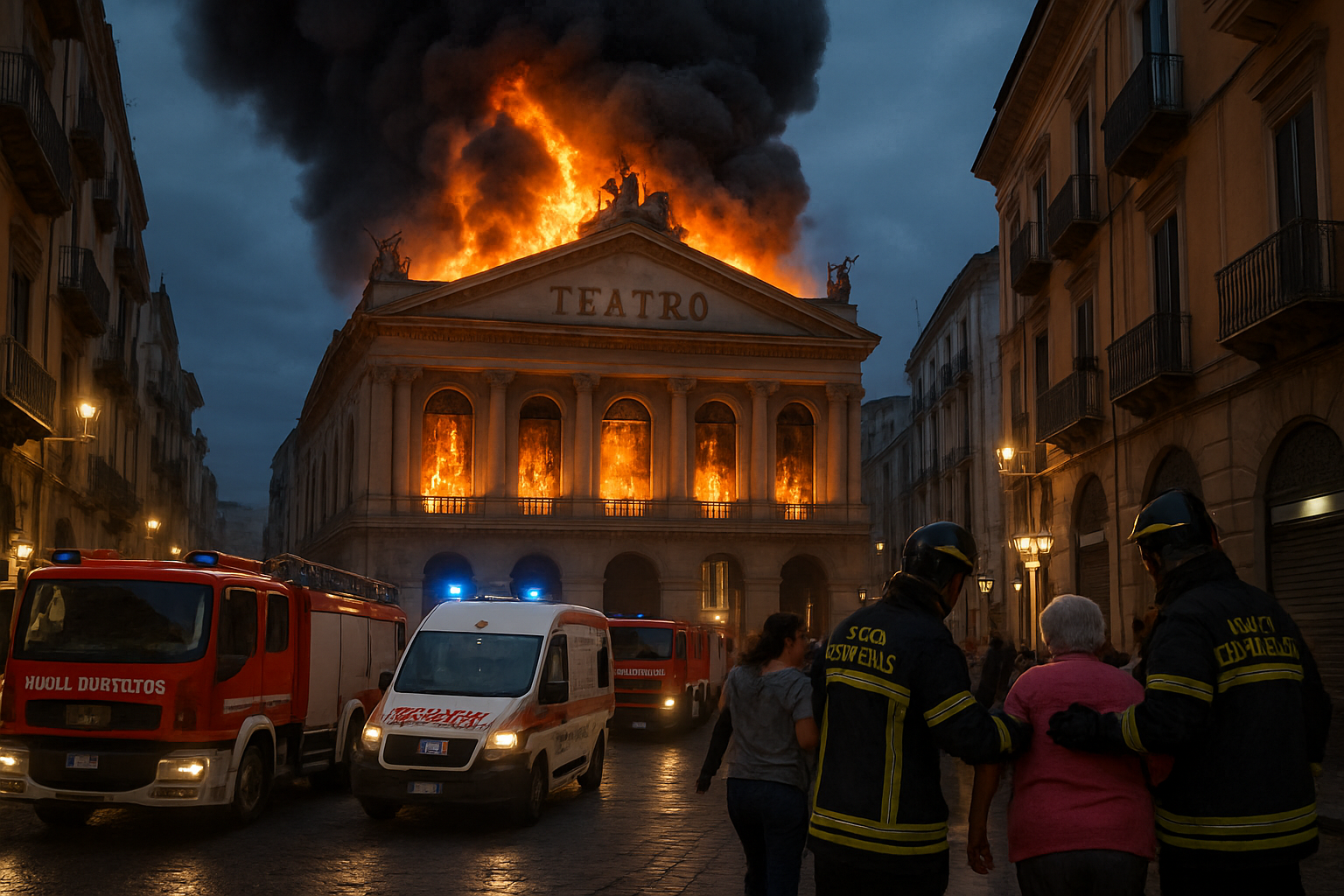
A massive fire broke out in the early hours of Tuesday morning, completely destroying the historic Sannazaro Theatre in Naples, Italy, forcing the evacuation of 22 residential apartments and hospitalizing four people for smoke inhalation.
The blaze erupted at the renowned cultural landmark located on Via Chiaia in the heart of Naples, one of the city's most central and prestigious streets. The theatre, situated on the ground floor of a residential building, was completely consumed by flames that spread rapidly through the structure.
Emergency Response and Evacuations
Local authorities swiftly coordinated a large-scale evacuation operation as thick smoke and flames engulfed the building. Twenty-two apartments in the residential complex above the theatre were evacuated as a precautionary measure, with residents temporarily displaced from their homes.
Emergency medical services treated four individuals for smoke inhalation, who were subsequently hospitalized for observation and treatment. The quick response of Naples' fire brigade and emergency services prevented what could have been a far more catastrophic situation.
Residents of the bustling Via Chiaia area described scenes of panic and fear as the fire rapidly spread through the historic building. The central location of the theatre in one of Naples' most densely populated districts heightened concerns about the potential for casualties and property damage.
The Historic Sannazaro Theatre
The Sannazaro Theatre holds significant cultural importance for Naples and the broader Italian theatrical community. As one of the city's historic performance venues, it has been a cornerstone of Neapolitan cultural life for decades, hosting numerous productions and serving as a vital space for the arts community.
The complete destruction of the theatre represents not only a tragic loss of cultural heritage but also a significant blow to Naples' vibrant artistic scene. The venue was known for its intimate atmosphere and its role in nurturing local theatrical talent.
Investigation and Aftermath
Local authorities have launched a comprehensive investigation into the cause of the fire, though early reports have not yet identified the origin of the blaze. Fire investigators are working to determine whether the incident was caused by electrical problems, structural issues, or other factors.
The timing of the fire, occurring in the early morning hours, likely prevented a more devastating loss of life, as the theatre would have been empty of performers and audience members. However, the rapid spread of the fire through the building complex highlights the vulnerability of historic structures to such disasters.
Building inspectors are now assessing the structural integrity of the remaining portions of the residential complex to determine when evacuated residents might be able to safely return to their homes. The extent of smoke and water damage to the residential units remains under evaluation.
Community Impact and Cultural Loss
The loss of the Sannazaro Theatre represents a significant cultural tragedy for Naples, a city renowned for its rich theatrical and musical traditions. The venue's destruction adds to concerns about the preservation of Italy's historic cultural sites, many of which are housed in centuries-old buildings that present unique fire safety challenges.
Local cultural organizations and theatre groups are already discussing potential memorial efforts and the possibility of rebuilding or relocating the theatre's programming to other venues in the city. The incident underscores the ongoing challenges faced by historic cultural venues in maintaining both their architectural heritage and modern safety standards.
As investigations continue and the community begins to assess the full impact of this devastating fire, the focus remains on supporting the displaced residents and honoring the cultural legacy of the destroyed theatre. The incident serves as a stark reminder of the fragility of cultural heritage and the importance of comprehensive fire prevention measures for historic buildings throughout Italy.