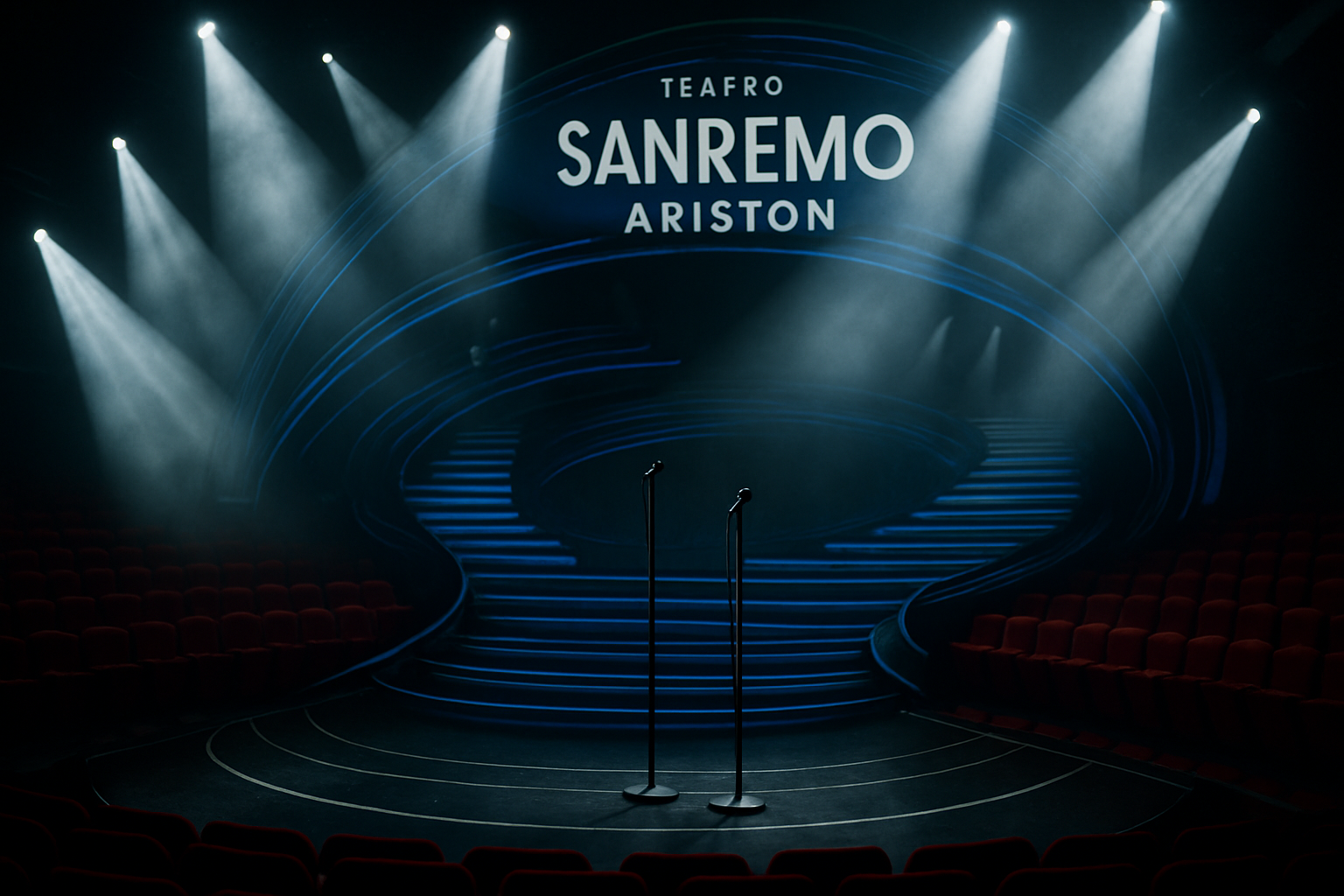
Italy's revered Sanremo Festival, the cornerstone of the nation's entertainment industry for 77 years, finds itself at a critical juncture as declining ratings, host departures, and fundamental industry changes challenge its traditional dominance in Italian popular culture.
The 2026 edition of the Festival di Sanremo concluded with significantly lower viewing figures than the previous year, prompting RAI executives to acknowledge that "the context has changed" despite praising the quality of the production. The numbers paint a concerning picture for what has long been considered Italy's most important cultural television event, with final night ratings falling below 2025 levels despite the dramatic victory of veteran performer Sal Da Vinci.
A Swift Farewell and Leadership Transition
The festival's conclusion was marked by an unusually hasty departure of the host, described by industry observers as a "quick goodbye" that left many questioning the circumstances surrounding the exit. This abrupt conclusion to the hosting duties underscored the tension between traditional expectations and evolving industry realities that have characterized the 2026 edition.
Perhaps most significantly, the festival witnessed a historic live handover to incoming artistic director Stefano De Martino during the finale, marking the end of Carlo Conti's tenure. Conti, who guided the festival through a period of significant cultural commentary and transformation, leaves behind a complex legacy of artistic innovation paired with commercial challenges.
According to historical context from the festival's recent evolution, Conti's leadership period was marked by defending the festival's cultural relevance while navigating changing viewing habits and demographic shifts. His oft-quoted statement "Il Festival sta bene" (The Festival is doing well) during rating discussions now takes on new meaning in light of the current challenges.
The Triumph and Burden of Victory
Sal Da Vinci's victory represents a fascinating intersection of traditional Italian musical heritage and contemporary industry pressures. The Neapolitan singer-songwriter's win with "Per Sempre Sì" showcased Italy's enduring connection to its regional musical traditions, but his post-victory interviews reveal the weight of expectations facing the Eurovision representative.
"After the proclamation I slept an hour and a half. My whole life flashed before my eyes"
— Sal Da Vinci, Sanremo 2026 Winner
Da Vinci's candid admission that "the fear is not over yet, now there's Eurovision" highlights the additional pressure facing Italian artists in an increasingly globalized entertainment landscape. His journey from traditional Neapolitan sceneggiata to viral sensation represents what industry analysts describe as "an Italian musical fairy tale" – yet one that carries the burden of national representation on the international stage.
The artist's story embodies the broader transformation within Italian entertainment, where traditional forms must adapt to contemporary audiences while maintaining cultural authenticity. His out-of-competition song became a collective celebration, demonstrating the power of authentic cultural expression in an era of manufactured entertainment.
Industry Voices and Cultural Reflection
The second-place finish of Sayf, the Tunisian-Italian artist whose participation sparked intense cultural debate in previous festival coverage, represents the evolving face of Italian identity. Sayf's performance of "Tu mi piaci" while observing Ramadan created what he described as "losing Sanremo on penalties while telling the story of Italy."
This cultural complexity reflects broader themes that have emerged throughout the festival's recent evolution. As documented in historical analysis, the 2026 edition served as a platform challenging traditional narratives while celebrating Italy's evolving demographic landscape, with artists addressing contemporary social issues while maintaining the festival's career-launching tradition.
The RAI Response and Future Vision
RAI's acknowledgment that they are developing "a new project" for the Sanremo brand suggests recognition that fundamental changes are necessary to maintain the festival's relevance. The broadcaster's statement that this was "a great edition but the context has changed" reflects the industry's struggle to balance traditional formats with contemporary viewing habits and technological disruption.
The challenges facing Sanremo mirror broader transformations across the global entertainment industry, where traditional gatekeepers are being challenged by new voices and platforms. The success of streaming services, changing social media consumption patterns, and evolving audience expectations have created an environment where even Italy's most established cultural institutions must reimagine their approaches.
Eurovision Preparation Amid Uncertainty
As Sal Da Vinci prepares to represent Italy at Eurovision 2026 in Vienna, he carries not only the hopes of the nation but also the weight of an industry in transition. The contest, which has evolved into a cultural diplomacy platform beyond entertainment, offers both opportunity and additional pressure for Italian representation on the global stage.
Historical context reveals that Eurovision 2026 is positioned as part of a broader "February 2026 Cultural Renaissance" across Europe, with the contest serving as a platform for cultural identity, artistic innovation, and European cooperation. Italy's participation comes at a moment when the nation's entertainment industry is grappling with fundamental questions about its future direction.
Broader Industry Implications
The challenges facing Sanremo extend beyond a single festival to encompass the entire Italian entertainment ecosystem. The convergence of declining traditional television ratings, the rise of streaming platforms, and changing demographic preferences has created what industry experts describe as an unprecedented transformation period.
The festival's struggles reflect broader global trends where established entertainment formats must prove their continued relevance in an increasingly fragmented media landscape. The success or failure of RAI's promised "new project" for the Sanremo brand may well determine not only the festival's future but also serve as a template for how traditional European cultural institutions can adapt to 21st-century realities.
As the Italian entertainment industry navigates these challenges, the question remains whether it can maintain its cultural authenticity while embracing necessary innovations. The answer will likely determine not only the fate of Sanremo but the broader trajectory of Italian popular culture in an interconnected global entertainment marketplace.