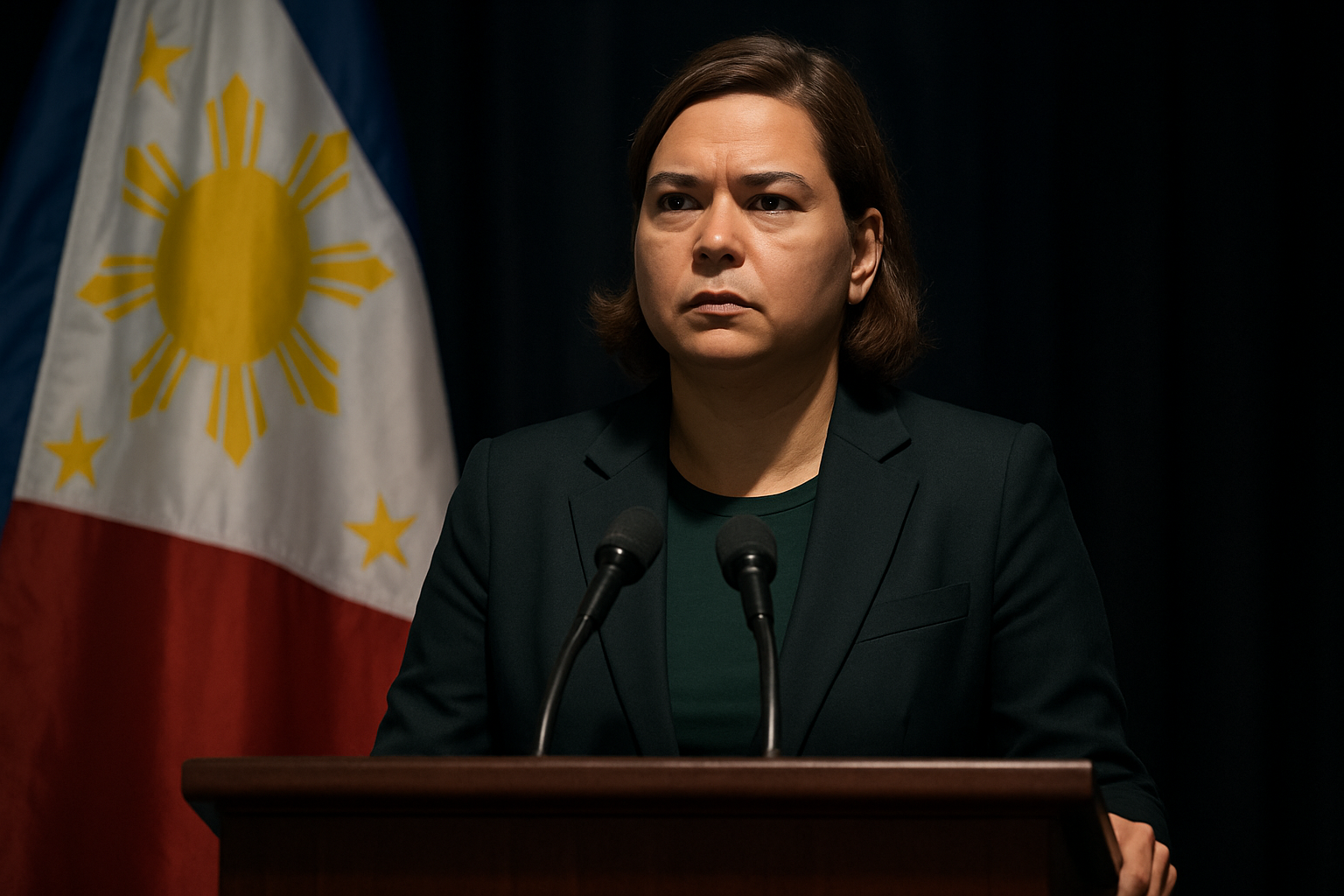
Philippine Vice President Sara Duterte officially declared her candidacy for the 2028 presidential election on Wednesday, February 18, setting the stage for an early and potentially explosive campaign in the Southeast Asian nation of 116 million people.
"I am Sara Duterte. I will run for president of the Philippines," she announced in a brief televised speech. "I offer my life, my strength, and my future in the service of our nation." The 47-year-old daughter of former president Rodrigo Duterte made the announcement as the House of Representatives prepares to initiate fresh impeachment proceedings against her.
Strategic Timing Amid Political Crisis
The announcement comes as Duterte faces mounting political pressure and represents what analysts describe as a calculated power move designed to reshape the dynamics of Philippine politics. Her declaration coincides with expected House impeachment proceedings, creating a complex political battlefield that will define the country's trajectory over the next two years.
House Senior Deputy Majority Leader Lorenz Defensor acknowledged that securing the endorsement of one-third of all House members to impeach the Vice President now appears unlikely following her presidential bid announcement. The strategic timing suggests Duterte is attempting to leverage her presidential candidacy as political armor against impeachment efforts.
"This is a power move meant to change the dynamics of the 2028 elections. It's a rare smart play from her camp, one that glosses over some weaknesses."
— Political Analysis, Rappler
Breaking with the Marcos Alliance
Duterte's announcement occurs amid a bitter power struggle with current President Ferdinand "Bongbong" Marcos Jr., marking the complete collapse of their once-formidable political alliance. The partnership that brought them to power in 2022 has deteriorated following controversies including the decision allowing International Criminal Court arrest of her father Rodrigo Duterte.
The Palace responded to her announcement with thinly veiled criticism, warning the public to "be wary of Manchurian candidates" – a reference that political observers interpreted as questioning her independence from foreign influence or her father's political machine.
Some lawmakers view the early declaration as a strategic distraction from ongoing impeachment proceedings. Critics argue that the timing is designed to shift focus away from allegations and investigations currently facing the Vice President.
Electoral Landscape and Challenges
While the presidential election is still two years away, contenders in the Philippines' largely personality-based political system typically begin preparing years in advance. Duterte's early announcement gives her a significant head start in campaign organization and fundraising, but it also makes her a target for opposition attacks over an extended period.
Political analysts note that Duterte faces significant challenges despite her early move. Her support base has reportedly shrunk and is now largely confined to Mindanao and parts of the Visayas. The Vice President needs to revive the fragmented Duterte base and win over her father's loyalists who have been reluctant to support her due to what critics describe as lackluster performance and erratic behavior.
Current President Marcos is constitutionally ineligible for re-election, leaving the field open for new candidates. However, Duterte's announcement is likely to accelerate the timeline for other potential candidates to declare their intentions.
Impeachment Proceedings and Legal Challenges
The Vice President's declaration comes at a critical moment as House representatives prepare impeachment proceedings against her. The proceedings could potentially bar her from office if successful, making the next few months crucial for her political survival.
The impeachment threat represents a significant risk to her presidential ambitions. If the proceedings advance and result in her removal from office, it could severely damage her credibility and electability in 2028.
International and Regional Implications
Duterte's presidency could have significant implications for Philippine foreign policy. Analysts suggest that a Duterte presidency might redirect the Philippines' foreign policy orientation from its current Washington alignment toward closer ties with Beijing and Moscow, reflecting the foreign policy approach of her father's administration.
The timing is particularly significant given the Philippines' strategic importance in the Indo-Pacific region and ongoing geopolitical tensions between the United States and China. International observers are monitoring the political developments closely, as they could affect regional stability and alliance structures.
Opposition Response and Coalition Building
Various sectoral groups have condemned Duterte's decision to declare her presidential bid and questioned the true intentions behind the move. Opposition figures argue that there is now greater pressure and incentive for opposition forces to close ranks against her candidacy, though achieving unity among diverse opposition groups remains a significant challenge.
The fragmented nature of Philippine politics means that building effective coalitions will be crucial for both Duterte and her opponents. Her early announcement may force opposition parties to accelerate their own coalition-building efforts and candidate selection processes.
Economic and Governance Context
The announcement comes as the Philippines faces various economic and governance challenges. Duterte's candidacy will likely be evaluated based on her record as Vice President and her proposed solutions to the country's problems, including corruption, infrastructure development, and economic growth.
Her supporters believe she has the solutions to the country's problems and represents continuity with the policies of her father's administration, which was popular among certain segments of the population despite controversy over human rights issues.
Looking Ahead to 2028
The 2028 election is shaping up to be highly competitive, with Duterte's candidacy forcing other potential candidates to declare earlier than planned and accelerating the overall political timeline. The stakes include domestic stability, democratic governance quality, and the Philippines' regional and international alignment.
The success or failure of impeachment proceedings will significantly impact the electoral landscape. If Duterte survives the impeachment attempt, she will enter the presidential race as a battle-tested candidate who has weathered significant political storms. However, if the proceedings succeed, they could end her presidential ambitions entirely.
As one of the youngest and most politically experienced vice presidents in Philippine history, Duterte's campaign will likely focus on her administrative experience and her family's political legacy, while her opponents will attempt to tie her to the controversies surrounding her father's presidency and her own performance as Vice President.
The announcement marks the beginning of what promises to be a highly consequential election cycle that will determine the Philippines' direction for the remainder of the decade and beyond, with implications extending far beyond the archipelago's borders.