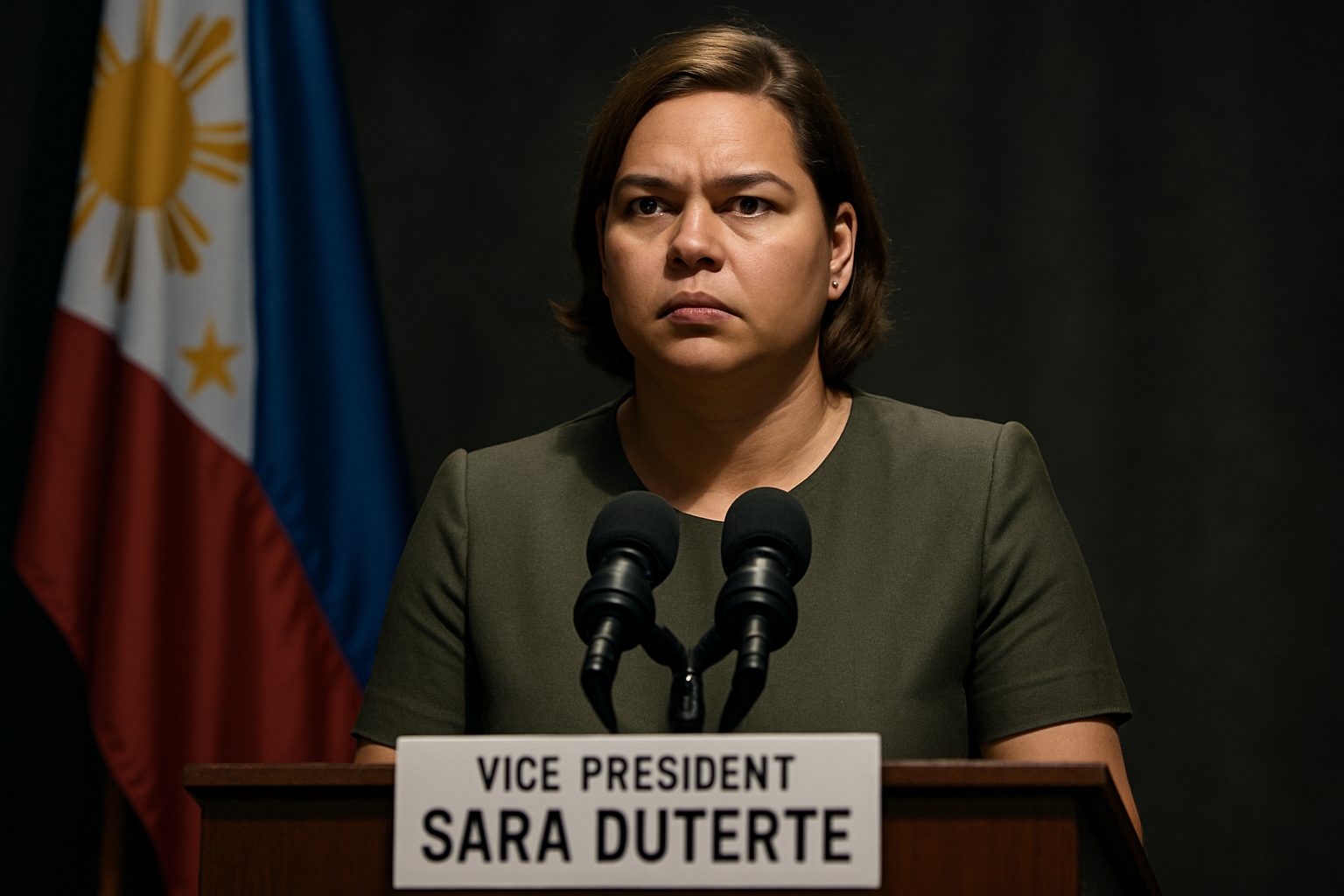
Philippine Vice President Sara Duterte made a dramatic political declaration on Wednesday, February 18, announcing her candidacy for the 2028 presidential election amid escalating tensions with President Ferdinand Marcos Jr. and the looming threat of renewed impeachment proceedings.
"I am Sara Duterte, and I will run for president of the Philippines," the 47-year-old leader declared in a speech streamed on her Facebook page. "I offer my life, my strength, and my future in the service of our nation."
The announcement comes more than a year before the scheduled filing of candidacy for the May 2028 elections and several months earlier than Duterte herself had previously indicated. It represents a bold political gambit by the daughter of detained former president Rodrigo Duterte, positioning herself as the primary challenger to the current administration's policies.
Impeachment Shadow Looms Large
Duterte's presidential announcement arrives at a critical juncture, coinciding with the House of Representatives' expected initiation of new impeachment proceedings against her. The timing underscores the high-stakes political drama unfolding in Philippine politics, where personal vendettas and institutional power struggles intersect with democratic governance.
While pro-impeachment advocates may find it more challenging to gather support this time around, the possibility of impeachment will cast a long shadow over Duterte's candidacy. A successful impeachment in the House and subsequent conviction in the Senate would bar her from public office, potentially derailing her presidential ambitions before they fully materialize.
The impeachment threats stem from multiple allegations of corruption that have plagued Duterte's tenure as vice president. These proceedings represent the continuation of a bitter political feud that has fractured what was once a formidable alliance between the Duterte and Marcos political dynasties.
The Alliance That Collapsed
Duterte's relationship with President Ferdinand Marcos Jr. has undergone a dramatic transformation since their landslide victory in the 2022 elections. The partnership between the two leaders, which once seemed unbreakable, has since fractured as both camps pursued divergent political agendas and competing visions for the country's future.
The rivalry intensified significantly in March 2025 when Marcos allowed the International Criminal Court to arrest Duterte's father, former president Rodrigo Duterte, who is now detained in The Hague awaiting trial on charges of crimes against humanity linked to his brutal anti-drug campaign. This decision marked a definitive break in their political alliance and set the stage for the current confrontation.
"Any process in the country must obligatorily transit through the recognition of electoral results and the legality of political forces. Reconciliation starts from the truth."
— Sara Duterte, on the need for political legitimacy
The escalating feud has had profound implications for Philippine politics, transforming the Marcos administration's approach toward Duterte from cautious cooperation to open hostility. Political analysts suggest that the administration is now expected to become more openly hostile toward her, potentially using all available institutional mechanisms to thwart her political ambitions.
Political Positioning and Strategy
In her announcement, Duterte positioned herself as a candidate of change, implicitly criticizing the current administration's performance. She blamed President Marcos Jr. for the country's problems, including corruption, signaling that her campaign will focus on contrasting her vision with the incumbent administration's record.
Sociological surveys consistently show that Duterte remains one of the strongest potential contenders in the 2028 presidential race. Her political brand combines the populist appeal of her father's legacy with her own political experience as a former mayor of Davao City and current vice president.
Analysts note that a Duterte presidency could potentially redirect the Philippines' foreign policy orientation away from Washington and toward closer ties with Beijing and Moscow. This shift would represent a significant departure from the Marcos administration's efforts to strengthen ties with the United States and its allies in the region.
The Duterte Political Dynasty
Sara Duterte's candidacy represents the continuation of one of the Philippines' most influential political dynasties. Her father, Rodrigo Duterte, served as president from 2016 to 2022, implementing controversial policies that included a deadly war on drugs that resulted in thousands of deaths and earned him international condemnation.
Despite the controversies surrounding her father's presidency, Sara Duterte has maintained significant popular support, particularly in Mindanao, where the Duterte family has deep political roots. Her announcement ensures that the Duterte name will remain a powerful force in Philippine politics for years to come.
The political implications of her candidacy extend beyond domestic politics. International observers are closely watching developments in the Philippines, given the country's strategic importance in the South China Sea and broader Indo-Pacific region.
Electoral Landscape and Challenges
The 2028 presidential election is shaping up to be one of the most competitive in recent Philippine history. Duterte's early announcement gives her a significant head start in building campaign infrastructure and securing political alliances, but it also makes her a target for opposition criticism and potential legal challenges.
The impeachment proceedings, if they move forward, will test the resilience of Philippine democratic institutions and their ability to handle high-stakes political confrontations. The outcome will have lasting implications for the country's political stability and governance.
Political observers note that Duterte's candidacy will likely force other potential candidates to declare their intentions earlier than planned, accelerating the political timeline and intensifying competition for key endorsements and resources.
International Implications
Sara Duterte's presidential bid carries significant implications for regional geopolitics and international relations. Her potential presidency could alter the Philippines' role in key international partnerships, including its relationship with the United States, China, and ASEAN neighbors.
The international community will be closely monitoring how the impeachment proceedings and electoral competition unfold, as they will provide important insights into the health of Philippine democracy and the rule of law in the country.
Regional allies and partners are likely assessing how a potential Duterte presidency might affect existing security arrangements, trade relationships, and diplomatic initiatives in the South China Sea and broader Indo-Pacific region.
Looking Ahead
As the Philippines moves toward the 2028 elections, Sara Duterte's announcement marks the beginning of what promises to be an intense and closely watched political campaign. The convergence of impeachment proceedings, family political legacies, and competing visions for the country's future will make this election a defining moment for Philippine democracy.
The coming months will be crucial in determining whether Duterte can successfully navigate the impeachment threat while building the political coalition necessary for a successful presidential campaign. Her ability to maintain popular support while facing institutional challenges will test both her political skills and the resilience of Philippine democratic institutions.
The stakes could not be higher, with the outcome potentially reshaping not only Philippine domestic politics but also the country's role in regional and global affairs for years to come.