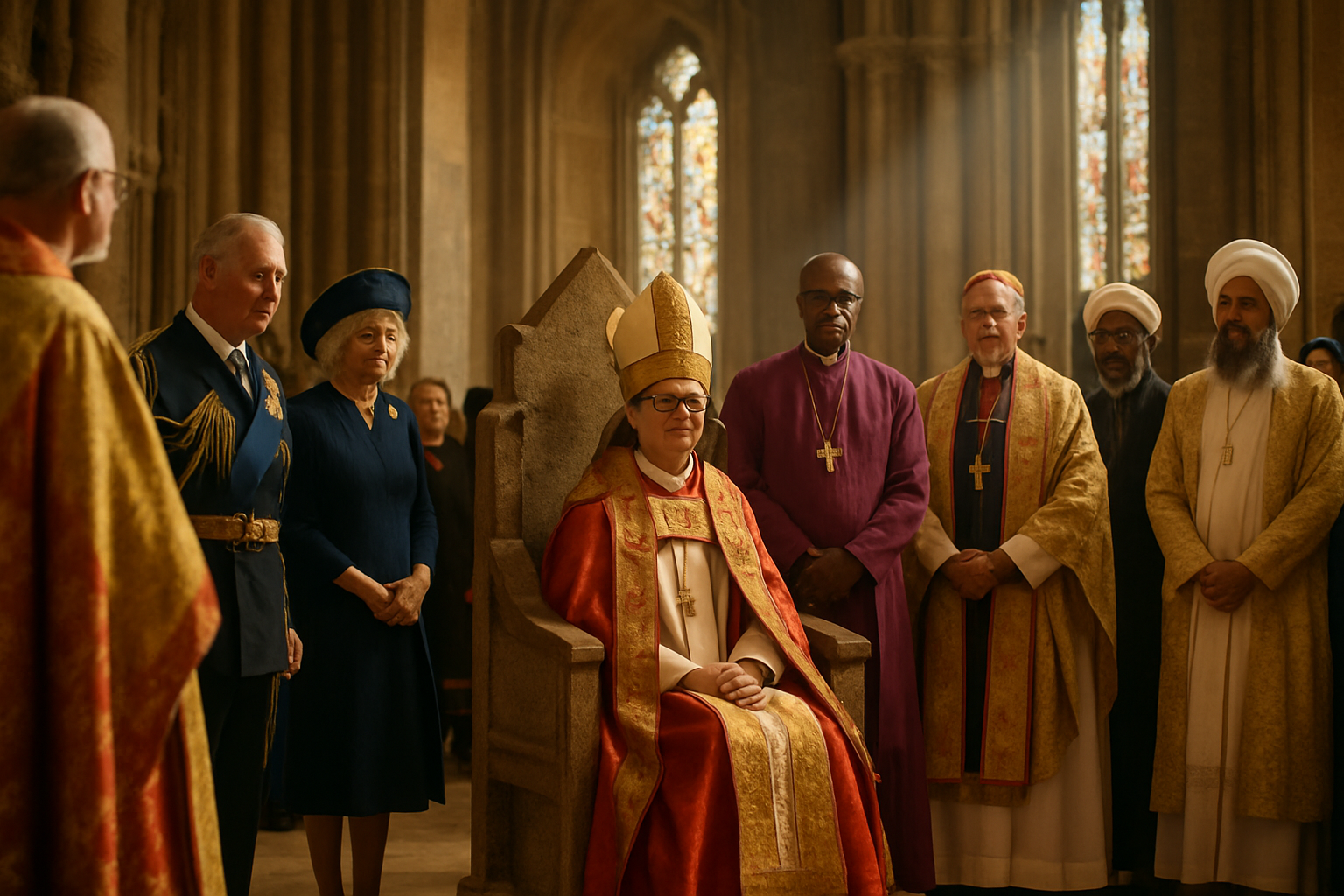
Dame Sarah Mullally, 63, a former nurse and midwife, has made history by becoming the first woman ever to serve as Archbishop of Canterbury, the spiritual leader of the global Anglican Communion comprising 85 million faithful across six continents.
The groundbreaking enthronement ceremony took place Wednesday at Canterbury Cathedral in southeast England before approximately 2,000 distinguished guests, including heir to the throne Prince William, Princess Catherine, Prime Minister Keir Starmer, and religious leaders from around the world. The momentous occasion marks the culmination of decades of struggle for women's ordination within the Anglican Church.
A Journey From Healthcare to Spiritual Leadership
Mullally's path to Canterbury represents a unique convergence of healthcare expertise and religious calling. Her background as a nurse and former midwife brings an unprecedented perspective to the role, emphasizing care, healing, and service—values that resonate deeply with contemporary challenges facing both the Church and society.
The ceremony itself masterfully blended ancient traditions with recognition of this historic breakthrough. Mullally was formally seated in the 13th-century Chair of St Augustine, the same throne used by archbishops for over 700 years, while the service incorporated contemporary voices celebrating women's contributions to religious life.
"I don't think any of us thought we'd have a female Archbishop this quickly," reflected Bishop Rachel Treweek, highlighting how rapidly the Anglican Church has evolved since the first women bishops were consecrated in 2015.
— Bishop Rachel Treweek
Constitutional and Global Significance
As the 106th person to hold this ancient office, Mullally assumes not only spiritual leadership of the Church of England but also constitutional significance as the senior bishop in the realm. The Archbishop of Canterbury serves as principal leader of the Anglican Communion worldwide, providing moral authority on national and international affairs.
The appointment takes on additional resonance given the broader context of women's leadership advancement globally. The ceremony honored nurses and healthcare workers in attendance, reflecting Mullally's professional heritage and acknowledging the essential role of caregivers during recent global health challenges.
A Decade of Rapid Change
The speed of this transformation has surprised even advocates for women's ordination. Just over a decade ago, the consecration of the first women bishops in 2015 marked a contentious milestone in Anglican history. The progression from that breakthrough to a female Archbishop of Canterbury demonstrates the Church's capacity for significant institutional change.
Mullally's unique background combining healthcare, public service, and religious leadership positions her to address contemporary social challenges including healthcare ethics, interfaith relations, and social justice issues that require both pastoral care and practical experience.
Breaking Ancient Barriers
The appointment represents the culmination of a decades-long movement within Anglicanism to fully include women in church leadership. The service at Canterbury Cathedral symbolically broke barriers that have existed for more than fourteen centuries of Anglican tradition.
Her enthronement follows a broader pattern of women achieving religious leadership positions globally, including recent appointments in other Christian denominations. This historic moment provides inspiration for religious institutions worldwide grappling with questions of inclusion and tradition.
Challenges and Opportunities Ahead
As spiritual head of the Anglican Communion, Mullally faces the complex task of leading a diverse global community spanning cultures from Africa to Asia to the Americas. Her healthcare background may prove invaluable in addressing issues of social justice, global health equity, and the church's response to contemporary moral challenges.
The appointment comes at a critical time for the Anglican Church, which must navigate traditional values while embracing progressive inclusion. Mullally's selection demonstrates the institution's commitment to modernization while maintaining its spiritual mission.
Religious leaders worldwide have welcomed the historic appointment as a sign of institutional progress and a recognition that spiritual leadership transcends traditional gender boundaries. The ceremony at Canterbury Cathedral will be remembered as a transformative moment not only for Anglicanism but for global religious leadership.
A New Era Begins
The enthronement of Sarah Mullally as Archbishop of Canterbury marks more than a personal achievement—it represents a fundamental shift in one of Christianity's most ancient institutions. Her combination of healthcare experience, administrative competence, and spiritual calling creates a unique leadership profile for addressing 21st-century challenges.
As the dust settles on this historic ceremony, the global Anglican community looks toward a future where the highest spiritual office is held by someone whose career began in service to health and healing. This convergence of care and spirituality may well define a new era in Anglican leadership, one where practical compassion and religious wisdom unite to address humanity's greatest challenges.
The significance of this moment extends far beyond Canterbury's ancient walls. For 85 million Anglicans worldwide, Wednesday's ceremony represents not just the breaking of an ancient barrier, but the opening of new possibilities for spiritual leadership in an increasingly complex world.